Dirigido a laboratorios dentales, clínicas, distribuidores y equipos de aprovisionamiento que deseen comparar coronas de circonio, coronas de disilicato de litio, carillas, servicios OEM o pedidos al por mayor de restauraciones.
Indícanos el tipo de producto, el material, el volumen mensual, el país de destino y si deseas solicitar una muestra, para que nuestro equipo de ventas pueda preparar el siguiente paso adecuado.
¿Cómo debe comunicarse a los compradores la reducción mínima de las coronas E.max?
Di el número.
Me refiero a la cifra real, no a la versión de marketing de enfoque blando que se esconde detrás de “preparación mínima”, porque los compradores de 2026 no quieren promesas vagas; quieren saber si una corona de disilicato de litio IPS e.max realmente funciona a 1,0 mm, si eso sólo se aplica a la cementación adhesiva y cuándo el mensaje de planificación más seguro sigue estando más cerca de una reducción oclusal o incisal de 1,5-2,0 mm con un hombro o chaflán de aproximadamente 1,0 mm. ¿Por qué tantos vendedores siguen teniendo miedo de ser tan claros?
Seré franco. La mayoría de los laboratorios no tienen un problema material. Tienen un problema de redacción.
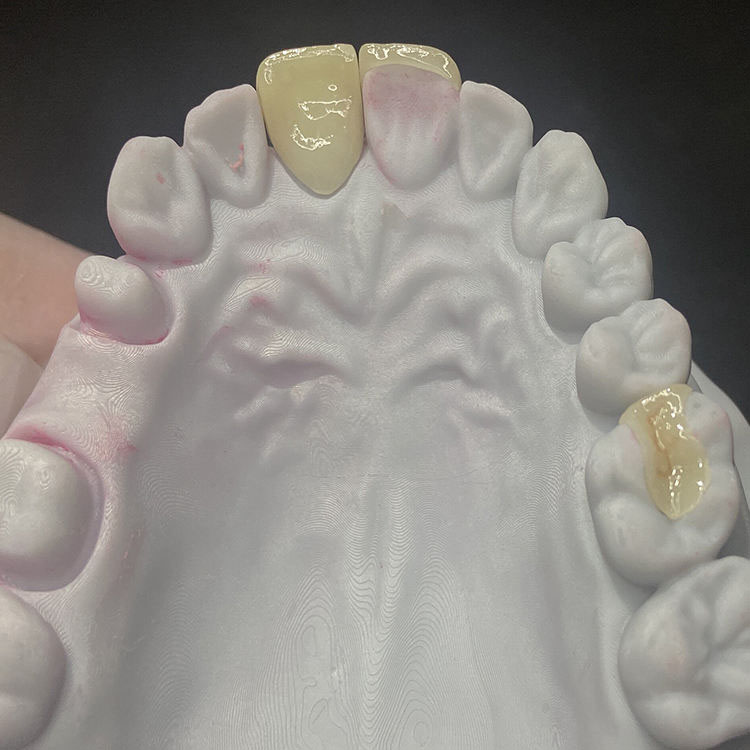
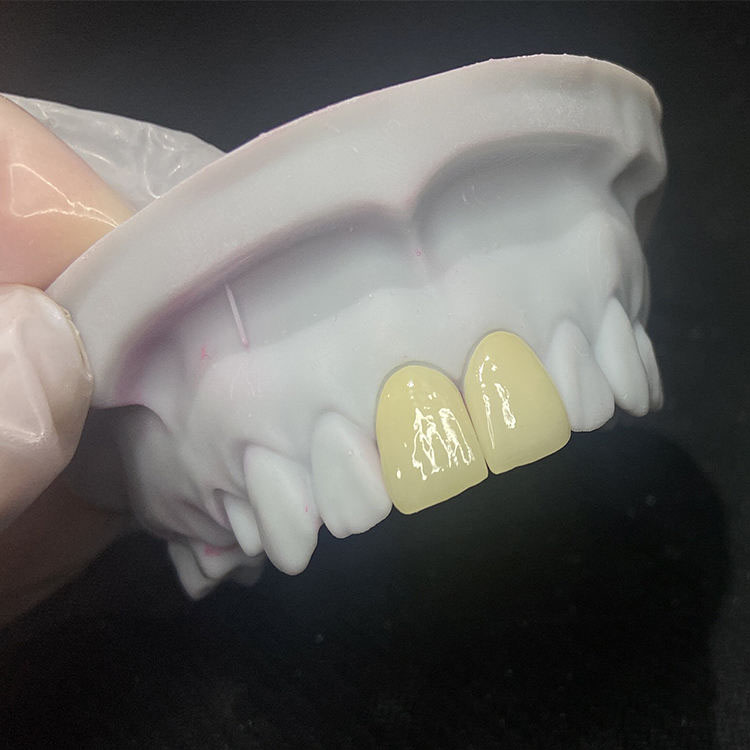
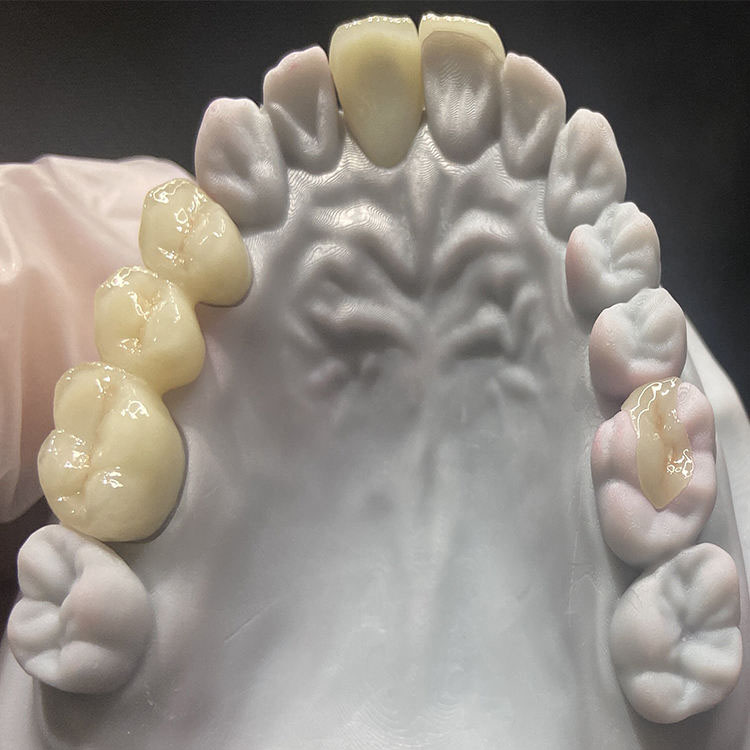
Cuando leo la estructura del sitio en Flujo de trabajo de coronas E.max de Artist Dental Lab, En realidad, la señal es bastante sólida: la página ya se apoya en la translucidez, la anatomía, el color del muñón, la guía oclusal, las notas de margen y la cementación en función del caso, que es exactamente como un laboratorio serio debería enmarcar el disilicato de litio. Pero el título que me has dado necesita un paso más. No debería pedir a los compradores que “se sientan” conservadores. Debería decirles qué significa una reducción mínima en cifras, en indicaciones y en riesgo.
Índice
El número que los compradores deben oír primero
Esta es la frase que yo utilizaría en los textos de ventas, en la admisión de casos y en el traspaso de la consulta al laboratorio:
Para casos de coronas IPS e.max adheridas adhesivamente y cuidadosamente seleccionadas, el grosor mínimo del material puede bajar a 1,0 mm, pero el mensaje estándar más seguro para la planificación de cobertura total suele ser de 1,5-2,0 mm en la zona oclusal o incisal con un hombro o chaflán de aproximadamente 1,0 mm, dependiendo de la indicación, la forma de preparación, la adhesión y la función.
Sentencia corta. Consecuencia larga.
Esa redacción funciona porque respeta ambos lados de la evidencia: La propia guía de coronas adhesivas de 1 mm de Ivoclar dice que el disilicato de litio puede utilizarse en al menos 1,0 mm en casos seleccionados de cementación adhesiva, mientras que las guías de preparación en silla IPS e.max más tradicionales siguen describiendo aproximadamente 1,5-2,0 mm reducción oclusal o incisal y aproximadamente 1,0 mm dimensiones de hombro/chaflán para preparaciones de coronas convencionales. ¿No es esa exactamente la distinción que necesitan los compradores, en lugar de otro perezoso eslogan de “cerámica de preparación mínima”?
Y esto importa más de lo que la gente de marketing admite. Un ensayo controlado aleatorio de 2024 sobre coronas monolíticas de disilicato de litio de espesor reducido informó de una fractura en el grupo monolítico y una Tasa de supervivencia 96% durante tres años, mientras que todas las coronas estratificadas en ese ensayo permanecieron intactas. Eso es alentador, sí. Pero alentador no es lo mismo que el permiso para vender 1 mm como el valor predeterminado universal.
Lo que dicen las pruebas cuando el folleto deja de sonreír
Los números duelen.
La verdad a largo plazo sobre el disilicato de litio no es que “lo fino siempre es mejor”. Es que el grosor reducido de E.max puede funcionar cuando la selección del caso, el protocolo adhesivo, la oclusión y el soporte de preparación son disciplinados, mientras que la evidencia a largo plazo nos sigue recordando que el éxito de la corona no se decide únicamente por el grosor de la cerámica. Un estudio de 2023 sobre coronas monolíticas de disilicato de litio sobre dientes informó 80.1% supervivencia y 64.2% éxito a los 15 años, con complicaciones biológicas que hacen verdadero daño a la puntuación final. Por tanto, si un vendedor comunica una reducción mínima sin hablar también de biología, oclusión e indicación, está vendiendo una verdad a medias.
Y aquí viene la parte más fea. Un estudio de 2026 sobre remakes de laboratorio en restauraciones prostodóncicas fijas encontrado 2.612 remakes y la prevalencia de un remake general de 6.5%. Eso no es un drama abstracto de laboratorio. Eso es dinero, tiempo de cátedra, pérdida de confianza y, por lo general, un concurso de acusaciones que comenzó mucho antes de que se sentara la corona. ¿Quién quiere patrocinar eso con una redacción chapucera?
Tengo una regla fija: si la comunicación no puede sobrevivir a la adquisición, la preparación clínica y la interpretación de laboratorio sin que alguien la “traduzca”, la comunicación es mala.
Por ello, el estudio 2024 sobre prescripciones del laboratorio dental y sistemas informáticos importa tanto. Comparó 600 recetas y descubrieron que los flujos de trabajo apoyados por la tecnología capturaban la información clave de forma mucho más fiable, incluidos los datos de los dientes que se iban a restaurar en 98.0% de casos frente a 77.2% en los sistemas tradicionales, con menos modificaciones en la sombra y menos re-comunicación. No se trata de trivialidades administrativas. Es lo que hay entre “reducción mínima” y “creíamos que querías decir otra cosa”.”
El patrón de enlace interno en Artist Dental Lab le dice lo que tiene que decir
El sitio ya está hablando.
Si lee por qué la comunicación dentista-técnico decide los casos estéticos, El mensaje es obvio: las restauraciones fracasan cuando las notas de reducción, el tono del muñón, la fotografía, los contornos y los límites funcionales son imprecisos. Si lee en qué se diferencia el tratamiento de superficie entre E.max y el óxido de circonio, el mensaje se hace aún más nítido: E.max es una vitrocerámica de disilicato de litio, Li₂Si₂O₅, y vive en una historia adhesiva que no es intercambiable con la lógica de adhesión impulsada por la MDP de la zirconia. Así que sí, yo enlazaría absolutamente esas dos páginas dentro de este artículo, porque explican por qué la “reducción mínima” no es sólo un número de preparación. Es un número de materiales y protocolos.
Y el resto de la arquitectura interna también ayuda. Cómo coordinar los materiales anteriores y posteriores le ofrece la división honesta de la indicación: el disilicato de litio es el dueño de la conversación estética, pero la fuerza posterior cambia rápidamente la conversación material. Y cuando el espacio de preparación o la demanda funcional dejan de ser amistosos, zirconia multicapa de contorno completo para resistencia posterior es el enlace interno más limpio que pretender que todos los problemas de los compradores pueden resolverse estirando E.max más allá de su zona de confort. ¿Por qué sobrevender un material cuando el sitio ya contiene el enlace cruzado más seguro?
El modelo de comunicación que yo pondría delante de los compradores
Sólo tres partes.
En primer lugar número mínimo. En segundo lugar, indique la condición. En tercer lugar, indique la riesgo de fallo si se ignora la condición. Así es como los adultos compran material clínico.
Esta es la versión que yo publicaría de cara al comprador:
Lo que los compradores deben saber
Lo que yo diría
Mensaje de base
“La preparación de coronas E.max debe comunicarse como un sistema dependiente de la reducción, no como una promesa genérica de preparación mínima”.”
Reclamación de menor número
“Se puede hablar de un mínimo de 1,0 mm sólo para casos seleccionados de coronas IPS e.max unidas adhesivamente con un diseño de preparación y soporte disciplinados”.”
Mensaje estándar de planificación
“Para la planificación rutinaria de coronas de cobertura total, comunique una reducción oclusal/incisal de aproximadamente 1,5-2,0 mm y un hombro/chaflán de aproximadamente 1,0 mm como expectativa más segura”.”
Precaución posterior
“En casos posteriores o con mucha fuerza, la reducción mínima debe enmarcarse junto con la función, la carga oclusal, el plan de adhesión y las posibles alternativas de zirconia”.”
Requisito de transferencia de laboratorio
“Envíe escaneados STL, registros de oposición y mordida, notas al margen, sombra del muñón, fotos y guía oclusal antes de prometer un objetivo de grosor E.max”.”
Frase a prohibir
“Mínima preparación para todos”.”
Esa mesa no es que yo sea dramático. Soy yo tratando de salvar a un comprador de ordenar la cosa equivocada con el entusiasmo correcto. Los documentos oficiales de preparación de Ivoclar apoyan la división numérica, y el propio Artist Dental Lab Flujo de trabajo de preparación de coronas E.max ya pide las entradas exactas del caso que hacen que esa división sea utilizable en el mundo real.
El aspecto jurídico y empresarial que nadie debe ignorar
El dinero manda.
En Informe de Associated Press de octubre de 2024 dichas carillas suelen costar $1.000 a $2.000 por diente, y, por lo general, no están cubiertos por el seguro. El sitio La Asociación Dental Americana advierte en 2024 sobre los “técnicos en carillas” dijo la parte silenciosa en voz alta: dejar al dentista fuera del diagnóstico y la planificación del tratamiento invita al daño dental. Y el Facultad de Odontología de la Universidad de Colorado añadió que las carillas de porcelana pueden durar hasta 20 años cuando se planifican y ejecutan adecuadamente. Así que el mercado es caro, lo que está en juego es real, y la diferencia entre una planificación adecuada y la improvisación cosmética no es académica. ¿Por qué un laboratorio serio comunicaría la reducción como si fuera un accesorio de moda?
Mi opinión es dura, pero ganada: si un vendedor no puede explicar cuándo está permitido 1 mm, cuándo 1,5-2,0 mm es más seguro y cuándo el zirconio merece el trabajo en su lugar, no está simplificando la odontología. Están exportando el riesgo al comprador.
Preguntas frecuentes
¿Cuál es el grosor mínimo de una corona E.max?
El grosor mínimo de una corona E.max es el menor espacio cerámico que necesita una restauración de disilicato de litio para funcionar según lo previsto, y en la comunicación con el comprador eso suele significar presentar 1,0 mm como límite inferior sólo adhesivo mientras se trata 1,5-2,0 mm espacio oclusal/incisal como el mensaje estándar más seguro para muchos casos de cobertura total. Yo nunca fusionaría esas dos afirmaciones en una sola línea de venta.
¿Se debe decir a los compradores 1 mm o 1,5-2,0 mm para la preparación de coronas E.max?
Los compradores deben oír 1 mm sólo cuando el caso está claramente enmarcado como protocolo adhesivo seleccionado para IPS e.max, porque presentar 1 mm como valor por defecto para todas las coronas invita a la infra-reducción, al exceso de abombamiento, a los problemas oclusales y al tipo de lucha por rehacer que acaba con el margen y la confianza de ambas partes. El titular más seguro sigue siendo condicional, no absoluto.
¿Cómo debe comunicarse a los compradores la reducción mínima de las coronas E.max?
La reducción mínima para coronas E.max debe comunicarse como una declaración en tres partes que incluya el objetivo numérico de grosor, la indicación o condición de cementación detrás de ese objetivo, y el riesgo de material o rehacer si se ignora la condición, para que los compradores entiendan tanto la oportunidad como el límite antes de prescribir, preparar o pedir. Siempre prefiero el inglés sencillo a los adjetivos bonitos.
¿Cuándo debe un comprador dejar de presionar con E.max y considerar en su lugar el óxido de circonio?
Un comprador debe dejar de presionar a E.max como la respuesta por defecto cuando la carga posterior, la parafunción, el soporte de preparación limitado, la incertidumbre de retención o las demandas mecánicas más amplias empiezan a superar la ventaja óptica del disilicato de litio, porque ese es el punto en el que el óxido de circonio a menudo se convierte en la historia del material más honesto y más repetible. Prefiero perder una comparación de folletos que un argumento de repetición.
¿Qué deben enviar los dentistas al laboratorio para la preparación de coronas E.max predecibles?
La preparación de coronas E.max predecibles requiere un paquete de entrega completo que incluya escaneados STL, registros de oposición y mordida, diseño de márgenes claros, notas de reducción, color y color del muñón, fotos clínicas y guía oclusal, porque las reclamaciones de grosor mínimo se desmoronan rápidamente cuando se deja que el laboratorio adivine el contorno, el valor, los contactos o los límites funcionales. Si el vendedor no pide esos datos, también está adivinando.