Richiedi informazioni sui prezzi e assistenza per i campioni
Per laboratori odontotecnici, cliniche, distributori e team di approvvigionamento che desiderano confrontare corone in zirconia, corone in disilicato di litio, faccette, servizi OEM o ordini all’ingrosso di restauri.
Indicaci il tipo di prodotto, il materiale, il volume mensile, il paese di destinazione e la richiesta di campioni, in modo che il nostro team commerciale possa prepararti la soluzione più adatta.
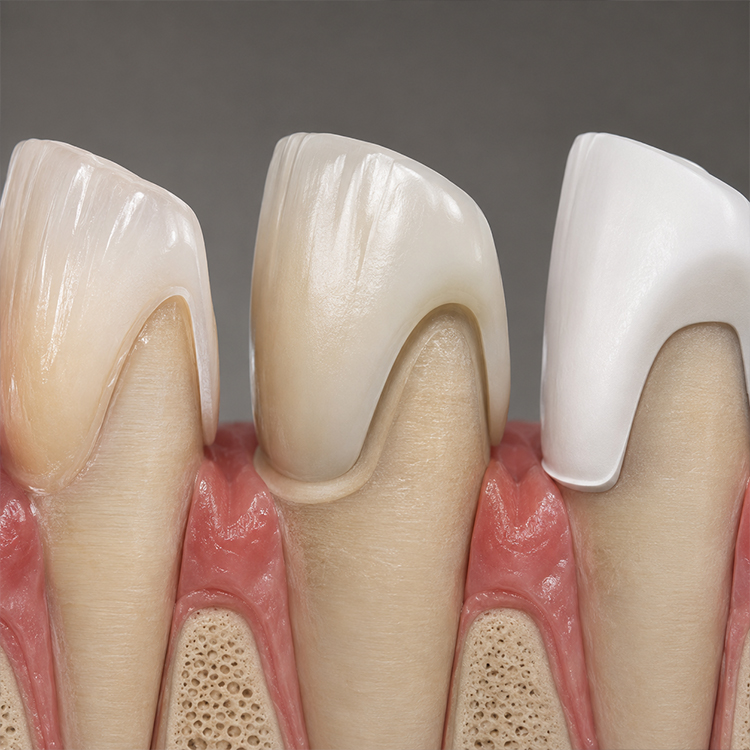
Analisi della struttura dei margini: Feldspatico vs E.max vs Zirconia
Il margine è il punto in cui il caso smette di mentire
I margini espongono tutto.
Una corona o un rivestimento estetico possono essere fotografati magnificamente su un banco di laboratorio, con il bagliore incisale, l'anatomia levigata e una linguetta di colore seduta vicino come un oggetto di marketing, ma se il design del margine della corona dentale è vago, troppo sottile, non supportato o non abbinato alla ceramica, il restauro diventa una discussione ritardata tra biologia, cemento, spessore della ceramica e pazienza alla poltrona.
Allora perché si parla ancora di Feldspatica vs. E.max vs. Zirconia come se si trattasse principalmente di un dibattito “bellezza vs. forza”?
Ho un'opinione difficile da esprimere: il materiale non è l'eroe. Lo è il margine. Il materiale vi dice solo quanta punizione può tollerare il bordo prima che il caso cominci a richiedere delle scuse.
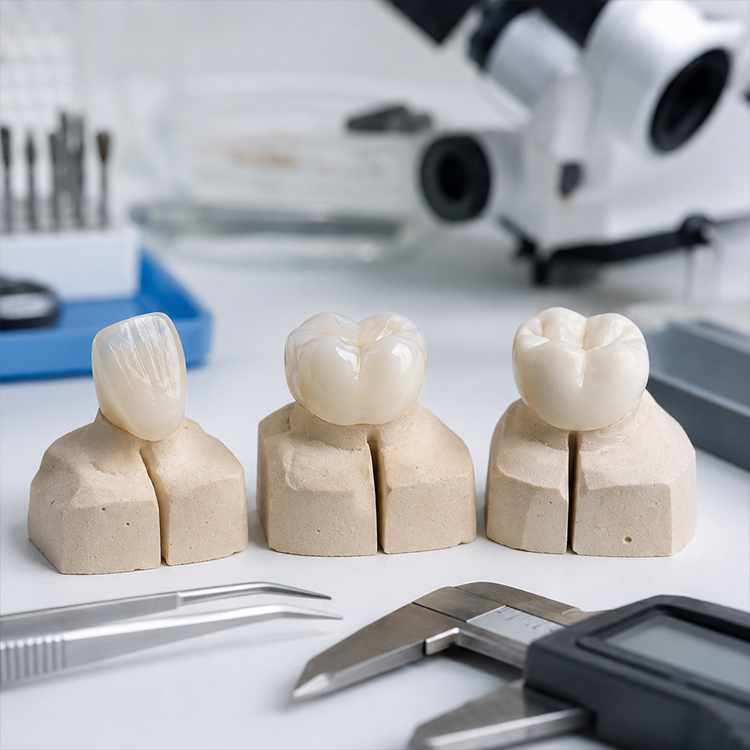
La porcellana feldspatica, il disilicato di litio E.max e la zirconia non sono tre gusti di “ceramica premium”. Sono tre diversi contratti di rischio. La porcellana feldspatica vi offre un comportamento luminoso simile allo smalto e punisce il cattivo supporto. E.max, costruito attorno alla chimica della vetroceramica a base di disilicato di litio, spesso definita Li₂Si₂O₅, offre una maggiore struttura e una più ampia disciplina di indicazione. La zirconia, ZrO₂, in particolare i moderni sistemi multistrato che utilizzano zone 3Y-TZP e 5Y-PSZ, offre una maggiore resistenza e opzioni di pareti più sottili, ma ha ancora bisogno di una linea di finitura che lo scanner, il fresatore, il tecnico e il medico possano effettivamente leggere.
Ecco perché non separerei mai la scelta del materiale dalla geometria della preparazione. Il laboratorio dentale Artist Dental Lab corone in zirconia vs guida ai margini delle corone E.max fa lo stesso punto dal lato del laboratorio: la progettazione dei margini non è una piccola nota tecnica a piè di pagina, ma è il punto in cui inizia il rischio di rifacimento.
Indice dei contenuti
Porcellana feldspatica: Bella, fragile e spietatamente onesta
Il feldspatico è seducente.
È anche il materiale che più facilmente mette in imbarazzo un progetto approssimativo, perché la stessa sottigliezza e traslucenza che fanno sembrare viva una faccetta feldspatica la rendono anche meno indulgente quando il dente è scuro, il margine non è chiaro, la riduzione è irregolare o il medico si aspetta che un guscio di ceramica stratificato a mano funzioni come una corona strutturale.
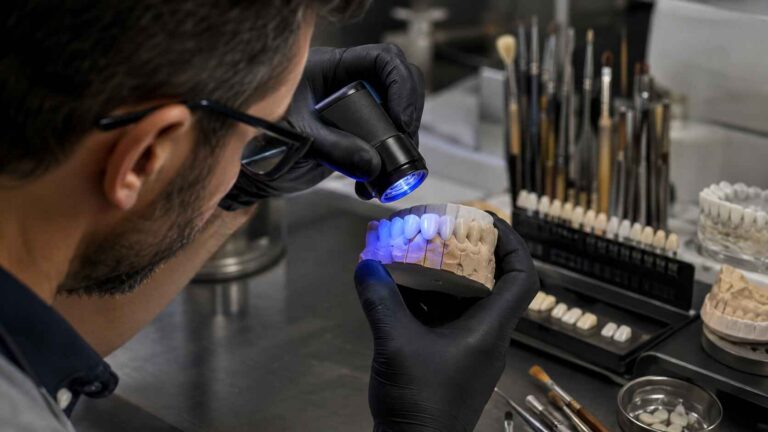
Il caso d'uso migliore è ristretto e reale: faccette anteriori, preparazioni per la conservazione dello smalto, modifica controllata del colore, effetti incisali delicati e un paziente la cui richiesta estetica giustifica il lavoro. Artist Dental Lab Pagina di impiallacciatura feldspatica Lo incornicia correttamente intorno alla traslucenza stratificata a mano, alla microtessitura, alla preparazione conservativa e alle chiare note a margine. Questo è il linguaggio giusto. Non “forte”. Non “universale”. Non “funziona ovunque”.”
Non significa che la porcellana feldspatica sia meccanicamente indulgente. Significa che la feldspatica può durare se il caso viene scelto bene, incollato bene, rifinito bene e mantenuto bene. Affermazione diversa. Una proposta di legge molto diversa.
Per la progettazione del margine di una faccetta feldspatica, voglio che il margine sia posizionato dove il ceramista può preservare una transizione ottica sottile senza creare una sporgenza cervicale ingombrante. I design a finestra, butt-joint e incisal-wrap possono tutti funzionare, ma la decisione dovrebbe seguire il volume dello smalto, l'occlusione, il colore del dente, la linea del sorriso e la variazione di lunghezza richiesta. Se il paziente desidera una mascheratura di tonalità bianca su un moncone scuro senza quasi nessuna riduzione, il feldspatico non è “premium”. È una trappola che indossa il rossetto.
E.max Disilicato di litio: Il cavallo di battaglia della classe media con maniere dispendiose
E.max viene venduto in eccesso.
Il mercato parla di E.max come se avesse risolto per sempre il compromesso della ceramica, ma il disilicato di litio ha ancora delle regole e quando le persone ignorano queste regole, di solito incolpano il laboratorio, lo scanner, il fresatore, il cemento o il morso del paziente prima di ammettere che la preparazione non ha mai dato al materiale un margine equo.
La letteratura tecnica di Ivoclar è più onesta di molte pagine di vendita. Nella guida per corone IPS e.max CAD/Press adhesive 1 mm si legge che il disilicato di litio IPS e.max, con una resistenza alla flessione biassiale media di 500 MPa in quel documento e con IPS e.max CAD con una resistenza alla flessione biassiale media di 530 MPa, consente uno spessore dello strato coronale di almeno 1,0 mm solo se utilizzato con la cementazione adesiva e richiede una spalla circolare o uno smusso di almeno 1,0 mm di larghezza, con bordi interni arrotondati, secondo la guida IPS e.max CAD. Adesivo ufficiale Ivoclar Guida per corone da 1 mm.
Questa frase è importante.
Significa che “1 mm E.max” non è uno slogan. È un protocollo condizionato. Cementazione adesiva. Supporto anatomico. Nessun bordo tagliente. Nessun bruxismo nell'elenco delle indicazioni specifiche. Nessuna preparazione preteso-ritentiva che chieda a un margine in vetroceramica di sopravvivere all'ottimismo.
Per i margini di preparazione delle corone E.max, mi piace una spalla arrotondata o uno smusso profondo ben formato. Non mi piace l'idea del bordo a coltello, a meno che non sia supportato da un'indicazione molto specifica e dal protocollo del materiale, e anche in questo caso voglio una documentazione. Il disilicato di litio può essere molto prevedibile nelle corone anteriori e in alcuni casi posteriori, ma il margine deve proteggere lo spessore della ceramica ed evitare l'overcontour cervicale.
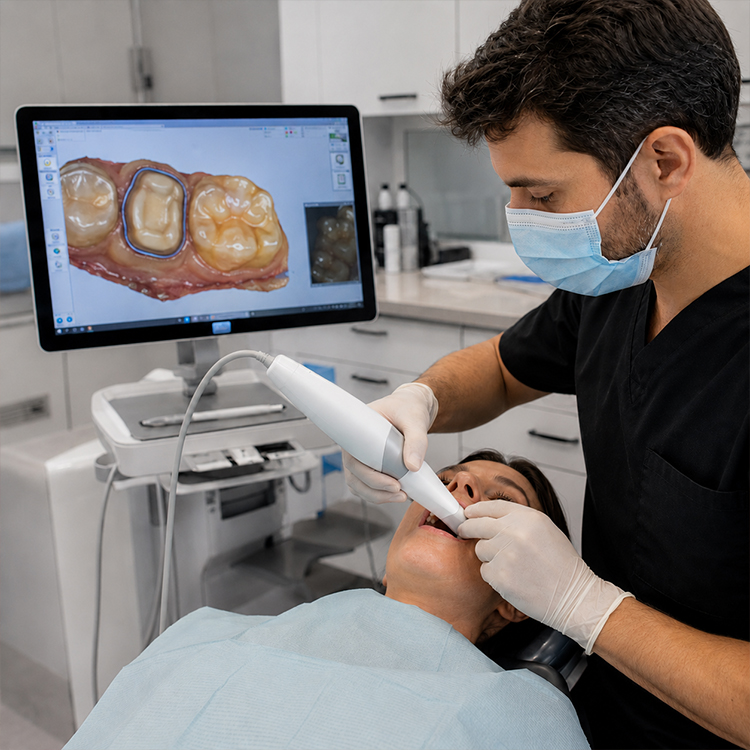
È qui che il Flusso di lavoro delle corone E.max merita un link interno a questo articolo. La pagina richiede scansioni STL, note a margine, tonalità, tonalità del moncone, foto e guida occlusale. Bene. Non si tratta di documentazione cartacea. È un'assicurazione sui margini.
Per le faccette, il Pagina di impiallacciatura E.max fa un'altra utile distinzione: le faccette in disilicato di litio non riguardano solo la traslucenza, ma anche l'adattamento prevedibile, la resistenza e la comunicazione delle note di margine e riduzione. Utilizzerei E.max rispetto al feldspatico quando ho bisogno di un'architettura ceramica più forte, di una gestione cromatica più moderata o di una migliore ripetibilità su più unità.
Ma non lo definirei comunque indulgente. E.max ricorda la cattiva geometria. Si lamenta solo in un secondo momento.
Zirconia: La forza non è un permesso
La zirconia perdona di più.
Ciò non significa che l'ossido di zirconio perdoni tutto, ed è qui che penso che molti clinici, centri di fresatura e laboratori a basso prezzo diventino avventati. Un'elevata resistenza alla flessione non salva i margini illeggibili, gli angoli delle linee interne, lo spazio di seduta insufficiente, il teatro di adesione umido o un profilo di emergenza che sembra essere stato progettato da un foglio di calcolo.
La zirconia moderna non è una cosa sola. Un blocchetto di zirconia multistrato può utilizzare il forte 3Y-TZP nel corpo dentinale e il più traslucido 5Y-PSZ verso la zona incisale. La pagina del blocchetto IPS e.max ZirCAD Prime di Ivoclar riporta una resistenza alla flessione di 1.100 MPa e afferma che tale resistenza consente uno spessore della parete della corona fino a 0,8 mm; inoltre descrive la transizione del materiale dalla zirconia 3Y-TZP alla zirconia 5Y-PSZ per la traslucenza, secondo quanto riportato da Pagina tecnica del prodotto ZirCAD Prime di Ivoclar.
Quindi sì, l'ossido di zirconio può essere più leggero dell'E.max in molte situazioni di corone. Ma no, la progettazione della linea di finitura della corona in zirconia non è opzionale.
Una revisione sistematica del 2020 sulle corone singole in zirconia supportate da denti ha rilevato che le preparazioni con finitura a spalla hanno un adattamento marginale leggermente migliore rispetto a quelle con finitura a smusso. questa revisione sistematica indicizzata PMC sull'adattamento della corona in zirconia. Non lo leggo come “mai usare lo smusso”. Lo leggo come: smettete di fingere che la geometria della linea di finitura non abbia un effetto misurabile.
Per i casi di resistenza posteriore, i flussi di lavoro dei ponti, i restauri supportati da impianti come prescritto e i profili di rischio legati al bruxismo, la zirconia spesso vince la conversazione in anticipo. Artist Dental Lab pagina in zirconia multistrato full-contour incastrare il materiale intorno alla precisione CAD/CAM, all'anatomia monolitica, alla riduzione del rischio di scheggiatura della porcellana e alla funzione posteriore. Questa è la corsia giusta.
Il pericolo inizia quando si sceglie la zirconia, perché nessuno vuole affrontare la preparazione. Se la linea di finitura è disordinata, subgengivale al di là della visibilità o cucita digitalmente nella finzione, la zirconia può ancora fresare. Può ancora fare da sede. Può anche superare il test dello specchio. Ma il tessuto di solito lo sa.
La tabella di confronto di cui i medici hanno effettivamente bisogno
Questa è la suddivisione pratica che utilizzerei quando esamino la struttura dei margini tra feldspatico e E.max e zirconia.
Fattore
Porcellana feldspatica
E.max / Disilicato di litio
Zirconia
Chimica di base
Matrice di vetro porcellanato feldspatico
Vetroceramica a base di disilicato di litio, spesso descritto come Li₂Si₂O₅
Biossido di zirconio, ZrO₂; può includere le zone 3Y-TZP e 5Y-PSZ.
Logica di forza tipica
Guscio estetico; dipende in larga misura dall'incollaggio e dal supporto
Ceramica strutturale a media resistenza; IPS e.max CAD comunemente citato intorno a 530 MPa
Ceramica ad alta resistenza; ZirCAD Prime citato a 1.100 MPa
Personalità a margine
Necessita di un supporto allo smalto e di una transizione delicata
Necessita di un supporto arrotondato e di una disciplina di spessore
Tollera meglio le pareti più sottili, ma necessita comunque di una geometria leggibile.
Preferenza comune per il traguardo
Finestra specifica per la faccetta, giunto di testa o bendaggio incisale, a seconda del caso.
Spalla arrotondata o smusso profondo; di solito circa 1,0 mm per le corone in determinati protocolli.
Spalla o smusso; spesso può supportare uno spessore di parete ridotto a seconda del sistema.
La migliore corsia estetica
Faccette anteriori sottili, caratterizzazione sottile, traslucenza simile allo smalto
Ceramica cervicale sottile, errori adesivi, margini non supportati
Scarso adattamento a causa di preparazioni illeggibili, compromessi di bassa traslucenza, errori di protocollo di cementazione
Il mio appello senza mezzi termini
Meglio se il dente è già gentile
Il meglio quando bellezza e struttura sono entrambe importanti
Il meglio quando la funzione diventa brutta
Il problema degli affari sporchi: i margini economici creano remake costosi
Il remake è raramente misterioso.
Quando si presenta un caso, tutti iniziano a difendere il proprio angolo. Il medico dice che la scansione era buona. Il laboratorio dice che il margine non era chiaro. Il paziente dice che la corona è ingombrante. Il rappresentante dice che il materiale è resistente. Da qualche parte in questa confusione si nasconde la verità: alla ceramica è stato chiesto di risolvere un problema di geometria.
Un confronto in vitro delle ceramiche dentali contemporanee del 2023 ha rilevato che le corone in disilicato di litio hanno un'accuratezza marginale clinicamente accettabile e che la zirconia e i materiali in silicato di litio rinforzati con zirconio possono produrre risultati favorevoli in condizioni controllate, secondo quanto riportato da lo studio PMC sulla discrepanza marginale di cinque ceramiche dentali contemporanee. Questo è utile, ma dovrebbe renderci più umili. Le condizioni di laboratorio non sono la saliva, il sangue, il collasso dei tessuti, le scansioni morbide, la pressione del tempo e un paziente che chiede se la corona può essere seduta prima di pranzo.
I margini puliti vendono prevedibilità. I margini negativi vendono drammi.
La lezione commerciale è scomoda: un laboratorio odontotecnico che accetta tutte le richieste di materiale senza mettere in discussione la preparazione, l'autorizzazione, la mascheratura del colore e la progettazione dei margini non è orientato al servizio. È un laboratorio pigro. E una clinica che invia scansioni vaghe e si aspetta una “ceramica premium” per coprire la mancanza di pianificazione non sta risparmiando tempo. Sta esternalizzando il rischio.
Ecco perché mi piace usare Artist Dental Lab. Guida basata su casi per faccette anteriori in E.max, zirconia e feldspatozoi come punto di controllo decisionale prima che la scelta del materiale diventi emotiva. La domanda migliore non è “quale ceramica è migliore?”. La domanda migliore è: quale struttura di margine può supportare onestamente questo dente?
Le mie regole del margine, senza il profumo della brochure
Quando mi appoggiavo al feldspatico
Propenderei per il feldspatico quando la preparazione rimane prevalentemente nello smalto, il paziente ha bisogno di una delicata caratterizzazione anteriore, il colore target non è selvaggiamente più luminoso del dente sottostante e il clinico può fornire foto, colore del moncone, contesto della linea del sorriso e un margine che il ceramista può rifinire senza tirare a indovinare.
Qui vince il sottile.
Ma il sottile vince solo quando il caso è gentile. Se la preparazione è ovunque nella dentina, il dente è scuro, il paziente brucia, il bordo incisale è funzionalmente ostile o il margine scompare in un'ombra di scansione, il feldspatico smette di essere elegante e inizia a essere fragile.
Quando mi appoggiavo a E.max
Propenderei per E.max quando il caso ha bisogno di più struttura rispetto al feldspatico, ma richiede comunque un'estetica elevata: corone anteriori, faccette premolari, correzione moderata del colore e lavori di sorriso a più unità in cui la ripetibilità conta più di un effetto incisale eroico.
Il margine di E.max deve essere definito, arrotondato e abbastanza spesso da evitare un bordo cervicale debole. Se il medico vuole una corona da 1,0 mm, voglio che la conversazione includa la cementazione adesiva, l'occlusione, il supporto anatomico e le restrizioni del produttore. Altrimenti, “preparazione minima” diventa un'espressione legale per indicare una riduzione insufficiente.
Quando mi appoggiavo alla zirconia
Propenderei per la zirconia quando domina il carico: corone posteriori, casi di ponti, clearance limitate, restauri supportati da impianti come prescritto, rischio di bruxismo o pazienti che hanno già insegnato al team che la stratificazione della porcellana è un azzardo.
Tuttavia, voglio un margine pulito. La zirconia è forte, non psichica. Se la scansione non è in grado di leggere la linea di finitura, la fresa non può rispettarla e il tecnico non può progettarla con sicurezza. Questa non è scienza dei materiali. Si tratta di una velleità di calcolo.
Domande frequenti
Che cos'è il design del margine della corona dentale?
La progettazione del margine della corona dentale è la geometria pianificata della linea di finitura in cui il dente preparato incontra il restauro, controllando lo spessore della ceramica, l'accuratezza del posizionamento, il comportamento del cemento, il profilo di emergenza, la risposta dei tessuti e il rischio di frattura a lungo termine in materiali come la porcellana feldspatica, il disilicato di litio E.max e la zirconia. È il confine strutturale del caso.
In pratica, ciò significa che il clinico deve scegliere un margine che il dente, il materiale, lo scanner, il fresatore, il ceramista e il protocollo di cementazione possano tollerare. Una bella corona con un brutto margine non è un successo. È un rifacimento ritardato.
Qual è il miglior design del margine per le corone in ceramica?
Il miglior design del margine per le corone in ceramica è di solito una spalla liscia e arrotondata o uno smusso ben formato che fornisca una quantità sufficiente di ceramica, eviti angoli interni taglienti, supporti una scansione o un'acquisizione dell'impronta accurata e si adatti alla resistenza, alla traslucenza e al protocollo di cementazione del materiale selezionato. La risposta giusta cambia a seconda del tipo di ceramica.
Per le corone in E.max, di solito voglio uno spessore disciplinato e una forma di supporto arrotondata. Per la zirconia, posso accettare un design più snello quando il sistema lo consente, ma voglio comunque una linea di finitura leggibile. Per le faccette feldspatiche, mi interessa di più il supporto dello smalto e la transizione ottica che la riduzione in stile corona.
Come si differenziano i margini di preparazione delle corone E.max da quelli in zirconia?
I margini di preparazione delle corone in E.max richiedono generalmente uno spessore di ceramica e una pianificazione adesiva più rispettosi, mentre i margini in zirconia possono spesso tollerare dimensioni di parete più sottili, poiché i moderni sistemi di zirconia hanno valori di resistenza alla flessione molto più elevati e diverse opzioni di cementazione. Il compromesso è che la zirconia ha ancora bisogno di una geometria pulita, visibile e fresabile.
L'errore consiste nel considerare la resistenza della zirconia come un sostituto della qualità della preparazione. E.max punisce più velocemente i margini sottili non supportati, ma la zirconia può ancora fallire dal punto di vista estetico, biologico o di adattamento se la linea di finitura è vaga o il profilo di emergenza è costruito in modo eccessivo.
Il design del margine del rivestimento feldspatico è diverso da quello del rivestimento E.max?
Il design dei margini delle faccette feldspatiche è solitamente più dipendente dalla conservazione dello smalto, dalla transizione ottica sottile e dal delicato contorno stratificato a mano, mentre il design dei margini delle faccette E.max può tollerare un uso strutturale più ampio, poiché il disilicato di litio offre una maggiore resistenza e flussi di lavoro CAD/CAM o pressati più ripetibili. Entrambi richiedono comunque margini puliti.
Non userei il feldspatico solo perché suona bene. Lo utilizzerei quando il dente consente una preparazione conservativa e l'obiettivo estetico richiede un comportamento leggero simile allo smalto. L'E.max è spesso il compromesso più sicuro quando il caso necessita di maggiore struttura.
Come scegliere il design del margine della corona per Feldspatica vs E.max vs Zirconia?
Scegliere il design del margine della corona adattando la linea di finitura ai limiti meccanici della ceramica, agli obiettivi ottici, al protocollo di cementazione, al colore del dente, allo smalto rimanente, all'occlusione, alla leggibilità dello scanner e allo spessore della parete richiesto, piuttosto che scegliere prima il materiale e forzare la preparazione ad obbedire successivamente. La logica del margine dovrebbe guidare la scelta del materiale.
La mia stenografia è semplice: feldspatica per la bellezza degli anteriori a smalto sottile, E.max per la struttura estetica con disciplina dei margini e zirconia per le situazioni di carico più elevato in cui la resistenza e la riduzione del rischio di scheggiatura contano più della massima traslucenza.
Riflessioni finali: Inviare il margine prima di vendere il materiale
Non iniziate il vostro prossimo caso di ceramica chiedendo: “Feldspatico, E.max o zirconia?”.”
Iniziare con il margine.
Inviate al laboratorio scansioni STL chiare, foto della preparazione, tonalità del moncone, note di riduzione, guida occlusale, foto del sorriso e una dichiarazione brutalmente onesta di ciò che il restauro deve nascondere, sopravvivere o imitare. Se il margine non può sostenere il materiale, cambiate la preparazione, cambiate il materiale o cambiate la promessa.
Per i casi B2B in cui il rischio è rappresentato dalla progettazione dei margini delle corone dentali, contattate Artist Dental Lab e iniziate con un caso di prova che includa note sui margini, documentazione sulle tinte e obiettivi dei materiali prima di iniziare la produzione. È così che i team seri riducono i rifacimenti. È così che la ceramica ha un'occasione giusta.