Overview
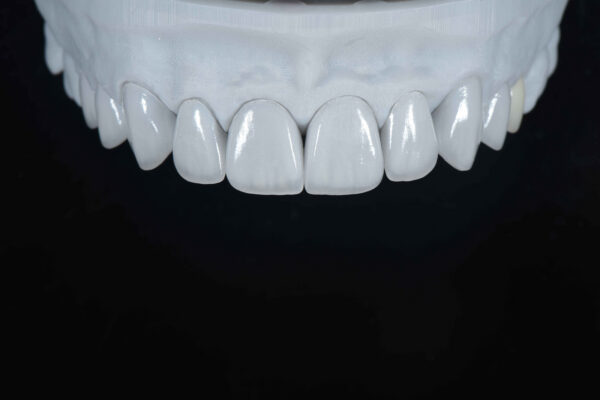
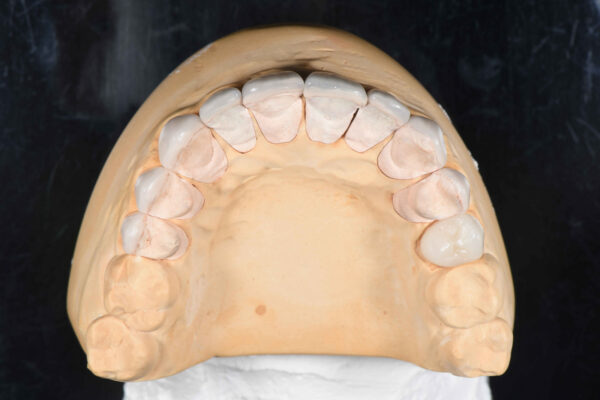
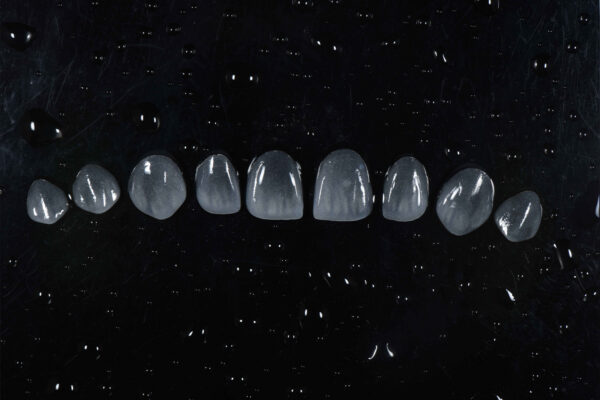
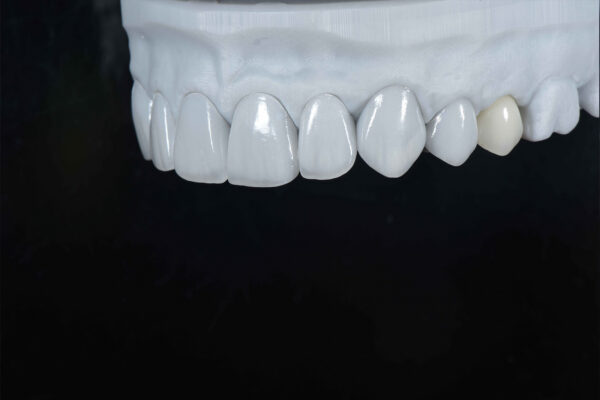
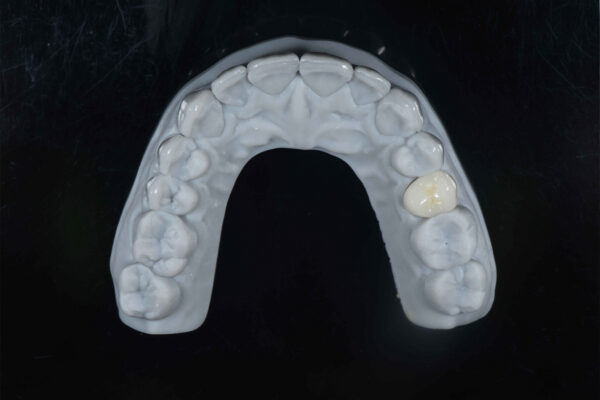
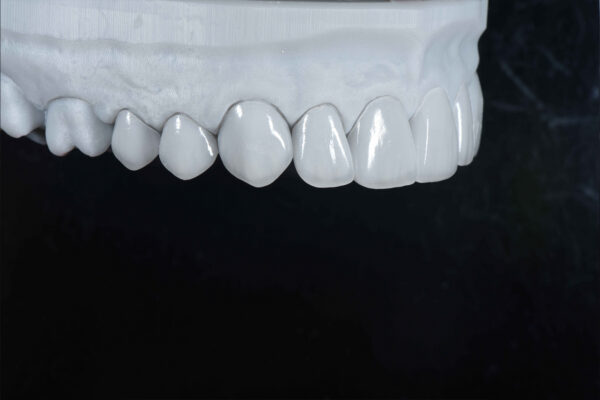
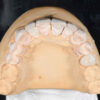
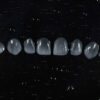
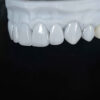
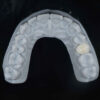
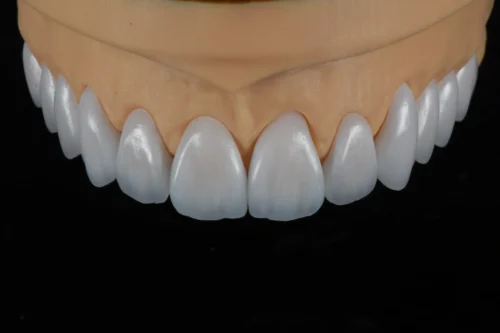
Custom multi-unit feldspathic veneers are hand-layered porcelain restorations designed for coordinated anterior smile cases. Each veneer is individually shaped and characterized while being developed as part of a complete smile composition.
This coordinated approach helps maintain balanced tooth proportions, a continuous smile arc, natural embrasures, and harmonious transitions from the central incisors to the canines and premolars.
The restorations can be customized with refined facial contours, controlled surface gloss, enamel-like translucency, and consistent shade integration across multiple adjacent units.
Best For
Premium smile makeovers, multi-unit anterior veneer cases, minimally invasive cosmetic restorations, diastema closure, tooth shape correction, worn incisal edge restoration, and cases requiring highly individualized anterior esthetics.
Material
Hand-layered feldspathic porcelain selected for its enamel-like translucency, natural light transmission, fine surface texture, and ability to reproduce delicate internal characterization.
Indications
Suitable for multi-unit anterior and selected premolar veneers, smile-arc enhancement, correction of tooth proportions, mild tooth asymmetry, worn incisal edges, diastema closure, and conservative esthetic rehabilitation as prescribed by the clinician.
Design Options
Window, butt-joint, or incisal-wrap preparation designs can be produced according to the clinical prescription and available restorative space.
Custom design options include tooth shape, facial contour, line angles, contact areas, embrasures, incisal edge position, translucency zones, subtle mamelon effects, incisal halos, surface texture, and gloss level.
Prep Guidance (Clinical)
Conservative tooth preparation may be used where clinically appropriate. Clearly defined margins, sufficient ceramic space, accurate preparation scans, and detailed reduction information help improve fit and esthetic predictability.
The final preparation design should be determined by the treating clinician according to the individual clinical situation and planned bonding protocol.
Shade & Characterization
Custom shade matching is supported by final shade information, stump shade records, patient photographs, and approved reference images.
Value, chroma, translucency, internal characterization, surface texture, and gloss can be coordinated across the complete veneer set to achieve consistent unit-to-unit integration.
Smile Design Control
Central-incisor dominance, lateral-incisor proportions, canine transitions, dental midline, smile arc, incisal display, contact relationships, and overall symmetry can be customized according to the approved clinical design.
A diagnostic wax-up, mock-up, temporary restoration, or approved digital smile design can be used as a reference when available.
Cementation
Designed for adhesive bonding protocols. The treating clinician should select the ceramic surface treatment, bonding system, resin cement shade, and cementation procedure according to the individual case.
What to Send
Send upper and lower STL or intraoral scan files, an accurate bite registration, clearly defined preparation margins, final shade, stump shade, retracted photographs, smile photographs, and full-face photographs.
Please also provide midline requirements, incisal edge position, smile-arc instructions, functional notes, and any approved wax-up, mock-up, provisional restoration, or digital reference design.
QC Focus
Margin integrity, proximal contacts, insertion path, unit-to-unit symmetry, tooth proportions, incisal edge position, facial contours, surface texture, shade coordination, and occlusal relationships where applicable.