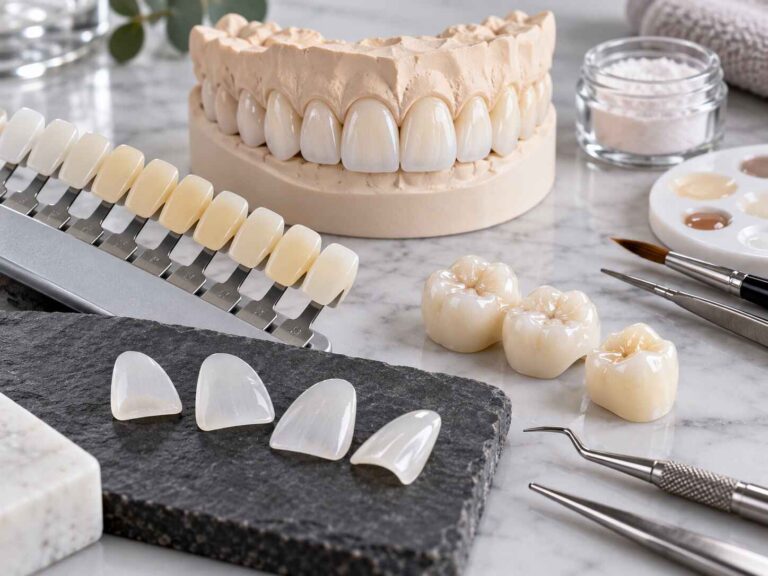
Meta description: Explore All-on-4, Malo, zirconia, Emax, veneers, PFM and removable dentures—made with trusted materials and multi-stage QC for predictable fit and turnaround.

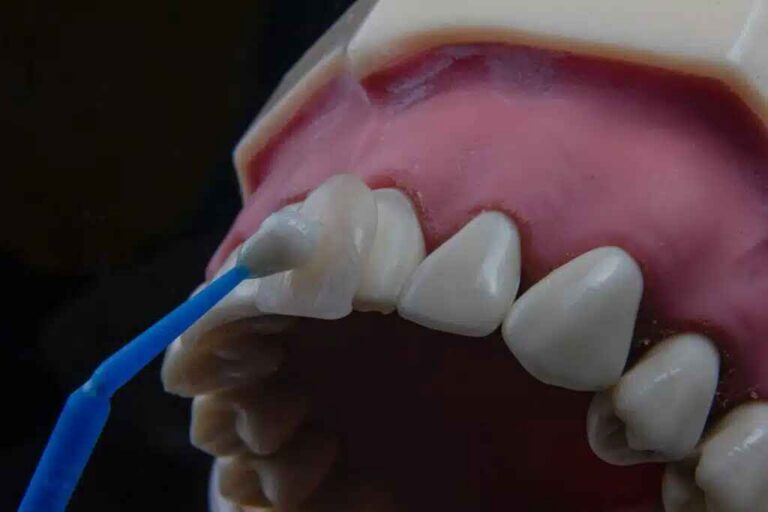
The biggest bonding challenges with zirconia veneers are not mysterious. They are predictable: weak micromechanical retention, poor surface treatment, wrong primer timing, saliva contamination, overconfidence in resin cement, and case selection that ignores enamel, occlusion, and prep geometry.

E.max and split zirconia are not interchangeable "costs" crown products. One wins light. One wins tons. Both can stop working severely when case choice, reduction, margin design, color information, and occlusal danger are treated like afterthoughts.

Zirconia crowns are not winning posterior dentistry because they are fashionable. They are winning because monolithic ZrO₂ handles load, CAD/CAM production scales, and porcelain-layered alternatives still carry remake risk when occlusion gets ugly.

High clarity zirconia crowns guarantee strength and esthetics, but anterior situations subject every weakness: value, stump color, incisal deepness, bonding, and occlusion. This write-up breaks down when zirconia suffices, when E.max still wins, and when the lab requires better information prior to touching the instance.

Full contour zirconia crowns are not chosen since dental practitioners stopped appreciating esthetics. They are chosen since damaging, turn-around, occlusion, individual expectations, and remake economics penalize weak product choices.

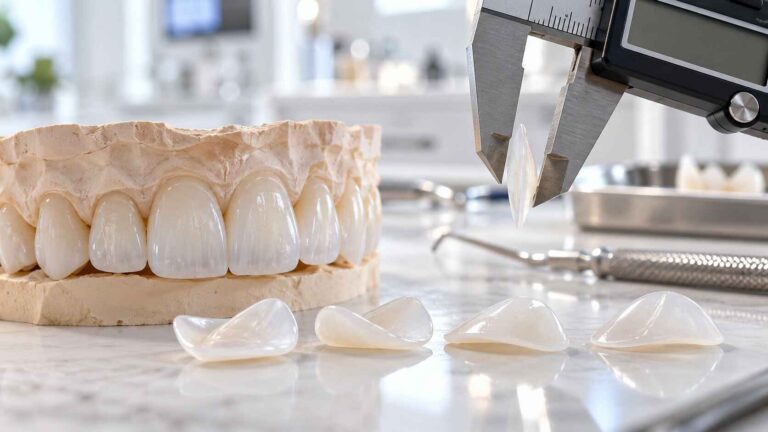
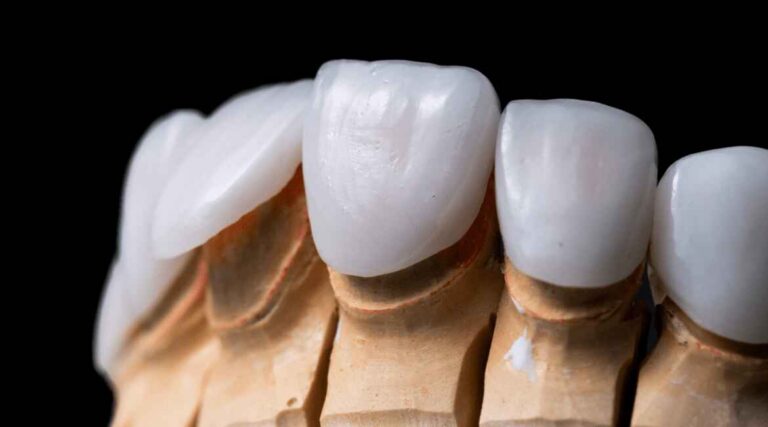
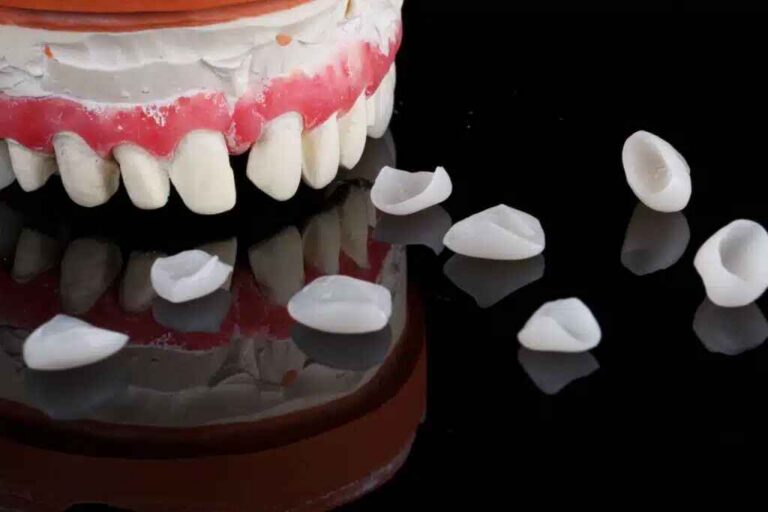
The best veneer material for minimally prepared anterior cases is not the strongest ceramic. It is the material that protects enamel, controls value, bonds predictably, and does not force the dentist or lab to lie about thickness.

Most veneer articles dodge the ugly question: what happens when the stump is so dark that translucency becomes a liability? I don’t dodge it. For most dark stump cases, monolithic or low-translucency lithium disilicate is the best overall answer, while feldspathic becomes selective and zirconia stays a niche tool.

E.max vs zirconia is not just a material debate. It is a surface-treatment problem. Get the intaglio protocol wrong, and the prettiest restoration in the box turns into a remake waiting for a calendar date.

I confront the “Veneer Selection” dilemma with frank industry insight, backed by clinical comparisons of E.max vs feldspathic veneers, performance data, and laboratory links you can actually use.