Why Some Facilities Prefer Complete Contouring Multi-layer Zirconia
The Uncomfortable Factor Clinics Maintain Returning to Complete Shape Zirconia
Margins decide instances.
That seems candid, however when a center is trying to relocate from rather single-unit dentistry to repeatable crown-and-bridge production, the material choice becomes much less concerning showroom esthetics and even more concerning what makes it through bite pressure, delivery, seating, minor occlusal error, and restless clients who do not intend to listen to the word “remake.”
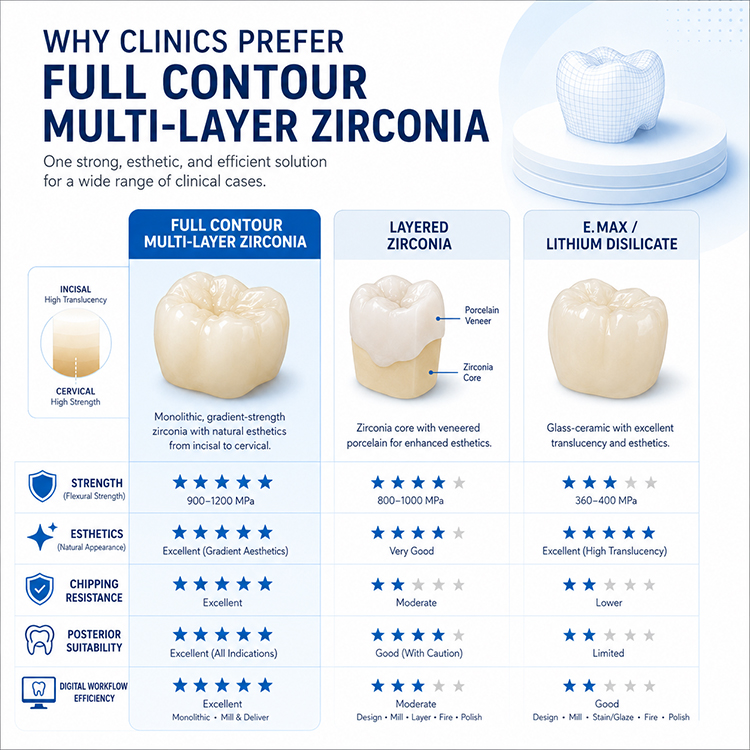
So why do some facilities like full shape zirconia crowns!.?.!? Because full shape multilayer zirconia gives them a sensible deal: monolithic strength, appropriate esthetics, CAD/CAM uniformity, and much less dependence on breakable veneering porcelain. Artist Dental Laboratory’s very own full-contour multilayer zirconia crowns and bridges page frames the material specifically this way: monolithic multilayer zirconia for crowns and bridges, with all-natural slope esthetics and reduced chipping risk.
I’ll say the quiet component. A great deal of centers do pass by zirconia because it is one of the most beautiful ceramic in every mouth. They pick it due to the fact that charm that chips is a responsibility.
What “Full Contouring Multi-layer Zirconia” Actually Means
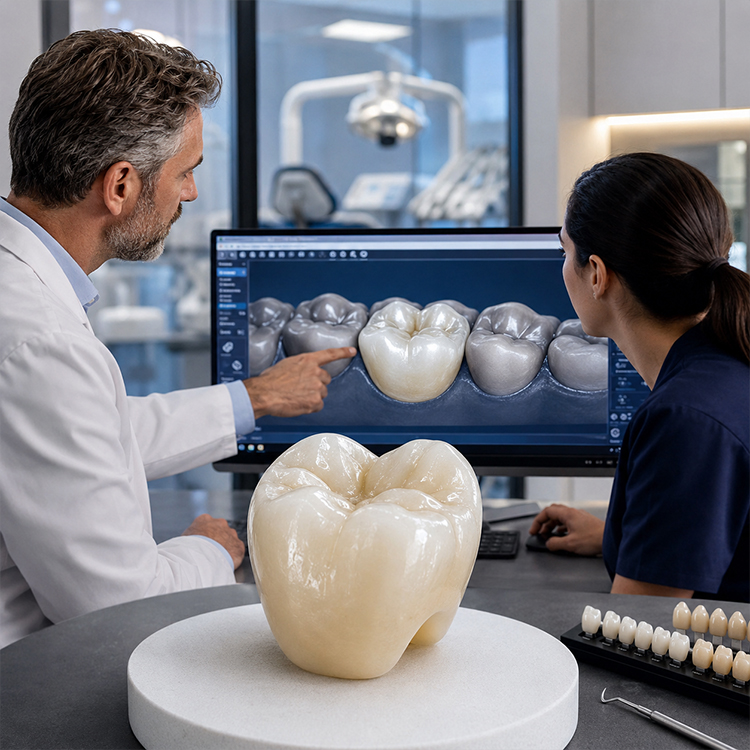
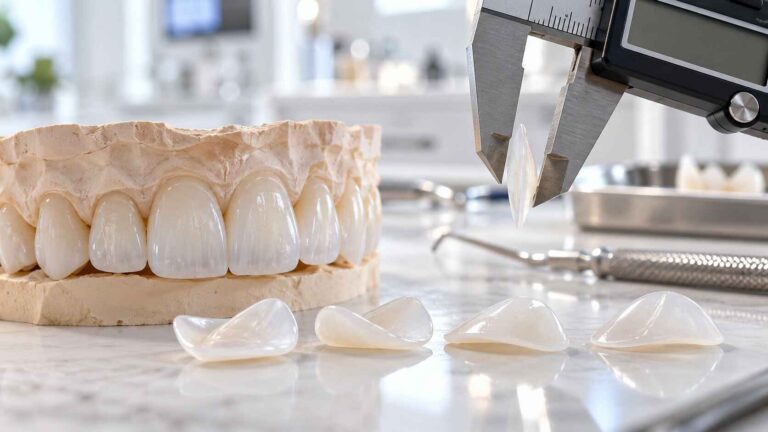
Full contouring multi-layer zirconia is a monolithic zirconium dioxide remediation, normally crushed by CAD/CAM, made in last physiological tooth form without a different porcelain veneer layer, while making use of shade and clarity gradients to boost all-natural look from cervical body to incisal or occlusal zone.
The product is usually gone over under names like monolithic zirconia crowns, multi-layer zirconia crowns, clear zirconia crowns, or full shape zirconia restorations. Chemically, the base product is zirconium dioxide, ZrO TWO, commonly supported with yttria in systems such as 3Y-TZP, 4Y-TZP, or 5Y zirconia. The trade-off is easy: even more clarity can mean lower flexural strength, while higher-strength zirconia can look flatter if the case is inadequately intended.
Which is where facilities make their actual money or lose it.
If the prep is posterior, the person is a mill, the crown is implant-supported, or the opposing dentition is unrelenting, the “prettiest” choice may not be the smartest option. This is why numerous laboratories position E.max crowns for anterior and selected posterior cases while reserving full contour zirconia for harder-function operations where strength and cracking resistance issue extra. Artist Dental Laboratory makes that exact same split: E.max is described around translucency and aesthetic areas, while full-contour multilayer zirconia is explained around posterior toughness and practical crown-and-bridge workflows.
Table of Contents
The Data Is Not as Charming as the Advertising and marketing
Here is the data no one need to neglect.
A 2023 possible medical research study on posterior third-generation monolithic zirconia crowns reported a 100% survival rate at 3 years, with crowns evaluated over 36 months and no organic or technical complications reported in the research recap.
That seems amazing. Yet I would certainly not sell it like a miracle.
Another randomized medical test comparing monolithic and veneered zirconia remediations reported 100% survival for veneered zirconia and 90% survival for monolithic zirconia at 3 years, with three monolithic zirconia repaired partial dentures shed.
See the problem?
The proof supports zirconia, but it does not excuse lazy situation option. Complete contour zirconia crowns are solid, not wonderful. They still rely on occlusal clearance, prep work style, sintering control, polishing, cementation protocol, port layout, and whether the dental expert really sends out functional STL scans, bite records, margin notes, and color references.
Musician Dental Laboratory’s zirconia web page requests precisely that sort of case data: STL scans, margin notes, occlusal scheme assistance, color selection, expression or clearance requirements, and attack records for predictable chairside modification. That is not brochure language. That is damage control.
Why Clinics Prefer Full Shape Zirconia in Real Manufacturing
1. Less Layering Variables
Layered porcelains can look beautiful. They can likewise chip, inequality, or come back from the lab with the incorrect worth due to the fact that someone underestimated stump shade, thickness, or lights.
Full shape zirconia gets rid of one major weak point: the porcelain veneer layer. It is not split porcelain trying to survive over a structure; it is one machine made anatomical system. In posterior dental care, that matters.
However right here is the tough truth: monolithic does not mean “no creativity.” It implies the artistry relocates into digital layout, shade gradient selection, staining, glazing, brightening, occlusal composition, and surface area structure. A bad complete shape zirconia crown still appears like a white helmet.
2. Better Fit for Back Crown-and-Bridge Workflows
Posterior dentistry is not polite.
Molar crowns take care of high tons, parafunction, limited clearance, saliva control, old core accumulations, slanted joints, and patients who eat like absolutely nothing ever occurred. In those instances, full contour zirconia restorations often feel safer than high-translucency ceramics that need more ideal conditions.
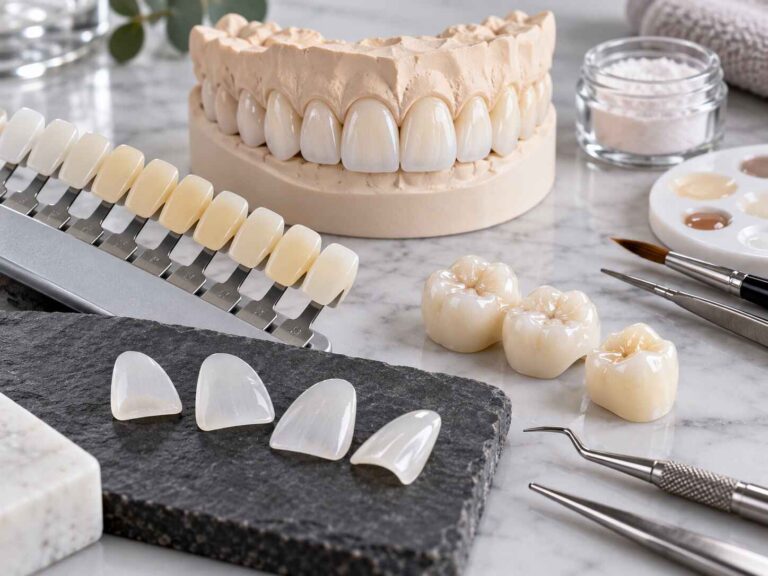
That is why I such as using material coordination in full-mouth rehabilitation as the real decision structure. Anterior teeth might require split E.max, feldspathic porcelain, or split zirconia. Posterior teeth often need a product that forgives feature better than it flatters photography.
3. Minimized Breaking Stress And Anxiety
Cracking is pricey.
Not just because the reconstruction fails, however due to the fact that the failing creates a triangle of blame: the dentist condemns the laboratory, the laboratory blames clearance, and the individual blames everybody. Full contour zirconia does not get rid of every failing setting, but it does decrease the traditional veneering-porcelain damaging problem that haunted earlier zirconia frameworks.
The FDA tool data source also shows that complete shape zirconia is not some informal lab hack. The NobelProcera HT ML Complete Shape Zirconia Crown appears in FDA 510(k) records under K153534, with the gadget name clearly provided as a full contour zirconia crown.
Guideline does not confirm clinical greatness. It verifies the classification is actual, called, and readily serious.
The Facility Choice Table: When Full Contour Zirconia Wins
Scientific Scenario
Full Contour Multi-layer Zirconia
Layered Zirconia
E.max/ Lithium Disilicate
PFM
Posterior solitary crowns
Solid fit, particularly under heavy feature
Useful when esthetic layering is needed, however chipping danger increases
Possible in chosen instances, however clearance and bonding matter
Sturdy, yet metal opacity and esthetics can restrict usage
Bruxism or high occlusal lots
Commonly favored when brightened and designed properly
Riskier if porcelain veneer is overwhelmed
Generally not my first choice for heavy bruxers
Historically usual, however less esthetic
Implant-supported crowns
Excellent choice due to the fact that monolithic structure lowers veneer failing risk
Can look far better however includes user interface threat
Case-dependent and frequently less forgiving
Common historically, however gray show-through can be ugly
Anterior aesthetic area
Appropriate just with careful color and translucency preparation
Commonly far better for depth and characterization
Usually more powerful aesthetic candidate
Typically weak aesthetic option
Rapid digital workflow
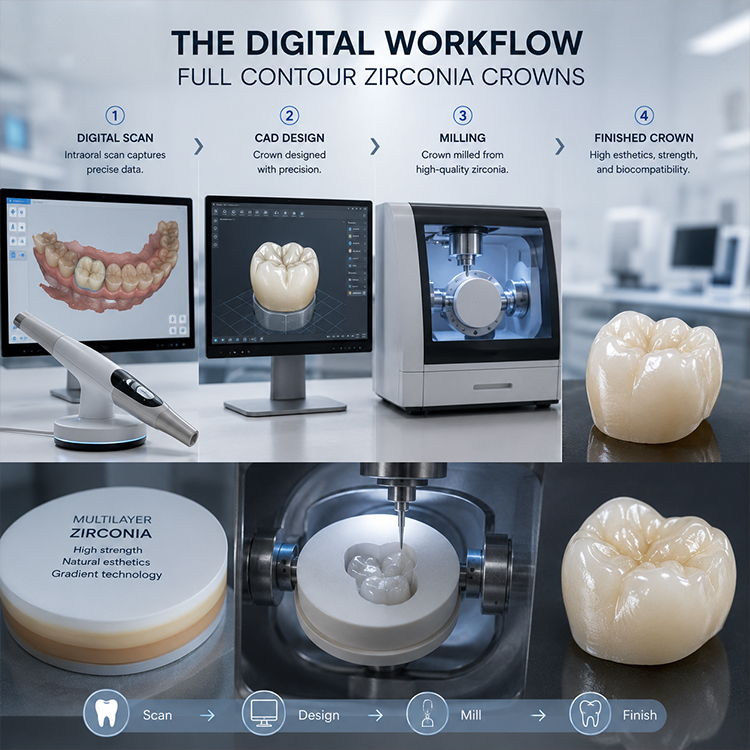
Exceptional CAD/CAM fit for repeatable manufacturing
More handwork needed
Digital-friendly however more protocol-sensitive
Extra conventional operations
Main failure issue
Occlusion, polish, fit, shade monotony
Breaking, color, layer bond
Crack, debonding, prep limitations
Esthetics, metal margin, porcelain chip
The Expert Problem: Clinics Frequently Choose Zirconia for the Incorrect Factor
Some centers choose zirconia due to the fact that they desire fewer problems. Fair.
But some pick it since they intend to stay clear of medical diagnosis. Unfair.
Complete contour zirconia crowns will certainly not deal with bad margin design. They will not rescue under-reduced preps. They will not make a missing bite record pointless. They will not transform an esthetic-zone main incisor right into a ceramic masterpiece just because the blank states “multi-layer.”
This is where the far better laboratories divide themselves. A serious laboratory asks whether the instance requires toughness, masking, clarity, enamel-like texture, connector support, dental implant user interface control, or easy posterior survival. Artist Dental Laboratory’s guide on just how margin design varies between zirconia crowns and E.max crowns is relevant right here because margin geometry is typically where the product choice materializes, not academic.
I do not trust material loyalty. I trust sign discipline.
What Clinics Needs To Need From a Zirconia Laboratory
Clinics should require proof of workflow control before they require less expensive units.
The minimum bundle should consist of CAD/CAM accuracy, consistent sintering, shade-system discipline, correct nesting strategy, contact-point control, occlusal confirmation, final polish, and a clear remake policy. If a lab can not describe just how it manages occlusal thickness, port style, surface area roughness after modification, and shade slope selection, I would not send them high-function posterior work.
For premium aesthetic situations, clinics need to also ask whether the laboratory understands when not to use complete contour zirconia. That is why a web page like exactly how to evaluate a lab’s capability to provide costs former esthetics belongs in this discussion. The most effective laboratory is not the one that markets one material for whatever. The most effective lab understands when to reject the very easy response.
Why Complete Shape Zirconia Maintains Winning the Business Disagreement
Business instance is painfully easy: fewer chips, fewer remakes, fewer chairside apologies, and a more foreseeable electronic manufacturing chain.
That is not glamorous. It is profitable.
Clinics running everyday crown-and-bridge process require restorations that seat easily, make it through real occlusion, and look appropriate without requiring brave chairside adjustments. Full shape zirconia crowns fit that rhythm. They are not the only solution, but they are one of the few ceramic alternatives that can deal with quantity, function, and appropriate esthetics in the exact same manufacturing lane.
And when clinics are sending instances through a B2B workflow, the functional details issue. Musician Dental Lab’s call and situation need type asks for product kind, product preference, and sign kind, including crowns and bridges, zirconia, lithium disilicate, single crowns, full-arch restorations, former situations, and implant-supported prosthetics. That is the proper intake structure because “make it good” is not a prescription.
Frequently asked questions
What are full contour zirconia crowns?
Complete shape zirconia crowns are monolithic zirconium dioxide reconstructions crushed or made in total anatomical tooth form, generally without different veneering porcelain, so they can offer high crack resistance, effective CAD/CAM production, and appropriate esthetics via multilayer shade slopes and surface finishing.
In facility language, they are typically selected for posterior crowns, implant-supported crowns, and individuals with heavier bite forces. They can be brightened, stained, glazed, or identified depending upon the laboratory protocol and the dentist’s esthetic target.
Are multi-layer zirconia crowns much better than routine zirconia crowns?
Multi-layer zirconia crowns are zirconia reconstructions made with integrated shade and translucency gradients, allowing the crown to look less level than older opaque zirconia while preserving most of the stamina and workflow advantages that made monolithic zirconia prominent in crown-and-bridge dental care.
They are not automatically better in every instance. A high-translucency multilayer space might be much less appropriate for serious masking or high-load back circumstances than a more powerful, lower-translucency product. The right answer relies on prep color, clearance, attack pressure, tooth setting, and esthetic assumption.
Why do centers select complete contour zirconia rather than E.max crowns?
Clinics choose full shape zirconia instead of E.max crowns when stamina, cracking resistance, posterior function, implant assistance, or quick electronic manufacturing matters greater than optimal glass-ceramic clarity, specifically in molars, bruxism-risk people, and regular crown-and-bridge operations.
E.max can be excellent in former and picked posterior cases, however it is more technique-sensitive around bonding, density, prep work, and occlusion. Zirconia is frequently the much safer company selection when the instance is practical very first and cosmetic second.
Do full contour zirconia crowns look natural?
Complete shape zirconia crowns can look all-natural when the situation makes use of the best multilayer space, appropriate thickness, correct color option, managed surface texture, and mindful discoloration or sprucing up, yet they can look synthetic if the lab overbuilds contours or ignores worth, translucency, and surrounding tooth character.
This is why dental experts need to send shade photos, stump shade information, opposing scans, bite records, and esthetic recommendations. Zirconia does not forgive vague communication. It compensates disciplined situation information.
Are monolithic zirconia crowns good for posterior teeth?
Monolithic zirconia crowns are commonly a solid back option since their single-piece structure lowers veneering porcelain damaging risk and sustains high-load feature, provided the prep work, occlusal style, surface polish, material kind, and cementation strategy are taken care of appropriately.
I would certainly still be cautious with severe bruxism, poor clearance, doubtful bonding surface areas, or terribly designed implant occlusion. Zirconia is solid, yet bad design can beat solid material.
Your Following Action: Quit Choosing Zirconia by Behavior
Complete contour zirconia crowns must not be the lazy default. They should be the controlled selection.
Utilize them when the instance requests for stamina, chipping resistance, posterior reliability, implant assistance, and electronic process efficiency. Prevent them when the case demands optimum enamel-like deepness, severe former characterization, or a ceramic method that depends more on optical layering than mechanical control.
If your clinic or lab is examining multi-layer zirconia crowns for crown-and-bridge, posterior, or implant-supported instances, send out a test situation with total STL scans, margin notes, bite records, color images, and occlusal instructions through Artist Dental Laboratory’s item questions and case entry page. Request the zirconia suggestion, the shade-gradient reasoning, the clearance requirement, and the finishing procedure before you authorize quantity job.