Full E.max Veneers vs Layered E.max Veneers: What Is the Real Difference?
One material. Two philosophies.
Most people talk about E.max veneers as if the brand name settles the argument, but that is lazy thinking, because a full E.max veneer is a monolithic lithium-disilicate restoration while a layered E.max veneer adds porcelain build-up to a lithium disilicate base to chase more depth, vitality, incisal effects, and texture. So the real difference is not the logo. It is the amount of variability you are willing to buy into.
Table of Contents
Stop Calling This a Beauty Debate
Here is my blunt read. Full E.max is the lower-variance option.
Layered E.max is the prettier answer only when the case truly needs hand-built incisal translucency, halo, internal characterization, and more ceramic artistry, because once you add another esthetic layer, you also add another place for color drift, thickness inconsistency, cooling stress, and human interpretation to creep in. And yes, that matters more than most sales pages admit.
If you scan Artist Dental Lab’s own product stack, the hierarchy is pretty obvious: the standard lithium disilicate E.max veneer page frames E.max as the balanced everyday option, the full E.max veneer page leans into predictable fit and consistent strength, the layered E.max veneer page leans into premium anterior characterization, and the feldspathic veneer page pushes even further toward enamel-like light behavior. That is not random navigation. That is the site quietly admitting these are different risk profiles.
What “Full” and “Layered” Actually Mean When the Case Hits the Lab
Full E.max means one ceramic body and fewer moving parts
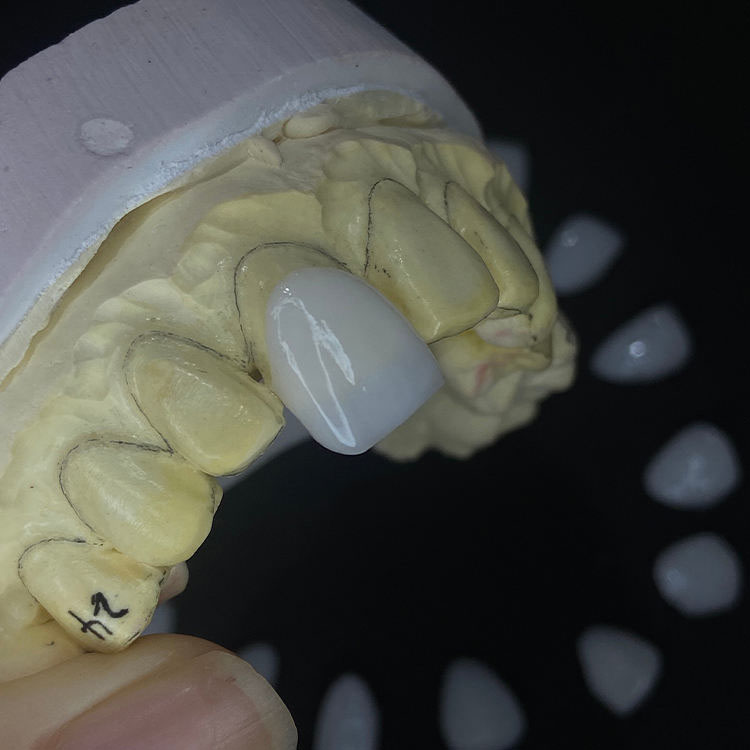
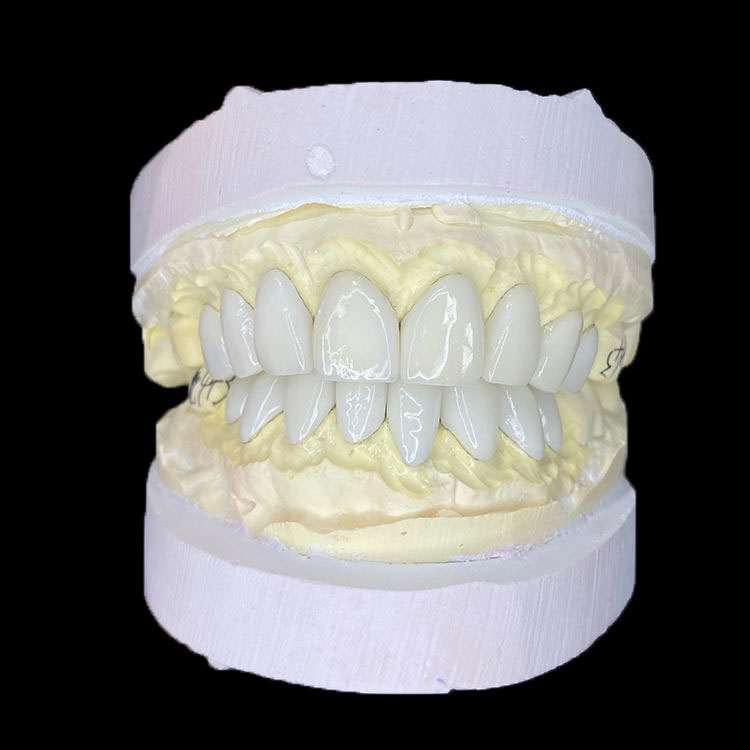
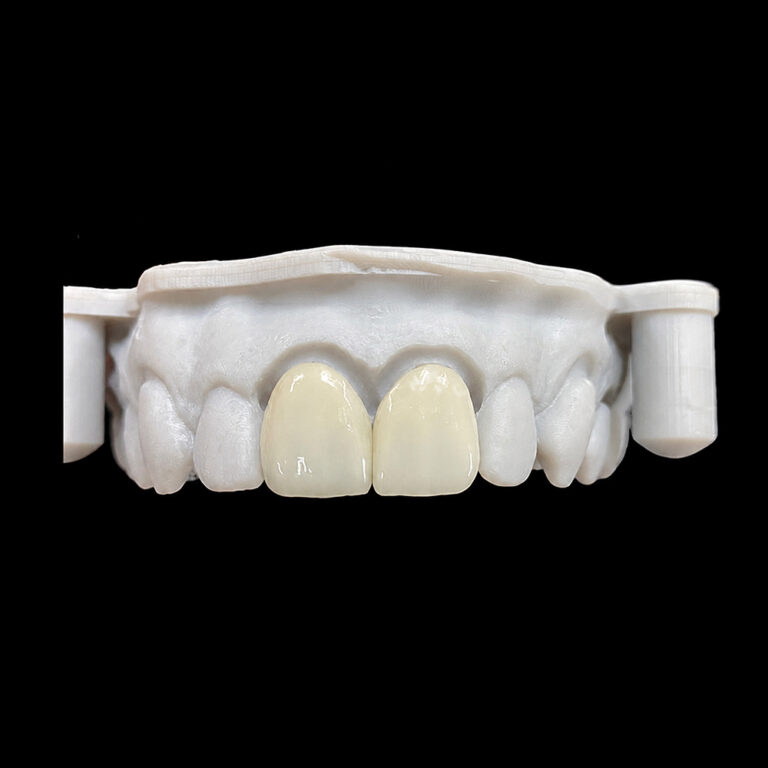
A full E.max veneer is monolithic lithium disilicate, usually finished with stain, glaze, gloss control, and surface texture rather than with an added veneering porcelain layer, which is why labs sell it as the more repeatable route for multi-unit smile cases where fit, value control, and cross-unit consistency matter more than showing off a ceramist’s incisal magic. That is also why I tend to trust it more when the doctor wants canine-to-canine discipline, not a single hero central incisor.
Layered E.max means more optical freedom and more technique sensitivity
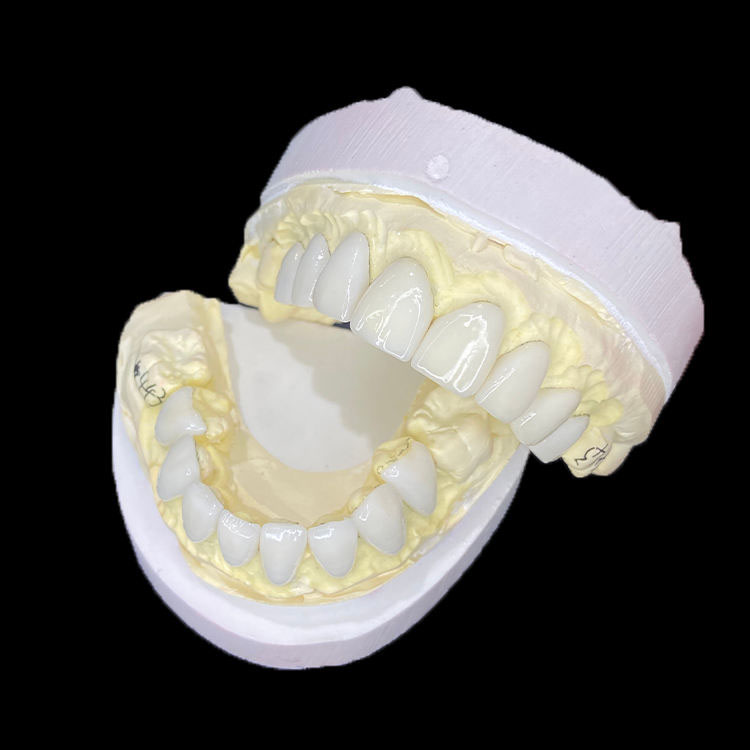
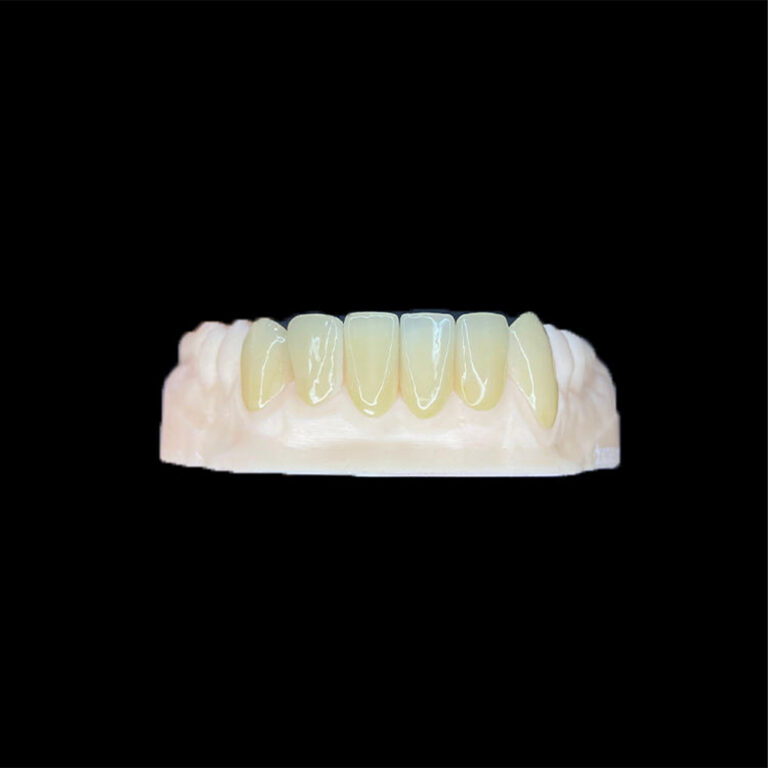
A layered E.max veneer starts with a lithium disilicate core and then adds porcelain layering to build depth, translucency gradients, halo effects, and surface texture, which is exactly why it can look outstanding in high-end anterior work and exactly why it becomes less forgiving when the prep space is inconsistent, the stump shade is sloppy, or the photos are weak. Beautiful? Absolutely. Automatic? Not even close.
Ivoclar’s own system architecture tells the same story in a less dramatic tone: IPS e.max CAD is marketed with 530 MPa flexural strength and multiple translucency options, while IPS e.max Press offers HT, MT, LT, MO, HO, Impulse, and Press Multi ingots so technicians can choose between thin veneer use, masking, cut-back, and layering depending on the optical target. Same family. Different manufacturing logic.
The Comparison That Actually Matters
I do not care what the brochure says. I care what goes wrong.
Decision Point
Full E.max Veneers
Layered E.max Veneers
My Hard-Truth Take
Build style
Monolithic lithium disilicate
Lithium disilicate core + porcelain layering
Same ceramic family, different complexity
Shade control
More repeatable across multiple units
More dependent on stump shade, cement, and ceramist execution
Full usually wins when consistency is the goal
Esthetic ceiling
High, especially with staining and texture
Higher in elite anterior characterization cases
Layered wins only when the case truly needs it
Mechanical margin
Fewer interfaces, fewer extra variables
Added veneering layer increases sensitivity to technique and chipping risk
Single-unit or elite anterior work with demanding incisal effects
Choose by case difficulty, not ego
Remake risk
Lower when the protocol is disciplined
Higher when photos, reduction, and cement control are sloppy
Most “material failures” are workflow failures
That table is my shorthand version of what the product pages, Ivoclar’s material data, and the veneer literature are all saying at once: the chemistry is not the whole story, and the real fight is between control and customization. Which one do you need more?
The Data Most Sales Pages Conveniently Skip
Lithium disilicate veneers work. The argument starts after that.
A 2025 review of bonding protocols for lithium disilicate veneers summarized several studies and reported a 96.81% survival rate for lithium disilicate laminate veneers over an average 10.4 years, while the 2019 clinical follow-up on 79 multilayered anterior lithium disilicate veneers reported a 98.7% survival rate at 3 years with only one detachment. That is why I do not buy the cartoon version of this debate where one side is “strong” and the other side is “esthetic.” In competent hands, both can work very well.
Enamel preservation still beats clever marketing
A 2025 long-term veneer survival study found a cumulative 15-year survival rate of 96%, but it also found that teeth with dentin exposure had higher failure risk, with an odds ratio of 3.47 when dentin exposure exceeded 30%. That is the part too many cosmetic pitches skip. Not sexy enough, I guess. But it is the real part. Prep design still runs this business.
Shade drift is where the monolithic camp gets loud
Now the uncomfortable number. In a 2024 PMC study comparing IPS e.max CAD and IPS e.max Press laminate veneers across four cement shades, the CAD groups showed ΔE values from 0.5 to 2.306, while the Press groups ranged from 5.272 to 8.848, and the same paper treated values above 3.5 as clinically unacceptable. This was not a direct full-versus-layered clinical trial, so I am not going to fake certainty, but it is a very clear reminder that cement shade, manufacturing route, thickness, and translucency can wreck your “perfect shade” story fast.
Strength still matters, even if it is not the whole case
Ivoclar lists IPS e.max CAD at 530 MPa flexural strength, and a widely cited narrative review concluded that monolithic lithium disilicate generally shows stronger fracture and fatigue behavior than bilayered versions in vitro; the same review reported veneered lithium disilicate crowns with markedly lower fracture-load values than monolithic ones. I would not turn that into a one-line rule for every veneer, but I also would not pretend an added veneering layer is mechanically free. It is not.
Where Layered E.max Still Earns Its Keep
Let’s be fair. Layered E.max has a real job.
When the case calls for fine incisal effects, warmth control, internal characterization, delicate surface texture, and the kind of anterior detail that makes a ceramist earn the invoice, layered E.max is still the better artistic platform, and Artist Dental Lab says exactly that on its layered E.max veneer page. I agree. I just do not think that indication applies to every six-unit smile case being sold on Instagram.
And if the patient wants the most enamel-like light behavior possible, the discussion can even move beyond E.max into feldspathic veneers, which the same site positions for ultra-natural translucency and refined micro-texture. That is why the “best veneer material” question is usually a bad question. Better for what, exactly?
The Business and Legal Angle Most People Pretend Is Not Part of the Story
That legal and economic reality is exactly why I care about workflow more than glamour shots. On Artist Dental Lab’s client cases and success stories page, the company says it serves partners in 20+ countries, lists a typical 7–14 day turnaround, and describes a 28-clinic North American DSO that cut standard case turnaround from 15–20 days to 9–11 days after consolidating production. That does not prove one veneer type is morally superior. It proves the obvious: the real difference between full and layered E.max often shows up in operations, remakes, and how much chaos your system can absorb.
The same logic shows up in the site’s E.max crowns page, which also emphasizes translucency, anatomy, and fit consistency. Material quality matters. But prescription quality, photos, reduction notes, and stump shade still decide whether the case ends in applause or a remake bag.
FAQs
What is the real difference between full E.max and layered E.max veneers?
The real difference is that full E.max veneers are monolithic lithium-disilicate restorations made as one ceramic body, while layered E.max veneers combine lithium disilicate with added porcelain to create more incisal effects, texture, and optical depth, which raises the esthetic ceiling but also increases technique sensitivity and workflow variability. After that, everything else is just detail.
Which is stronger: full E.max or layered E.max?
Full E.max veneers are generally the safer mechanical bet because the monolithic design removes the extra veneering layer that can add more interfaces and more opportunities for chipping or fracture-related complications, although actual survival still depends heavily on enamel preservation, bonding quality, occlusion, and disciplined case selection. That is why I call it the lower-drama option, not the magic option.
Do layered E.max veneers always look more natural?
Layered E.max veneers can look more natural in elite anterior cases because the ceramist can control translucency gradients, halo, warmth, and surface texture more aggressively, but they are not automatically better-looking when prep space, stump shade, cement shade, and photo communication are weak or inconsistent. In other words, artistry without control is just expensive hope.
Are E.max veneers worth the money?
E.max veneers are worth the money only when the case truly benefits from bonded lithium disilicate and the dentist preserves enamel, controls the shade data, and manages occlusion carefully, because the national consumer price range is high and the financial pain of remakes compounds quickly in multi-unit cosmetic cases. I would never treat them like a casual beauty purchase.
What is the best choice for multi-unit smile makeovers?
The best choice for multi-unit smile makeovers is usually the option that gives the clinic the tightest control over value, translucency, fit, and cross-unit consistency, which often favors full E.max veneers, while layered E.max is better reserved for cases where the extra characterization genuinely changes the final result enough to justify the extra variability. That is a workflow answer, not a fan-club answer.
Your Next Move
I will say it plainly. Default to control first.
If I were building a clinic protocol today, I would start with the full E.max veneer workflow for multi-unit cases where consistency, fit discipline, and lower remake risk matter most; reserve the layered E.max veneer option for true showpiece anterior cases; and keep the feldspathic veneer route for the rare case that genuinely needs that extra optical finesse. Then I would compare those choices against the lab’s client-case benchmarks and, if the workflow makes sense, start a trial case with Artist Dental Lab. That is how professionals make this decision. Not by asking which brochure sounds prettier.