Are E.max Crowns Suitable for High-Occlusion Back Situations?
The Short Response Dentists Hate: In Some Cases, Yet Not Casually
E.max crowns are suitable for some high-occlusion posterior instances, yet only when the preparation, ceramic density, bonding method, opposing dentition, and patient risk account all line up. I would not market them as the universal solution for molars. That slouches dental care spruced up as esthetics.
Load informs reality.
When a patient has hefty occlusion, reduced posterior clearance, high excursive contacts, polished wear elements, possible rest bruxism, or a practice of destroying restorations while politely declaring “I do not grind,” the product choice stops being a beauty competition and ends up being a risk audit. Why pretend or else?
E.max is lithium disilicate glass-ceramic, commonly discussed chemically as Li ₂ Si Two O FIVE. It is solid for a glass-ceramic. It is also still a glass-ceramic. That distinction issues.
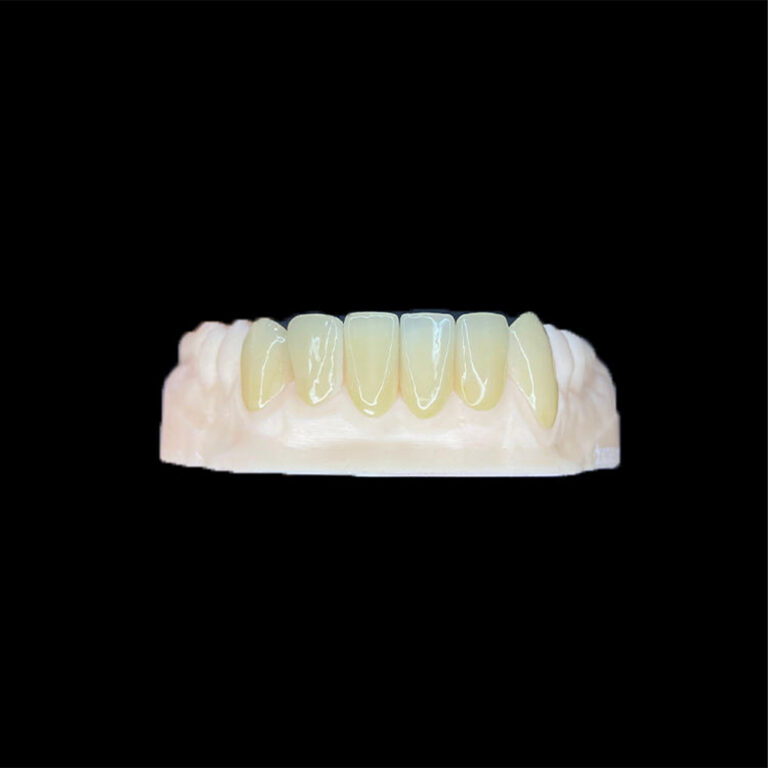
Musician Dental Lab positions its E.max crowns around natural translucency, exact anatomy, esthetic zones, and picked posterior usage. I like that phrasing since it does not overpromise. The very same website settings full-contour multilayer zirconia reconstructions around posterior stamina, monolithic layout, practical occlusion, implant-supported instances, and lowered damaging threat. That is the split. Not love. Not sales brochure language. Situation choice.
Table of Contents
The Material Truth: E.max Is Strong, Zirconia Is Much Less Sentimental
The unpleasant fact is that “high stamina” suggests different points depending on the material family members. Ivoclar lists IPS e.max CAD with a flexural stamina of 530 MPa and fracture sturdiness of 2.11 MPa · m 1ST ᐟ ² on its main IPS e.max CAD material page. That goes over for lithium disilicate. However zirconia products usually being in a much greater mechanical group, specifically when posterior lots is the main enemy.
Does that mean zirconia constantly wins?
No. And any individual claiming that is marketing anxiety as opposed to judgment.
A 2023 research in the Journal of Advanced Prosthodontics reported 6-year cumulative survival of 96% for monolithic CAD-CAM lithium disilicate glass-ceramic crowns versus 90.8% for metal-ceramic crowns in a 50-crown retrospective contrast, with only 2 complications in the lithium disilicate group versus 12 in the metal-ceramic team. That is not weak proof. It is a serious pointer that posterior lithium disilicate crowns can execute well when the case is regulated.
But right here is my more difficult viewpoint: survival statistics do not excuse bad indicator choice.
High-occlusion instances are not “posterior cases” in the generic sense. They are posterior instances with mechanical hostility. A first molar under controlled feature is something. A 2nd molar with minimal clearance, a tight lift pattern, and a client that squashes nightguards is another animal totally.
Where E.max Crowns for Back Teeth Make Good Sense
E.max crowns for posterior teeth make good sense when the tooth has sufficient decrease, the prep work is rounded and encouraging, the occlusion can be tidied up, the medical professional can bond predictably, and the person is not a strolling crack test.
I would certainly consider E.max crowns for molars when:
The occlusal clearance supports adequate ceramic thickness.
The preparation has no sharp internal line angles.
The margin is readable and not a heroic plume edge.
The villain is natural enamel or a regulated corrective surface area.
The situation requires better translucency than zirconia can easily provide.
The patient has low-to-moderate parafunctional danger.
The clinician is willing to secure the remediation with occlusal monitoring, not simply seal and hope.
Slim crowns exist.
A minimally lowered lithium disilicate crown may look efficient on a digital check, but if the distal incline is slim, the centric stop is ugly, and the individual strikes that device like a hammer, the failure was planned prior to the crown was crushed. Who has that error– the dental expert, the laboratory, or the material?
This is where Musician Dental Laboratory’s article on zirconia crowns vs E.max crowns margin design ends up being valuable. The margin is not a detail. It is the border where ceramic density, scan readability, concrete actions, and fracture risk meet.
High Occlusion Adjustments the Indication: Stop Calling Every Posterior Case the Very Same
High occlusion indicates the posterior crown is being asked to survive heavier-than-average pressure, less flexible call timing, or duplicated parafunctional tension. Because setup, the very best crown product for high bite pressure is not automatically the most beautiful ceramic; it is the material that makes it through the person’s genuine function.
The bruxism literature is unpleasant, but it is not quiet. A 2022 randomized trial discussion in Journal of Clinical Medication noted that a previous 2019 research of 95 back monolithic zirconia systems located 80% of disastrous failures took place in patients with clinical indicators of bruxism, while an additional randomized trial reported no fractures or chip-off cracks after 3 years for monolithic zirconia and lithium disilicate single crowns. The useful lesson from ceramic crowns and rest bruxism study is not “bruxers are safe.” The lesson is that material, design, medical diagnosis, and follow-up all matter.
I do not trust fund one-factor thinking here.
If someone asks, “Are E.max crowns appropriate for molars?” my response is: yes, in selected molars. If a person asks, “Are E.max crowns appropriate for high-occlusion molars?” my answer adjustments: just with enough space, tidy occlusal design, adhesive self-confidence, and sincere threat control.
That is not conservative. It is readily rational.
Remakes cost money. Chairside modification costs trust fund. Stopped working posterior ceramic cases cost every person time, specifically when the lab was handed an under-reduced preparation and after that condemned for appreciating physics.
E.max vs Zirconia in Posterior Ceramic Crowns: The Table I Would Actually Make use of
The Lab-Side Risk Nobody Wants in the Sales Duplicate
Right here is the ugly component. Several E.max failings are not “E.max failures.” They are interaction failures.
The dental practitioner sends a scan. The bite document is obscure. The stump shade is missing. The occlusal scheme is assumed. The prep has barely adequate clearance in one useful groove. The prescription claims “E.max crown, color A2, make natural.” Then everyone acts surprised when the restoration requires change or, even worse, becomes a remake prospect.
I hate that operations.
For high occlusion dental crowns, the lab needs greater than a documents. Send out the STL scans, opposing arch, bite enrollment, margin notes, stump color, pictures, clearance concerns, call preferences, and any proof of parafunction. If the instance belongs to a larger rehabilitation, Artist Dental Lab’s guide on collaborating former and posterior products in full-mouth rehabilitation makes the right argument: light belongs ahead; lots dominates the back.
And indeed, I am oversimplifying intentionally.
The anterior section is where clarity, worth, incisal impacts, and individual perception get loud. The posterior sector is where chewing performance, call stability, fracture resistance, and material tiredness earn money in full. A situation that disregards that department is not advanced. It is fragile.
My Choice Regulation for High-Occlusion Posterior Situations
I use a simple rule: E.max crowns can be selected for high-occlusion posterior situations only when the professional team can show the risk is controlled prior to the laboratory starts designing.
Not hope. Evidence.
If the case has restricted occlusal decrease, extreme wear, bruxism signs, second molar loading, dental implant assistance, doubtful seclusion for bonding, or a background of fractured repairs, I would normally move toward full-contour zirconia. If the instance has adequate clearance, a desirable prep, regulated calls, a patient that is not abusing the posterior sector, and a strong esthetic factor, E.max remains defensible.
That is the genuine answer to zirconia vs E.max crowns.
Not “which is much better?” Much better wherefore? Much better under what lots? Much better versus which antagonist? Much better with which cement? Much better for which individual?
The Situation Acceptance Checklist Prior To You Recommend E.max for Molars
Before I would green-light E.max crowns for molars in high-occlusion scenarios, I would desire the scientific group to answer these questions:
Exists sufficient occlusal clearance for the prescribed lithium disilicate crown density?
Are centric stops situated far from thin unsupported ceramic?
Are excursive contacts controlled?
Is the opposing teeth natural enamel, ceramic, zirconia, or steel?
Is the patient a presumed bruxer?
Will the clinician bond adhesively or make use of a various cementation procedure?
Is the margin smooth, constant, and legible?
Is the crown single-unit, splinted, implant-supported, or part of a larger corrective plan?
Would certainly a zirconia crown lower threat without damaging the aesthetic objective?
If those answers are vague, I would not condemn the material. I would certainly condemn the process.
For bigger center teams, representatives, or private-label restorative programs, the very same logic needs to be constructed right into SOPs. Artist Dental Lab’s OEM/ ODM services web page points out custom-made design policies, product selection, finish choices, QC checkpoints, occlusal plan support, and case approval regulations. That is precisely where high-occlusion E.max situations ought to be filteringed system– prior to manufacturing, not after a remake.
FAQs
Are E.max crowns appropriate for molars?
E.max crowns appropriate for some molars when lithium disilicate density, glue protocol, prep work design, antagonist material, and occlusal system are managed, however they are not my default choice for every high-force posterior instance since parafunction, minimal clearance, and steep assistance can turn an attractive reconstruction right into an obligation. After that very first filter, the choice becomes case-specific.
For low-risk molars with great reduction and aesthetic demand, E.max can be a smart option. For second molars, bruxers, implant-supported posterior systems, or cases with bad clearance, I would normally compare it seriously versus zirconia prior to dedicating.
What is the very best crown product for high bite force?
The best crown material for high bite force is usually the one that balances crack resistance, occlusal clearance, antagonist wear actions, prep work support, cementation integrity, and esthetic requirement; in lots of hefty posterior instances, monolithic zirconia should have first factor to consider over lithium disilicate. That does not make E.max weak.
It indicates high-load molars ought to not be planned like aesthetic premolars. E.max crowns remain valuable, but only when the pressure issue is smaller than the optical benefit.
Are lithium disilicate crowns strong sufficient for posterior teeth?
Lithium disilicate crowns are strong sufficient for selected posterior teeth when appropriate ceramic thickness, rounded prep work geometry, controlled occlusion, and proper cementation are present, with scientific researches reporting strong survival outcomes for posterior monolithic lithium disilicate crowns over multi-year observation periods. The word “selected” is doing a great deal of work.
A posterior crown is not instantly a high-occlusion crown. As soon as hefty function goes into the situation, the prescription needs even more discipline.
Is zirconia far better than E.max for high occlusion oral crowns?
Zirconia is commonly better than E.max for high occlusion oral crowns when posterior force, parafunction, restricted room, dental implant support, or bridge layout dominates the instance, because full-contour zirconia typically supplies a stronger mechanical safety margin than lithium disilicate. But “better” relies on the scientific target.
If the individual needs high esthetics in a noticeable premolar zone and the occlusion is convenient, E.max may still win. If the crown should make it through punishment, zirconia generally gets my vote.
What should dental practitioners send out the laboratory for high-occlusion E.max crowns?
Dental professionals ought to send out STL scans, opposing scans, attack records, margin notes, stump color, scientific images, occlusal/contact guidelines, reduction problems, parafunction history, and the aesthetic target before asking the lab to produce high-occlusion E.max crowns. Without those documents, the lab is developing inside a haze.
The more force involved, the less resistance there is for guessing. High-occlusion posterior ceramic crowns need a situation data, not just a color tab.
Final Thoughts: Do Not Ask E.max to Do Zirconia’s Job
E.max crowns are not delicate decorations. They are genuine lithium disilicate crowns with outstanding aesthetic worth and tested posterior capacity in selected instances.
Yet high occlusion transforms the offer.
If the instance is a controlled back repair with appropriate room, great bonding conditions, and a genuine esthetic reason, E.max can make sense. If the case is a punishing molar, a bruxer, a limited 2nd molar, a dental implant crown, or a high-force rehabilitation zone, stop compeling a beauty-first product right into a strength-first job.
Send the laboratory the full case data, compare E.max against zirconia truthfully, and pick the material that matches the mouth– not the advertising line. For situation planning, begin with Artist Dental Laboratory’s E.max crowns and full-contour multilayer zirconia process, then submit the occlusal information prior to production. That is just how you lower remakes. That is just how posterior crowns endure.