How Premium Labs Can Use Case Stories to Market High-End Anterior Restorations
Pretty photos fail.
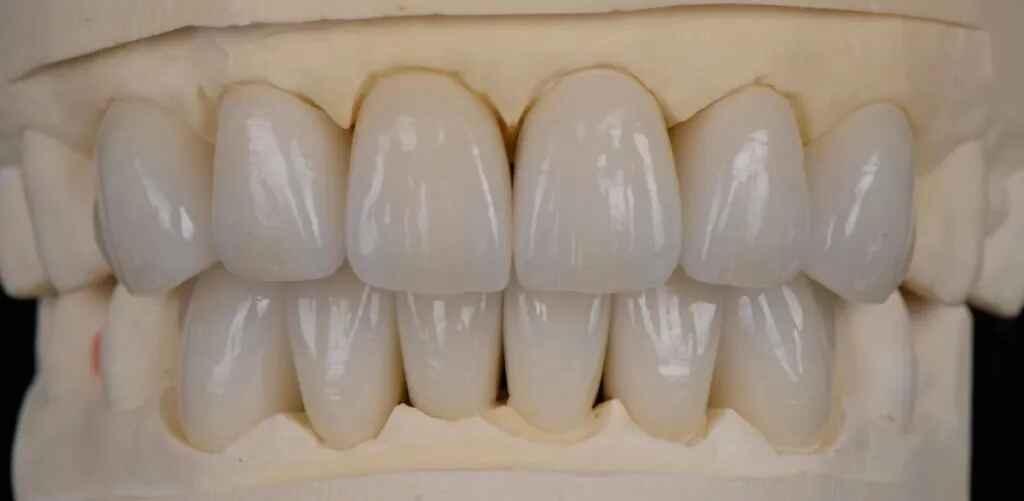
When a laboratory publishes a perfect final smile without showing the preparation, substrate, shade problem, material decision, occlusal risk, communication record, or quality-control process behind it, the image may earn attention but does almost nothing to prove repeatable competence.
What, exactly, did the lab demonstrate?
Here is my blunt view: most dental lab marketing turns high-end anterior restorations into a beauty contest. Every veneer is bright. Every incisal edge is photographed under flattering light. Every caption says “natural result,” as though naturalness were a measurable production specification.
It is not enough.
A premium lab should market the decisions behind the restoration, not merely the restoration itself. That means turning selected clinical cases into evidence-rich stories that show dentists how the laboratory thinks when the case is difficult, expensive, visible, and unforgiving.
Case Stories Sell Judgment, Not Ceramic
Dentists are not buying lithium disilicate, feldspathic porcelain, or layered zirconia as isolated materials. They are buying a lower probability of an embarrassing seating appointment.
They want to know whether the laboratory can interpret incomplete information, identify a risky prescription, control value across multiple units, reproduce surface texture, manage stump-shade influence, and say no when the requested material is wrong.
A credible case story answers those questions.
A 2025 BMC Oral Health study on dental photography and social media surveyed 552 adults attending public and private dental facilities in Saudi Arabia. Women were more likely to report that viewing previous cases affected their choice of dentist, with an odds ratio of 2.025 and a 95% confidence interval of 1.253 to 3.274.
That does not prove every Instagram carousel creates a new patient. It does prove that previous-case imagery can influence provider selection, especially when viewers use visual evidence as a proxy for expertise.
But labs sell to professionals. The standard should therefore be higher.
A dentist comparing laboratories does not just need a close-up of central incisors. The dentist needs enough evidence to decide whether the result came from disciplined case management or from favorable anatomy, aggressive photography, and luck.
That is why a premium lab should build its dental laboratory case studies around buyer questions already represented in its Client Cases and Workflow resources: What information was received? What was missing? What did the technician change? What risk was identified? What was checked before dispatch?
Those questions create trust because they expose process.
Table of Contents
What a High-End Anterior Restoration Story Must Prove
A serious anterior restoration case story should begin before ceramic production. It should begin with the decision.
Show the Original Problem Without Sanitizing It
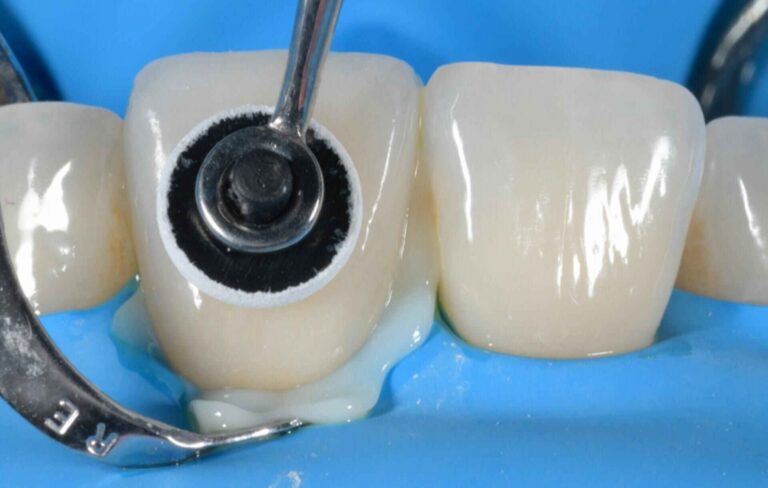
Identify the actual esthetic and functional problem. Was the case a single central incisor beside a highly characterized natural tooth? A six-unit veneer case with a canted midline? A high-smile-line patient with gingival asymmetry? A dark ND4 stump shade beneath a requested BL2 restoration? A bruxer asking for ultra-thin feldspathic veneers?
Specificity matters.
Record the tooth numbers, age range where consent permits, treatment category, preparation condition, remaining enamel, substrate shade, smile line, occlusal pattern, parafunctional history, and the clinician’s stated objective.
Do not write, “The patient wanted a better smile.”
Write, “The clinic requested six maxillary anterior veneers from teeth 6 through 11, with value increased from approximately A3 to BL3, while preserving a low-translucency cervical zone over two darker substrates.”
Now the reader has something to judge.
Explain Why the Material Earned the Case
Material selection is where premium labs can separate themselves from commodity suppliers.
For highly characterized anterior cases, a layered E.max veneer workflow can support controlled internal effects, incisal translucency, halo development, warmth, and customized surface texture. But the story should explain why those benefits justified the additional technique sensitivity.
For minimal-preparation cases with favorable enamel and demanding optical integration, a hand-layered feldspathic veneer option may offer the enamel-like light behavior the case requires. That does not make feldspathic porcelain the automatic “premium” answer. It makes it one answer within a narrow indication.
For multi-unit cases where consistent contour, shade, fit, and production repeatability matter more than extreme internal characterization, a full E.max veneer solution may be the more defensible prescription.
Name the chemistry where it adds meaning. Lithium disilicate is commonly represented as Li₂Si₂O₅. Zirconia is ZrO₂. These materials behave differently under reduction, bonding, surface treatment, functional load, and transmitted light.
Material names should never be used as decorative brand signals. Explain the trade-off.
Publish the Records That Made the Result Possible
A useful cosmetic dentistry case presentation should identify what the laboratory received:
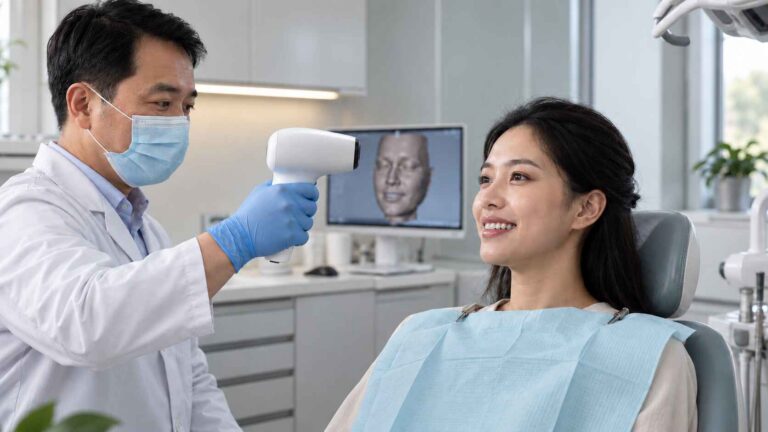
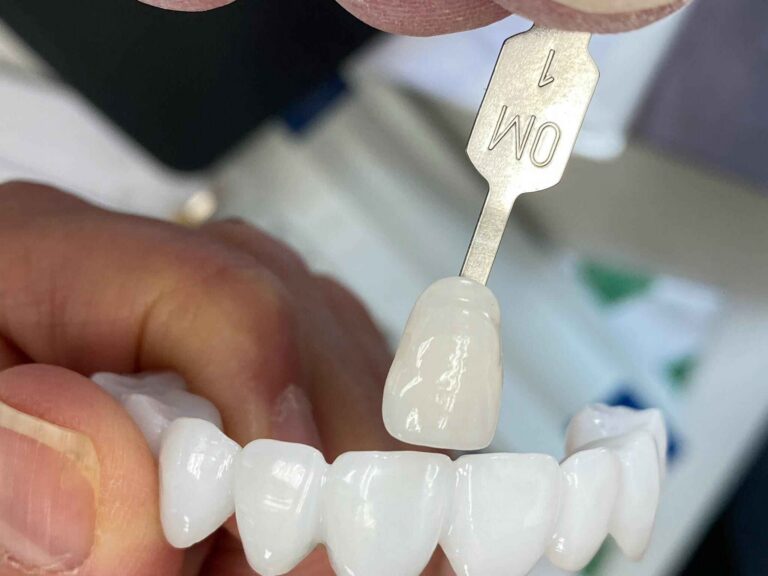
STL or PLY intraoral scans, retracted frontal photographs, full-face smile images, occlusal views, cross-polarized shade images, stump-shade records, VITA Classical or VITA 3D-Master references, wax-up files, midline notes, smile-line markings, incisal-edge targets, and surface-texture references.
The photography data also matters. A 100 mm macro lens, fixed magnification, repeatable flash arrangement, neutral background, gray reference card, and consistent white balance produce more defensible comparisons than two smartphone images captured under different room lights.
No magic. Just control.
And when records were missing, say so. A case story becomes more believable when it documents the additional photograph, corrected scan, new bite record, or revised prescription requested before production.
The Case Story Structure I Would Actually Publish
The strongest structure follows the sequence of a real case rather than the sequence of a sales brochure.
Case Story Element
Weak Gallery Content
Premium Case Story Content
What the Dentist Learns
Opening
“Beautiful veneer transformation”
Tooth numbers, case type, original complaint, functional and esthetic constraints
Standardized before-and-after views, close-ups, seated result and stated limitations
Whether the comparison is fair
Follow-up
None
Seating feedback, adjustments, patient response and 6-, 12- or 24-month review where available
Whether the restoration performed beyond delivery
CTA
“Contact us”
Submit a similar case with required files and expected review steps
What the reader should do next
This table is not merely a content template. It is a sales qualification system.
A dentist who reaches the end of a detailed story already understands the laboratory’s preferred records, communication standard, material logic, and case-review expectations. That reduces empty inquiries and improves the quality of trial cases.
Publish the Risk, Not Just the Smile
Most lab galleries hide risk because risk feels commercially uncomfortable. I think that is a mistake.
Risk creates credibility.
Consider long-term veneer data. A Medical University Innsbruck study indexed by PubMed followed 318 porcelain laminate veneers placed in 84 patients. Estimated survival was 94.4% at five years, 93.5% at 10 years, and 82.93% at 20 years.
The more interesting number was not the 10-year survival rate. It was the 7.7-times higher failure risk associated with bruxism.
Fracture accounted for 44.83% of recorded failures. Nonvital teeth also carried significantly greater failure risk, and smokers showed more marginal discoloration.
Those figures should change how a premium lab tells case stories.
Do not publish a veneer result as though the material defeated biology. Explain whether the patient had parafunction, how guidance was managed, whether enamel bonding was available, whether a protective appliance was prescribed, and why the selected restoration was considered reasonable.
That is not negative marketing. It is adult marketing.
A single central incisor story should be equally honest. Artist Dental Lab’s discussion of why single central incisor restorations are the hardest anterior cases is a strong topic model because it addresses an expensive clinical problem rather than presenting another anonymous crown.
The best case stories are built around tension:
The substrate was dark.
The space was limited.
The adjacent tooth was highly characterized.
The patient rejected orthodontics.
The preparation crossed from enamel into dentin.
The first scan did not capture the margin.
The requested shade would have produced excessive opacity.
Then the story shows what the laboratory did about it.
Would you trust a lab that never acknowledges a difficult decision?
Dental Before-and-After Stories Carry Real Legal Risk
Consent is not a line buried in a case-submission form.
In September 2025, the U.S. Department of Health and Human Services announced a $182,000 HIPAA settlement involving online patient success stories. HHS reported that Cadia Healthcare Facilities disclosed protected health information from 150 patients on public websites without first obtaining valid written HIPAA authorizations.
The settlement also required a corrective action plan monitored for two years.
This was not a dental laboratory case. The lesson still travels.
A close-up smile can remain identifiable when combined with a name, clinic, date, facial feature, unusual condition, testimonial, or social media account. Cropping the eyes does not automatically remove every privacy concern. A laboratory serving U.S. clinics should establish who obtains the authorization, what media and territories it covers, whether the patient may revoke future use, who owns the photographs, and whether the lab is allowed to republish the clinic’s material.
Local law varies. Get professional legal advice.
Testimonials require equal discipline. The FTC Consumer Reviews and Testimonials Rule took effect on October 21, 2024, and permits civil penalties for knowing violations involving fake or false reviews and testimonials.
A case story should therefore identify its source honestly. Was the statement supplied by the treating dentist? Was the clinic compensated? Was a discount, remake credit, free sample, or other benefit provided? Did the laboratory edit the quotation? Is the outcome representative, or is it an exceptional result selected from hundreds of routine cases?
The hard rule is simple: never manufacture proof.
Do not invent a dentist’s quotation. Do not turn an employee’s praise into an independent testimonial. Do not use AI-generated “patient” language. Do not label a stock photograph as a clinical result. Do not alter tooth contours, gingival color, surface texture, or shade in post-production and then call the image documentary evidence.
Premium branding cannot survive cheap deception.
Turn One Case Into a Complete Dental Lab Marketing System
A case story should not live once on a blog and disappear.
Start with one full article of roughly 1,200 to 2,000 words. Then extract a technical LinkedIn post, a five-slide sales presentation, a short email for partner clinics, a material-selection graphic, a chairside communication checklist, a 60-second laboratory video, and a condensed case card for the relevant product page.
But every format should preserve the same facts.
The blog may explain the entire case. The LinkedIn post may focus on the dark substrate. The sales deck may focus on the communication workflow. The email may invite dentists to submit a similar case. None of them should change the material, tooth numbers, timeline, or result.
I would organize the case library around problems rather than products:
Single central incisor matching.
Multi-unit veneer symmetry.
Dark stump-shade management.
High-smile-line anterior restorations.
Minimal-preparation veneer cases.
Bruxism and material selection.
Anterior implant emergence profiles.
Remake prevention through better records.
That structure matches how dentists search. They rarely wake up wanting “premium dental lab branding.” They search for an answer to the case currently sitting in their scanner inbox.
A product should enter the story only after the problem is clear.
FAQs
What is a dental lab case story?
A dental lab case story is a structured account of one restoration case that explains the patient or clinic problem, records the clinical and laboratory inputs, justifies the material and design decisions, documents quality controls, and presents the final outcome with consent, limitations, and relevant follow-up.
Unlike a simple gallery entry, it allows dentists, laboratories, DSOs, and distributors to evaluate the process behind the result and decide whether the lab’s experience is relevant to their own cases.
What should a premium anterior restoration case story include?
A premium anterior restoration case story should include the original esthetic problem, preparation and substrate details, shade and stump-shade records, photographs, scan data, material selection, design notes, ceramic characterization, quality-control checks, seating outcome, patient consent, and a clear statement explaining why the result may not represent every case.
Useful additions include tooth numbers, occlusal risks, VITA shade references, rejected material options, requested corrections, chairside adjustments, turnaround stages, and follow-up photographs.
Are before-and-after photos enough for dental lab marketing?
Before-and-after photos are visual evidence, but they are not a complete case story because they rarely explain the starting conditions, preparation design, occlusion, material, shade strategy, technician decisions, image standardization, complications, or follow-up that a dentist or laboratory buyer needs to judge whether the result is relevant.
Photos attract attention. Technical context converts that attention into professional trust.
How can laboratories use patient case stories without violating privacy rules?
Dental labs can use case stories responsibly by obtaining valid written authorization, limiting identifiable patient information, confirming who owns the photographs and records, disclosing paid or connected testimonials, avoiding unsupported performance claims, preserving the original files, and having local legal or compliance counsel review the release and publication process.
The clinic, laboratory, photographer, marketing agency, and hosting platform should also have clearly assigned responsibilities for storing, transferring, editing, approving, and removing case materials.
Which anterior restoration cases should a premium laboratory publish first?
A premium lab should publish cases that answer expensive buyer questions first, including single central incisors, dark substrates, multi-unit veneer symmetry, high-smile-line cases, limited reduction, bruxism-related material choices, implant-supported anterior crowns, remakes rescued through better records, and long-term follow-ups that show how the restoration aged.
Choose cases with complete records and a defensible decision trail, not merely those with the whitest final photograph.
Turn Your Next Anterior Case Into Verifiable Proof
Stop publishing anonymous teeth.
Select one anterior restoration with complete records, valid patient authorization, standardized photography, a documented material decision, and honest seating feedback. Build the story around the problem the clinic could not solve alone.
Then show your work.
Dental clinics and laboratory partners evaluating a complex veneer, anterior crown, or smile-design case can send a trial case brief to Artist Dental Lab with STL files, preparation details, shade and stump-shade records, smile photographs, occlusal notes, material preferences, and the esthetic result they need to achieve.