How Clinics Can Explain the Need for Premium Material Upgrades to Patients
A premium dental material upgrade should be explained as a change in clinical capability, not as a vaguely “better” version of the same restoration. The patient needs to understand what problem the upgraded material addresses, what benefit may be visible or functional, what limitations remain, and why the additional cost applies to this particular case.
That sounds obvious.
Yet many treatment presentations still collapse into one weak sentence: “The premium option looks better and lasts longer.”
I would not accept that explanation as a patient. Clinics should not expect patients to accept it either.
The hard truth is that patients rarely know what lithium disilicate, multilayer zirconia, layered ceramic, translucency, stump shade, flexural strength, or incisal characterization mean. They only hear a price difference. Unless the clinic converts technical distinctions into patient-level consequences, a legitimate material recommendation can sound like an upsell.
Patients Are Not Rejecting the Material—They Are Rejecting the Story
Cost matters. There is no point pretending otherwise.
The American Dental Association Health Policy Institute reported that approximately 13% of the U.S. population experienced cost barriers to dental care, compared with roughly 4%–5% for other healthcare services, in its national report on dental care use, coverage, and cost barriers. That means a patient may enter the consultation financially defensive before anyone says “zirconia” or “E.max.”
So the clinic has two jobs:
Explain the clinical recommendation accurately.
Prove that the price difference is connected to a meaningful difference in the treatment plan.
The second job is where many clinics fail.
They show two prices but do not show two material behaviors. They call one option “standard” and the other “premium,” as though the patient were comparing airline seats. They quote a laboratory surcharge without explaining what additional planning, processing, characterization, photography, finishing, or quality-control work the restoration requires.
That framing feels commercial because it is commercial.
Stop Selling Adjectives
Words such as “premium,” “advanced,” “superior,” and “high-end” carry almost no decision-making value by themselves. Replace each adjective with an observable or clinically relevant difference.
Do not say:
“The premium crown is more aesthetic.”
Say:
“This material gives the technician more control over translucency, surface texture, shade value, and the transition between the crown and your natural teeth. That difference matters here because the tooth is visible when you speak and smile.”
Do not say:
“Zirconia is stronger.”
Say:
“Because this tooth receives heavier biting force and you show signs of grinding, we are considering a zirconia design that provides a larger mechanical safety margin. The trade-off is that not every zirconia formulation produces the same optical result.”
Specificity builds trust.
Table of Contents
Explain the Diagnosis Before Naming the Upgrade
Patients should hear about the clinical problem before they hear the material name.
I use a simple rule: no material recommendation without a case-specific reason.
The sequence should be:
1. Identify the treatment pressure
Tell the patient what the restoration must manage:
Heavy posterior force
Bruxism or clenching
Limited restorative thickness
A dark stump or metal post
A high smile line
Several adjacent anterior restorations
Implant support
Long-span design
Limited enamel for bonding
A demanding shade match beside natural teeth
2. Explain why the basic option may be less predictable
This is not the same as calling it bad.
A standard material may remain clinically acceptable while offering less control over one part of the case. Perhaps it provides less masking. Perhaps it is more dependent on bonding. Perhaps a monolithic design is durable but cannot reproduce the same incisal depth as a hand-layered restoration.
That is an honest discussion. It also gives the patient a genuine choice.
3. Introduce the upgraded material as a response
Only now should the clinic name the material.
For example:
“Because the tooth is in the smile zone, the underlying stump is dark, and the adjacent central incisor has visible translucency, we recommend a lithium-disilicate restoration with customized shade mapping rather than selecting the material from strength alone.”
Clinicians considering this category can review the laboratory requirements for E.max lithium-disilicate veneers, including stump shade, retracted photographs, margin information, STL files, and esthetic reference goals.
For a patient with heavier functional demand, a clinic might instead explain why an anterior zirconia veneer is being considered to balance masking, fit, shape control, and mechanical performance.
The material follows the diagnosis. Never the other way around.
Translate Laboratory Data Without Distorting It
Patients do not need a materials-science lecture. But stripping away every technical fact is also a mistake.
Give them enough evidence to understand that the recommendation is not invented.
Lithium disilicate is commonly described by the chemical formula Li₂Si₂O₅. Ivoclar reports a flexural strength of 530 MPa and fracture toughness of 2.11 MPa·m¹ᐟ² for IPS e.max CAD. Those are manufacturer-specific values, not universal numbers for every lithium-disilicate product, but they show why the material can combine optical performance with substantial mechanical capability.
Zirconia is even more complicated. “Zirconia” is not one material behavior.
Depending on formulation and position within a multilayer disc, products may use 3Y-TZP, 4Y-TZP, or 5Y-TZP zirconium oxide. Ivoclar, for example, reports zones ranging from approximately 650 MPa for a highly translucent 5Y-TZP region to 850 MPa for 4Y-TZP, while other zirconia products or zones may exceed 1,100 MPa. Greater strength and greater translucency do not automatically rise together.
This is precisely why “zirconia is stronger” is such a poor patient explanation.
A Patient-Friendly Material Comparison
Decision factor
Lithium disilicate option
Zirconia option
What the patient should understand
Material family
Li₂Si₂O₅ glass-ceramic
ZrO₂-based ceramic, commonly yttria-stabilized
These are different ceramic systems, not different grades of the same product
Main clinical advantage
Strong optical behavior and adhesive potential
High fracture tolerance and broad functional applications
Selection depends on tooth position, force, preparation, and esthetic target
Esthetic control
Often selected for translucency and natural light transmission
Varies considerably by zirconia generation, formulation, and design
Not every zirconia is opaque, and not every translucent material suits a high-force case
Bonding behavior
Commonly treated through a glass-ceramic bonding protocol
Requires a zirconia-compatible surface-treatment and cementation strategy
The clinic must follow the protocol designed for the material
Best discussion point
Integration with adjacent natural teeth
Mechanical margin and masking ability
Neither option is automatically “best” for every patient
Main warning
Case selection, enamel availability, preparation, and bonding matter
Excessive simplification can hide differences among 3Y, 4Y, and 5Y formulations
Material names alone do not predict the final result
A patient may reasonably ask, “Why does changing the material increase the fee?”
Answer it directly.
The additional fee may cover more than the blank or disc used to manufacture the restoration. Depending on the case, it can reflect:
Additional diagnostic review
A different preparation and reduction strategy
Stump-shade documentation
Cross-polarized or retracted photography
Digital smile design
Wax-up or provisional approval
Individual CAD design
Hand layering
Custom staining and glazing
Incisal halo or internal-effect work
Extra try-in stages
More detailed laboratory communication
Additional quality-control checkpoints
A more demanding bonding or cementation protocol
But do not pad the list.
Only mention steps that are genuinely part of the case. Patients are quick to detect rehearsed value stacking.
Use the Three-Option Method
In many consultations, three options are easier to understand than two:
Option
How to position it
Appropriate language
Baseline treatment
Meets the essential restorative need
“This option restores the tooth and remains a reasonable clinical choice.”
Case-optimized treatment
Addresses a specific esthetic or functional complication
“This option gives us more control over the issue we identified in your case.”
Highly customized treatment
Adds individual ceramic characterization or workflow stages
“This option is intended for patients who want the closest possible integration with the surrounding teeth and understand the additional laboratory work involved.”
This prevents a false choice between “cheap and bad” versus “expensive and good.”
And yes, some patients will select the baseline option.
Let them.
Informed dental patient communication is not a technique for forcing acceptance. It is a process for helping the patient choose while understanding the likely compromises. That distinction protects trust and often improves long-term case acceptance more effectively than pressure ever could.
Make the Difference Visible
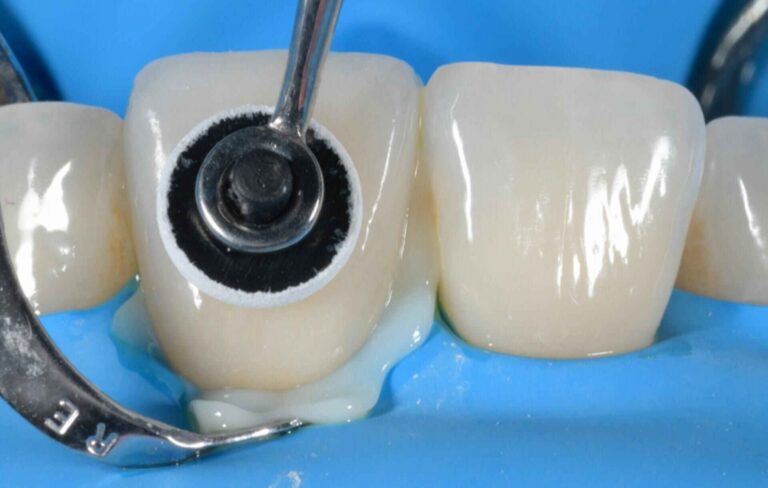
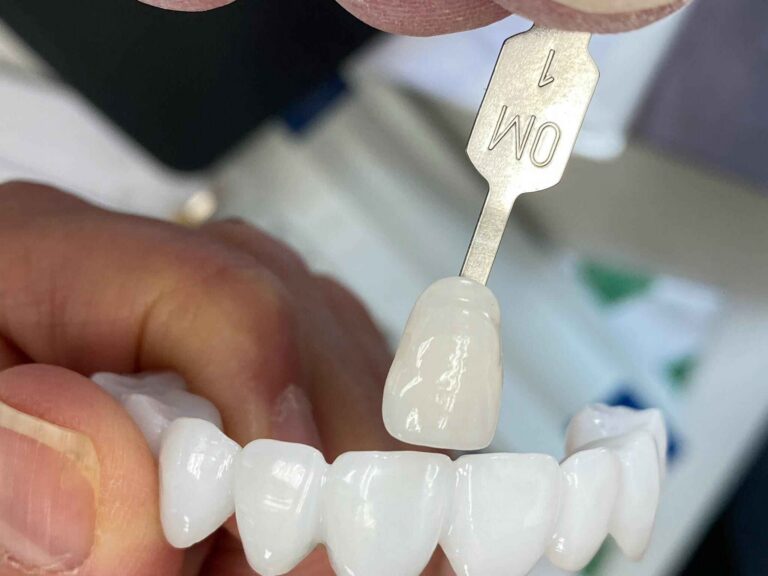
Patients understand images faster than ceramic terminology.
Use:
A shade-tab photograph
A stump-shade photograph
A smile photograph
A retracted anterior photograph
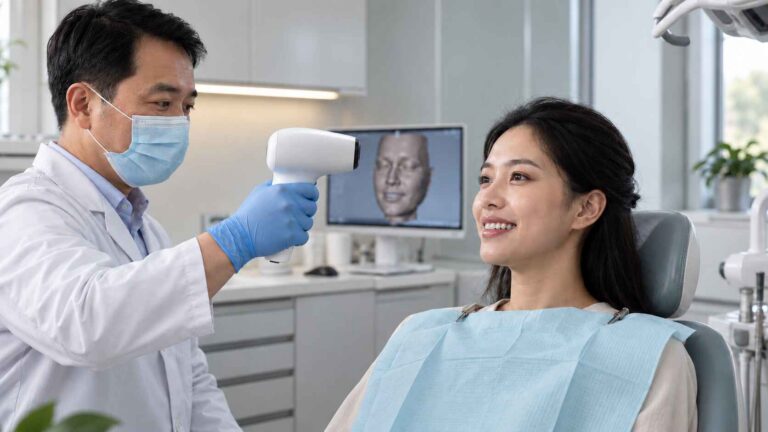
A digital design preview
A cross-sectional material diagram
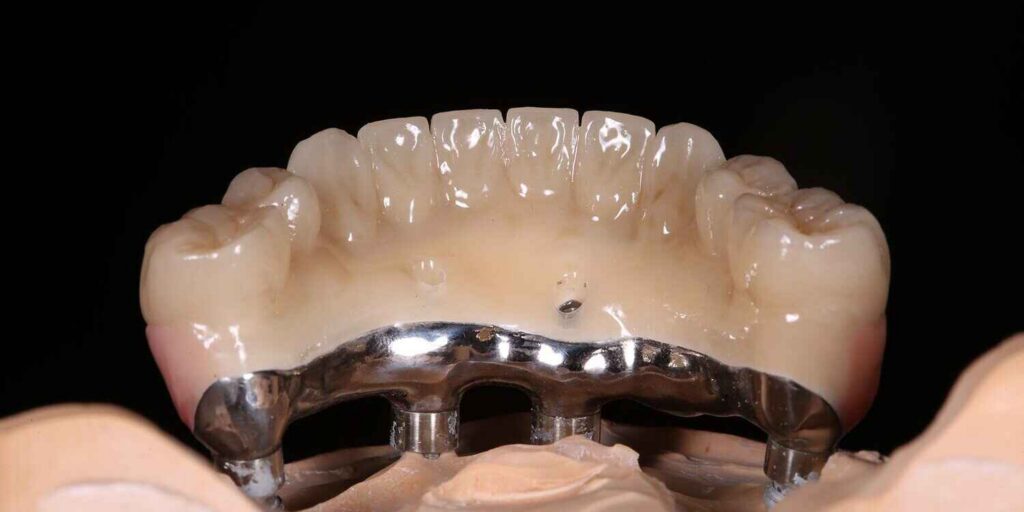
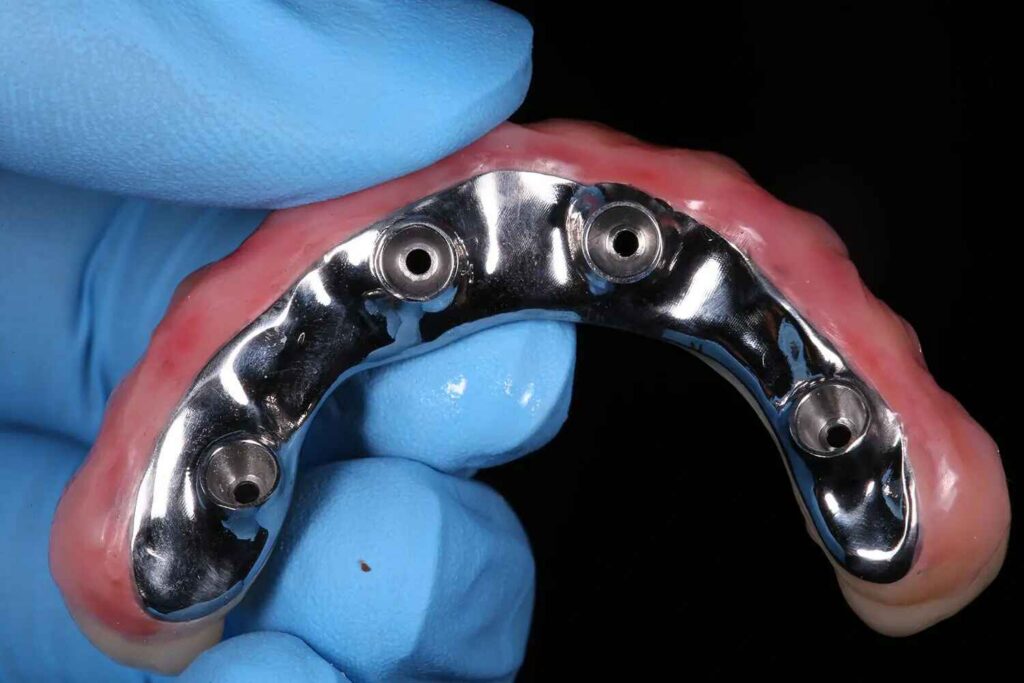
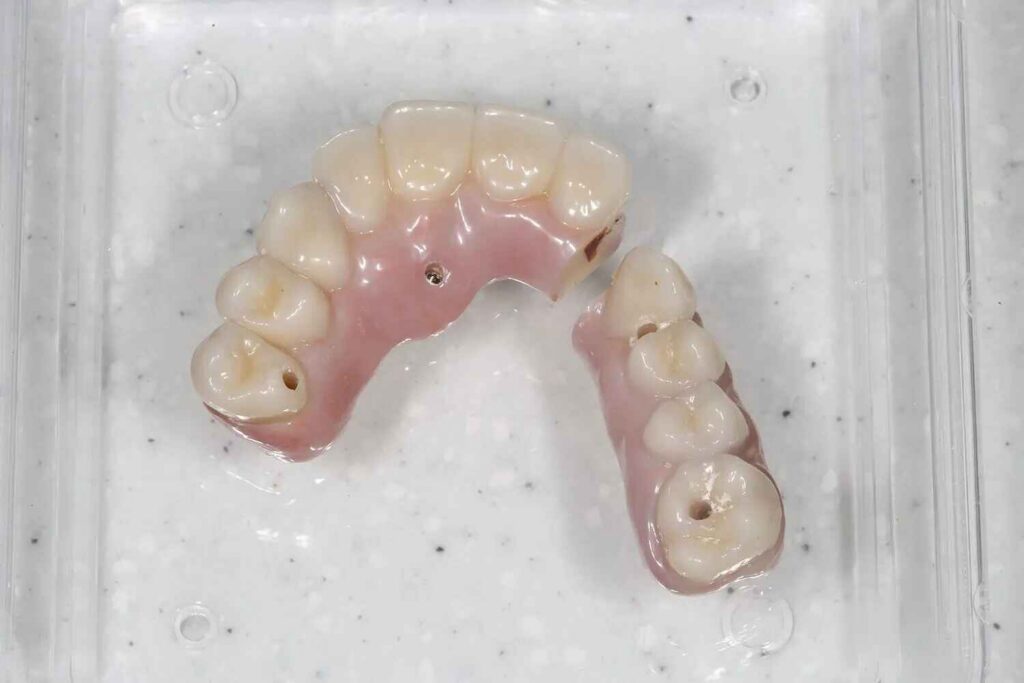
A sample crown or veneer
A before-and-after image from a clinically comparable case
A side-by-side image of monolithic and layered surface characterization
The comparison must be fair. Do not show the worst possible standard restoration beside the best possible premium result. That is advertising, not education.
When discussing advanced anterior characterization, clinics can show patients what additional ceramic work may influence by referencing the distinctions described in layered E.max veneers for premium smile makeovers.
But set limits.
A digital preview is not a contractual guarantee. A material sample does not reproduce the patient’s stump shade, gingival frame, lip movement, lighting, preparation depth, or surrounding enamel. Say that clearly.
Use Teach-Back Instead of Asking “Do You Understand?”
“Do you understand?” is almost useless.
Most patients say yes because they want to appear cooperative, the consultation is running long, or they do not know which part they have misunderstood.
The U.S. Agency for Healthcare Research and Quality reports that studies have found up to 80% of medical information may be forgotten immediately, while nearly half of the information retained may be remembered incorrectly. Its teach-back guidance recommends asking patients to explain information in their own words.
Try this:
“I want to make sure I explained the options clearly. In your own words, what do you see as the main difference between these two materials?”
Or:
“What is the main reason we are recommending the upgraded material for this tooth?”
If the patient answers, “Because it is the expensive one,” the explanation failed.
If the patient says, “Because this tooth shows when I smile, the underlying color is dark, and the upgraded option gives the technician more control over masking and translucency,” the clinical reasoning landed.
That is dental patient education working as intended.
Never Promise a Lifespan You Cannot Defend
Clinics often try to justify a premium material with a time claim:
“This crown lasts 15 years.”
That sentence may close a case. It can also create a future dispute.
Restoration survival depends on far more than the ceramic:
Tooth preparation
Remaining enamel and dentin
Margin design
Restoration thickness
Connector dimensions
Surface treatment
Cement selection
Moisture control
Occlusion
Bruxism
Diet
Oral hygiene
Periodontal health
Recall compliance
Laboratory execution
Instead of promising a date, explain the risk profile.
Say:
“This material gives us a more appropriate mechanical or esthetic margin for the conditions we see today, but no restoration is permanent. Your bite, hygiene, maintenance, and the condition of the supporting tooth will continue to affect the outcome.”
Less exciting. More defensible.
Treat Informed Consent as a Conversation, Not a Signature
The American Dental Association states that informed consent is not merely a document; it is a dentist-patient discussion covering the proposed treatment, material risks, benefits, alternatives, and the patient’s questions. The ADA also states that the dentist must participate in that conversation rather than delegating the entire responsibility to administrative staff.
That has a direct implication for premium material upgrades.
A treatment coordinator may discuss scheduling and payment. A laboratory representative may provide technical information. But the clinician should explain why the material is indicated, what alternatives exist, and what limitations remain.
Document:
The diagnosis
The options presented
The reason for recommending the material
Major risks and limitations
Esthetic limitations
Functional limitations
The cost difference
The patient’s questions
The selected option
Any option the patient declined
Do not document “patient chose premium.”
Document why.
Align the Clinic’s Promise With the Laboratory Workflow
A clinic cannot confidently explain a premium material upgrade when the laboratory prescription contains only a shade and tooth number.
Premium outcomes require premium communication.
For an anterior case, the laboratory may need:
Prep and opposing STL or PLY files
Accurate bite data
Stump shade
Standard shade
Smile and retracted photographs
Polarized photographs when available
Surface-texture references
Value and translucency targets
Incisal-edge position
Desired embrasure form
Occlusal guidance
Provisional or wax-up references
Notes on patient expectations
The clinic should also understand how the laboratory checks margins, contacts, occlusion, shade instructions, surface finish, and case documentation. Artist Dental Lab outlines these review points in its dental laboratory quality-control workflow.
Here is my blunt view: a clinic should not charge for individualized ceramic artistry while sending generic laboratory instructions.
That is not a material upgrade. It is a billing upgrade.
A Practical Script for Presenting Premium Dental Materials
Clinics can adapt the following sequence:
Step 1: State the finding
“This tooth is highly visible, and the darker underlying color may affect the final shade.”
Step 2: Present the baseline option fairly
“A standard monolithic restoration can restore the tooth and provide an acceptable result. It is a valid treatment option.”
Step 3: Explain the limitation
“Its limitation in this case is that we may have less control over the transition between masking the dark foundation and recreating natural translucency.”
Step 4: Present the case-optimized upgrade
“The upgraded option allows a different material or ceramic design, along with more individualized laboratory characterization. That gives us additional control over shade value, surface texture, and how light moves through the restoration.”
Step 5: State what remains uncertain
“No ceramic can guarantee an invisible match, especially beside a natural central incisor, but this option gives us a better technical route toward that goal.”
Step 6: Explain the cost
“The fee difference reflects the material selection, additional records, individualized laboratory work, and extra review stages—not simply a different product label.”
Step 7: Confirm understanding
“Could you explain the main difference back to me, so I know I presented it clearly?”
This is not a sales script.
It is a decision script.
FAQs
What is a premium dental material upgrade?
A premium dental material upgrade is a case-specific change in ceramic, alloy, resin, design architecture, or laboratory workflow intended to provide additional esthetic control, mechanical tolerance, masking ability, bonding potential, or customization beyond the clinic’s baseline restoration while still carrying limitations, maintenance requirements, and no guarantee of permanent success.
The term should describe a documented clinical difference, not simply a higher fee or a brand name.
How should clinics explain premium dental materials to patients?
Clinics should explain premium dental materials by first identifying the patient’s clinical problem, then comparing available options in plain language, connecting the upgraded material to a specific functional or esthetic benefit, disclosing its limitations and cost, showing visual evidence where appropriate, and confirming comprehension through teach-back rather than pressure.
Patients should also be told when the baseline option remains reasonable.
Is zirconia always better than E.max for dental restorations?
Zirconia is not automatically better than E.max because zirconia formulations, lithium-disilicate products, preparation designs, bonding conditions, tooth positions, occlusal forces, esthetic targets, and restoration geometries differ substantially; the better material is the one whose optical, mechanical, and clinical requirements most closely match the documented conditions of the individual case.
A posterior bruxism case and a single central-incisor veneer should not be discussed as though they present the same engineering problem.
How can clinics improve dental case acceptance without overselling?
Clinics can improve dental case acceptance by presenting the diagnosis before the price, offering fair alternatives, replacing promotional adjectives with case-specific evidence, using photographs and models, explaining the laboratory work behind the fee, avoiding unsupported longevity promises, giving patients time to ask questions, and documenting informed consent as a conversation rather than a signature.
The objective is informed confidence, not same-day pressure.
Should every patient be offered the most expensive material?
The most expensive dental material should not be offered as the automatic best choice because price does not determine clinical suitability; patients should receive options based on diagnosis, preparation, force, esthetic demand, maintenance capacity, budget, and the laboratory workflow required to produce a predictable restoration for that specific tooth or treatment plan.
Sometimes the simpler material is the more responsible recommendation.
Turn Material Discussions Into Better Clinical Decisions
Premium material upgrades become easier to explain when the clinic stops defending the price and starts demonstrating the decision.
Show the problem. Compare the options. Explain the trade-offs. State what the additional work includes. Confirm what the patient understood. Then document the conversation.
Do that consistently, and “premium” stops sounding like a sales category. It becomes what it should have been from the beginning: a case-specific clinical recommendation supported by material science, laboratory planning, patient preference, and transparent consent.
Clinics evaluating zirconia, lithium disilicate, layered ceramic, or customized veneer workflows can contact Artist Dental Lab for material guidance, trial-case support, and quotation details. Include the restoration type, tooth position, preparation files, stump shade, occlusal conditions, esthetic target, photographs, and expected case volume so the laboratory can respond with a technically relevant recommendation rather than a generic price list.