Why Surface Texture Determines Realism in Anterior Cases
The Tooth Does Not Lie Under Light
Texture sells realism.
We can argue all day about shade tabs, ceramic brands, camera settings, and whether the patient wanted “Hollywood white” or “natural bright,” but when the final anterior restoration hits the mouth under operatory light, daylight, a bathroom mirror, and a smartphone flash, the surface either behaves like enamel or exposes itself as dental furniture.
So why do so many expensive anterior restorations still look fake?
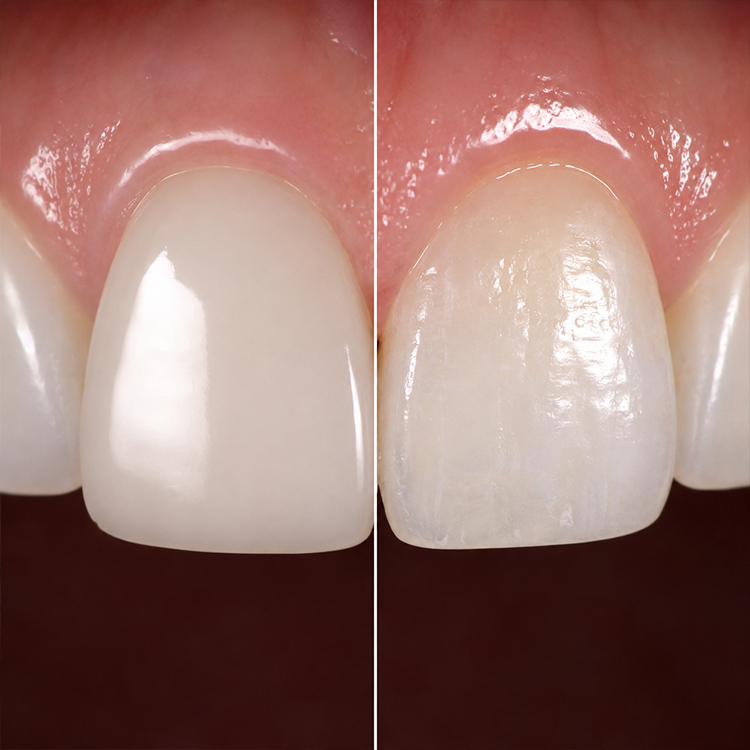
Here is my hard opinion: shade gets too much credit, and surface texture gets blamed too late. A dead-looking central incisor is not always a color problem. Sometimes the value is acceptable, the chroma is close, the incisal edge is passable, and the case still looks wrong because the lab built a smooth ceramic object instead of a tooth.
Natural enamel is not a flat tile. It has perikymata, developmental grooves, vertical lobes, faint craze lines, selective gloss, convexity changes, worn incisal character, and tiny interruptions that scatter light. The eye reads those details fast. The patient may not name them. The spouse will.
And yes, this matters for every serious category of anterior restorations: anterior composite restorations, porcelain veneers, lithium disilicate veneers, feldspathic veneers, and anterior crowns.
If you are sending premium cosmetic cases to a lab, texture should not be a finishing note at the end. It should be part of the prescription from the start.
Table of Contents
The Uncomfortable Data Behind “Looks Natural”
Dental people love intuition. I don’t hate intuition. But I trust it more when the numbers agree.
A classic Journal of Dental Research study, The Surface Roughness and Gloss of Composites, reported that surface gloss plays a major role in the esthetic appearance of composite restorations. That was 1984, before Instagram dentistry, before cheap ring-light veneer marketing, before every patient arrived with a filtered reference photo. The principle still holds.
Then there is the 2004 British Dental Journal paper, The in vivo perception of roughness of restorations. Volunteers could distinguish roughness differences between 0.25 and 0.50 µm, and the authors concluded that restorations should have a maximum roughness of 0.50 µm if they are not to be detected by the patient. Read that again. Not the dentist. The patient.
This is where the industry gets lazy. We sell materials as if they carry esthetics by themselves. They do not. Lithium disilicate, feldspathic porcelain, nano-hybrid composite, zirconia, resin cement, glaze paste, diamond rubber, aluminum oxide disc—none of them replaces judgment.
A smooth surface can be technically clean and visually dead. A textured surface can be artistic and hygienically stupid. The work is in controlling the middle.
Shade Is the Loud Problem; Texture Is the Quiet Killer
I’ve seen anterior cases where everyone blamed the shade. The remake request said “too opaque” or “too white.” But when you look closer, the restoration is not really too white. It is too uniform.
That is different.
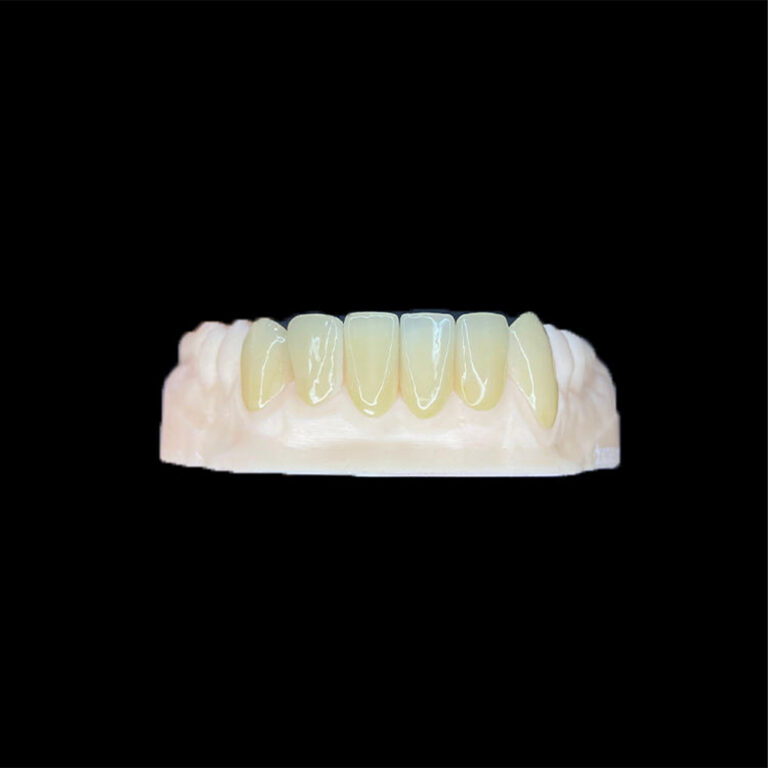
Natural anterior teeth do not reflect light evenly from cervical third to incisal third. The cervical area may show more chroma. The middle third carries body value. The incisal third may show translucency, halo, mamelon effect, and surface wear. But all of that optical work gets flattened when the surface is over-glazed, over-polished, or shaped like a CAD library default.
This is why hand-layered feldspathic veneers still have a real place in high-end anterior esthetics. Feldspathic porcelain is not magic, and it is not the right answer for every patient. But when enamel support, conservative preparation, and a demanding smile zone line up, its ability to carry delicate translucency and micro-texture is hard to fake.
On the other hand, E.max veneers can be the more disciplined option when the case needs lithium disilicate strength, predictable fit, and a cleaner production workflow. For more demanding esthetic zones, layered E.max veneers give the technician more room to build depth, incisal character, and lifelike texture over a lithium disilicate base.
But the material is only the contract. The surface is the signature.
The Realism Map: What Texture Actually Controls
Surface Factor
What It Changes Visually
Common Failure
Lab-Side Instruction That Helps
Macro-texture
Overall lobe form, line angles, facial anatomy
Tooth looks bulky or flat
Send frontal, 45-degree, and profile photos with contour notes
Micro-texture
Enamel-like fine surface detail
Restoration looks plastic or factory-made
Request age-matched perikymata, craze lines, or low texture
Gloss level
Light reflection and perceived value
Too shiny, too matte, or uneven
Specify glaze vs mechanical polish preference
Incisal texture
Halo, translucency, wear, mamelon illusion
Incisal third looks opaque or lifeless
Send incisal reference photos and patient age
Cervical texture
Emergence realism and gingival integration
Crown/veneer looks overbuilt near tissue
Provide margin design, tissue photos, and emergence expectations
Polishing sequence
Smoothness, stain resistance, tactile comfort
Patient feels roughness or sees staining
Define final polish standard and occlusal adjustment protocol
This table is not academic decoration. It is the difference between “nice crown” and “which tooth was restored?”
The Lab Prescription Most Dentists Still Do Not Send
But here is where I get blunt.
A dentist who writes “natural texture” on a prescription has not actually communicated texture. That phrase is almost useless. Natural for whom? A 23-year-old with unworn enamel? A 58-year-old bruxer? A single central next to a dehydrated adjacent tooth? A six-unit smile design where the patient wants controlled brightness, not museum-grade anatomy?
A useful anterior restoration prescription should include:
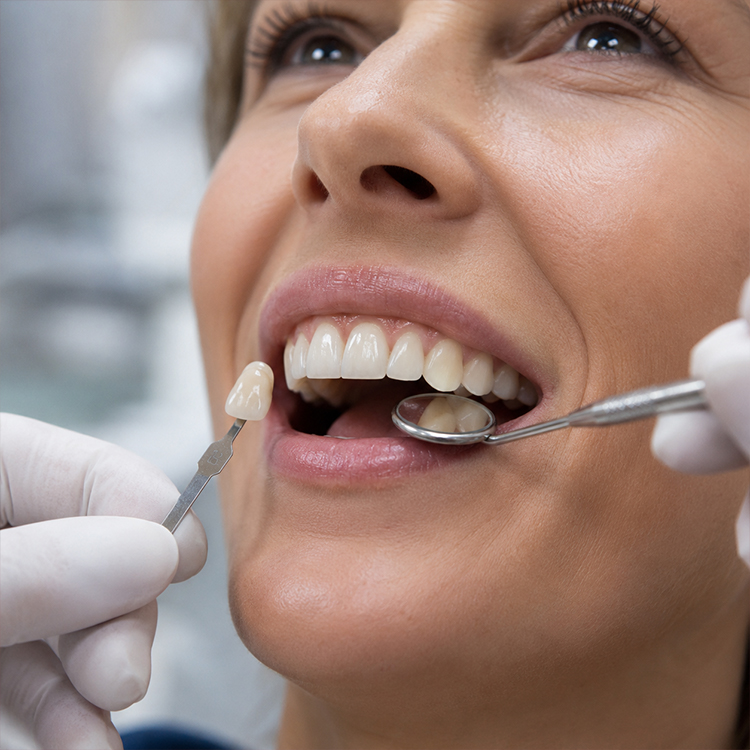
Retracted shade photos
Full-face smile photo
1:1 close-up of adjacent teeth
Cross-polarized shade photo when possible
Stump shade for thin ceramic
STL/IOS scans, opposing, and bite
Margin notes
Desired gloss level
Age-appropriate texture notes
Incisal edge character
Occlusal guidance and parafunction warning
Reference images from provisional, wax-up, or mock-up
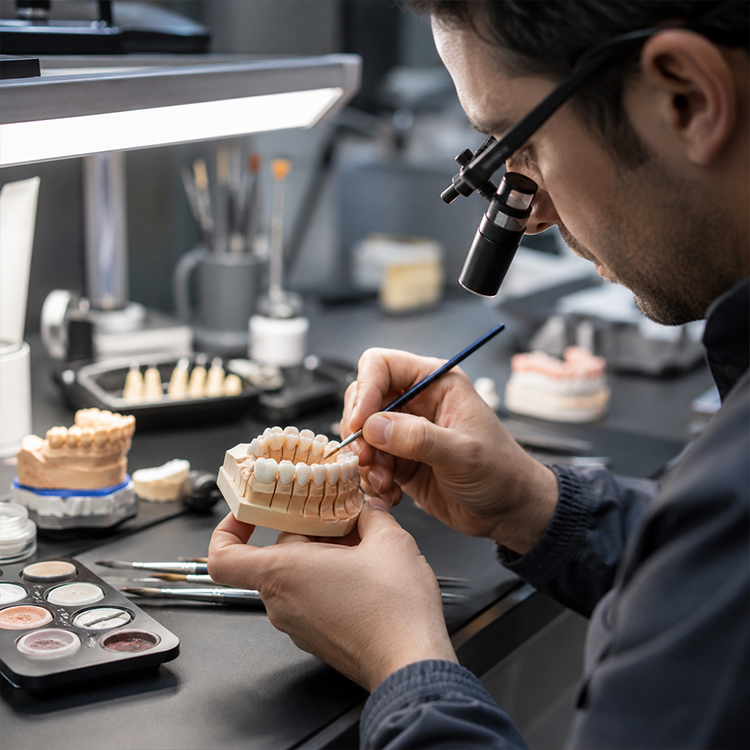
Artist Dental Lab’s own OEM/ODM dental restoration workflow makes this point in a production context: material selection, shade strategy, finishing preferences, QC checkpoints, and traceability need to be defined before the case becomes a repeatable product. That same thinking applies to a single anterior central. Especially a single anterior central.
The single central is brutal. Everyone knows it. One tooth, surrounded by natural neighbors, gives the lab nowhere to hide. If the facial line angle is off by a whisper, the tooth looks wider. If the gloss is wrong, the shade looks wrong. If the micro-texture is missing, the restoration looks young next to an older tooth. If the incisal translucency is overdone, it looks gray. If it is underdone, it looks chalky.
That is not romance. That is optics.
Composite, Ceramic, and Zirconia Do Not Texture the Same Way
Anterior composite restorations and porcelain veneer surface texture are often discussed as if the same finishing logic applies. It does not.
Composite is sculpted, finished, polished, adjusted, re-polished, and then punished by toothpaste, diet, brushing abrasion, and time. Ceramic is built, milled, layered, stained, glazed, polished, adjusted, and sometimes ruined chairside with one aggressive bur and no proper repolishing sequence. Zirconia, or ZrO₂, brings strength but needs controlled finishing because a dead-flat monolithic surface in the anterior zone can look sterile.
Lithium disilicate, often discussed through the chemistry of Li₂Si₂O₅, gives a strong esthetic middle path. It can be beautiful, but if the surface is generic, the restoration still screams “manufactured.” Hydroxyapatite in enamel, Ca₁₀(PO₄)₆(OH)₂, does not behave like a uniform ceramic block. That mismatch is why surface design has to compensate.
For anterior crowns, E.max crowns can make sense when the case needs natural translucency and better structure than a veneer indication allows. But crown texture has to respect tooth reduction, stump shade, ceramic thickness, and emergence profile. A crown that looks good on a die can still look wrong in the lip frame.
That is why I do not trust “premium” as a product label. I trust case planning.
The Veneer-Tech Warning Is Really a Quality-Control Story
The consumer market is learning a rough lesson: cosmetic dentistry is not makeup.
In 2024, the American Dental Association warned the public about unlicensed “veneer technicians,” stating that unsupervised dental treatment can cause infection, nerve damage, choking hazards, and irreversible harm when teeth, gums, or jaws are altered without proper supervision. The ADA’s statement on veneer technicians is not just a patient-safety warning. It is an indictment of shortcut esthetics.
The Associated Press reported that dentists often charge roughly $1,000 to $2,000 per tooth for veneers, that veneers are irreversible because enamel is removed, and that they may last 5 to 15 years before replacement is needed. The same AP report on fake dentists and veneer scams described illegal social-media veneer operators offering full sets at far lower prices.
Why mention this in an article for professionals?
Because the cheap-veneer trend exposes the ugly truth patients rarely understand: anterior esthetics is a medical, mechanical, optical, and laboratory system. Not a beauty service. Not a weekend certificate. Not a flat white shell bonded to enamel and blessed by an Instagram reel.
Surface texture sits right inside that system. It affects plaque behavior, comfort, polish retention, perceived shade, and whether the restoration visually belongs in the mouth.
My Lab-Side Rules for Realistic Anterior Surface Texture
Rule 1: Do Not Texture Without a Reference
“Natural” is not a reference. Adjacent teeth are a reference. Provisionals are a reference. A patient’s pre-op enamel is a reference. A close-up photo under good light is a reference.
If the lab cannot see the target, the lab will invent one.
Rule 2: Match the Patient’s Age, Not the Dentist’s Taste
Young enamel often carries different surface energy than worn adult enamel. Older teeth may show flatter facial anatomy, reduced incisal texture, craze lines, abrasion, and lower gloss. A 62-year-old patient with a mirror-polished, high-value, baby-smooth central incisor is not “youthful.” It is suspicious.
Rule 3: Texture Must Survive Delivery
A beautiful lab texture can be destroyed during try-in adjustment. If the clinician adjusts contact, contour, or occlusion and does not restore the surface properly, the patient receives a compromised restoration. This is where “best finishing and polishing techniques for anterior teeth” becomes more than a search phrase. It becomes risk control.
Rule 4: Gloss Is Not the Same as Smoothness
A restoration can feel smooth and still reflect light incorrectly. Gloss is optical. Roughness is tactile and topographic. They interact, but they are not identical. That is why the 1984 gloss research and the 2004 roughness perception study still matter.
Rule 5: The Final Surface Should Be Prescribed, Not Discovered
For high-end anterior esthetic restorations, the final texture should be discussed before fabrication. Not after cementation. Not after the patient says, “It looks a little fake.” Not after the dentist sends an irritated remake note.
For B2B cases, this is where a structured trial case matters. A lab and clinic should agree on finish standards, photo protocols, remake thresholds, and texture vocabulary before volume production begins. If the case is complex, start with the Artist Dental Lab contact and consultation page and make texture part of the case brief, not an afterthought.
FAQs
Why does surface texture matter in anterior restorations?
Surface texture matters in anterior restorations because it controls how light reflects, scatters, and breaks across the facial surface, making a veneer, crown, or composite restoration look like natural enamel instead of a smooth artificial shell. It influences perceived shade, age, vitality, morphology, and whether adjacent teeth visually accept the restoration.
Shade gets the attention because it is easier to name. Texture does the quieter work. In the anterior zone, micro-texture, gloss, line angles, and incisal characterization can make a technically accurate restoration look either alive or fake.
What is the ideal surface roughness for realistic dental restorations?
The ideal surface roughness for realistic dental restorations is low enough to remain comfortable and cleanable, while still carrying controlled enamel-like anatomy, with research suggesting patients can detect roughness differences around 0.25 to 0.50 µm and that restorations should stay at or below about 0.50 µm when possible.
That does not mean every anterior tooth should be polished into a featureless mirror. It means texture has to be deliberate. Macro-anatomy can create realism, while uncontrolled roughness can create staining, plaque retention, tactile complaints, and visual noise.
How do you create natural-looking anterior restorations?
Natural-looking anterior restorations are created by combining correct shade, value, translucency, morphology, surface texture, incisal effects, margin design, material selection, and dentist-lab communication into one controlled workflow rather than relying on ceramic choice or polishing alone. The restoration must match both the mouth and the patient’s age.
The most predictable cases include high-quality photos, stump shade, STL or IOS scans, bite records, texture notes, provisional references, and clear expectations for gloss and incisal character. Without that information, the technician is guessing.
Are feldspathic veneers better for surface texture than E.max veneers?
Feldspathic veneers can be better for delicate surface texture and enamel-like optical effects in selected anterior cases, but E.max veneers may be more appropriate when the case needs lithium disilicate strength, broader indication safety, or more consistent production control. The better material depends on preparation, enamel support, shade challenge, and function.
I would not choose feldspathic just because it sounds elite. I would not choose E.max just because it sounds reliable. The question is whether the patient’s biology, esthetic demand, and occlusion support the material.
What should dentists send the lab for anterior esthetic restorations?
Dentists should send the lab a complete anterior case file that includes STL or IOS scans, opposing and bite records, margin notes, shade and stump-shade information, retracted photos, full-face smile photos, adjacent-tooth texture references, incisal-edge notes, provisional or wax-up references, and functional guidance for occlusion and parafunction.
That case file protects everyone. The dentist gets fewer surprises. The technician gets usable direction. The patient gets a restoration that has a fighting chance of looking like it belongs.
Final Thoughts: Make Texture Part of the Prescription
Here is the move.
Before your next anterior restoration case leaves the clinic, write down the texture target as clearly as you write the shade. Not “natural.” Not “nice anatomy.” Actual instructions: low gloss, age-matched micro-texture, subtle vertical lobes, light craze lines, softened incisal wear, cervical emergence control, or polished youthful enamel.
Then send the photos to prove it.
If you are planning anterior veneers, crowns, or cosmetic rehabilitation cases and want the lab to reproduce realism instead of guessing at it, review the relevant material path—feldspathic veneers, E.max veneers, layered E.max veneers, or E.max crowns—and submit the case with surface texture, shade, stump shade, and finish expectations defined from day one.