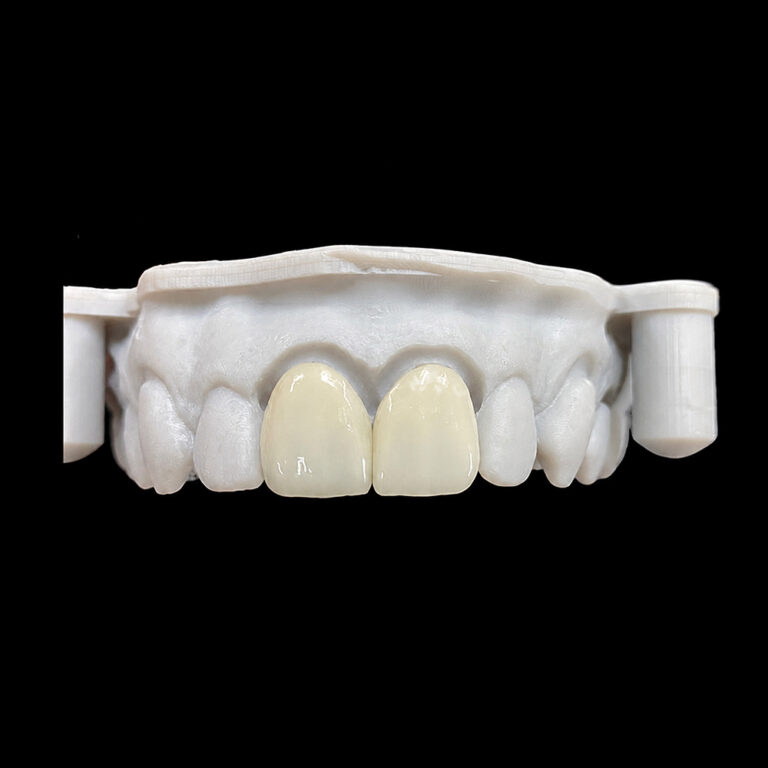
Can Veneers Be Used Directly in Deep Bite or Edge-to-Edge Cases?
The Ugly Truth: Veneers Do Not Magically Fix a Bad Bite
No. Usually not.
Dental veneers can be used in some deep bite or edge-to-edge cases, but placing them directly without diagnosing occlusion, anterior guidance, parafunction, enamel support, vertical dimension, and restorative space is the kind of shortcut that looks profitable on Instagram and expensive in the remake drawer.
Why pretend otherwise?
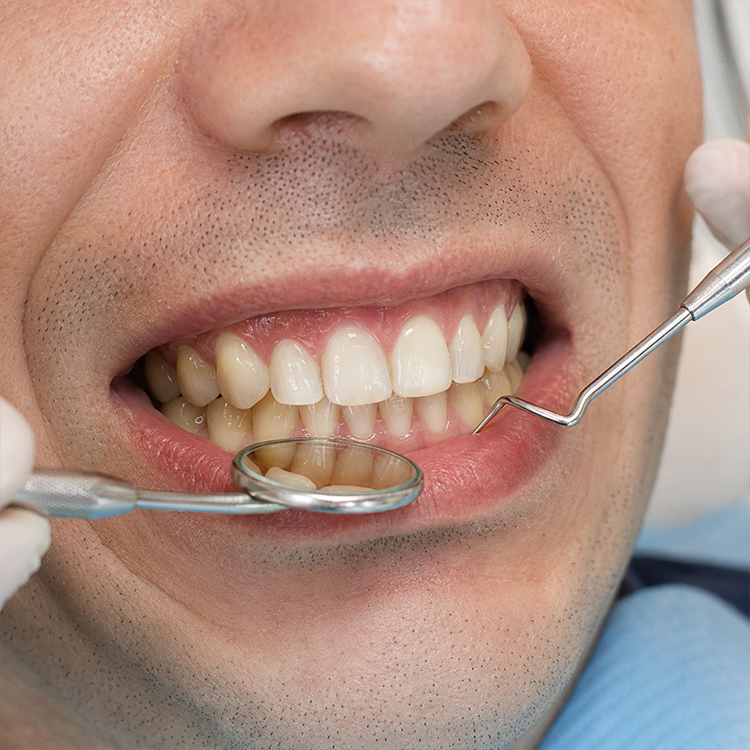
A deep bite is not just “more tooth overlap.” The American Association of Orthodontists defines a closed bite, also called deep overbite, as a condition where the upper front teeth overlap the lower front teeth excessively, and that single detail changes the entire risk profile for porcelain veneers, ceramic thickness, incisal edge design, and bonding strategy.
Edge-to-edge bite is even less forgiving. There is no comfortable overjet cushion. Incisal ceramics are asked to survive direct frontal collision, and anyone who sells that as a simple “smile makeover” is either inexperienced, overconfident, or not the person who has to remake the case at 11 p.m.
I’ll say the part many brochures avoid: veneers for deep bite and veneers for edge-to-edge bite are not primarily cosmetic cases. They are occlusion cases wearing cosmetic clothing.
Table of Contents
What “Direct Veneers” Really Means in a Deep Bite Mouth
When a patient asks, “Can veneers fix bite problems?” the honest answer is: veneers can sometimes camouflage tooth shape, worn edges, spacing, color, and mild positional issues, but they do not biologically correct skeletal overbite, mandibular posture, anterior guidance, or parafunctional grinding patterns.
That matters because the American Dental Association’s public veneer guidance already warns that veneers may chip, crack, loosen, or need replacement, and specifically says patients who grind or clench, or have a deep overbite, may not be good candidates.
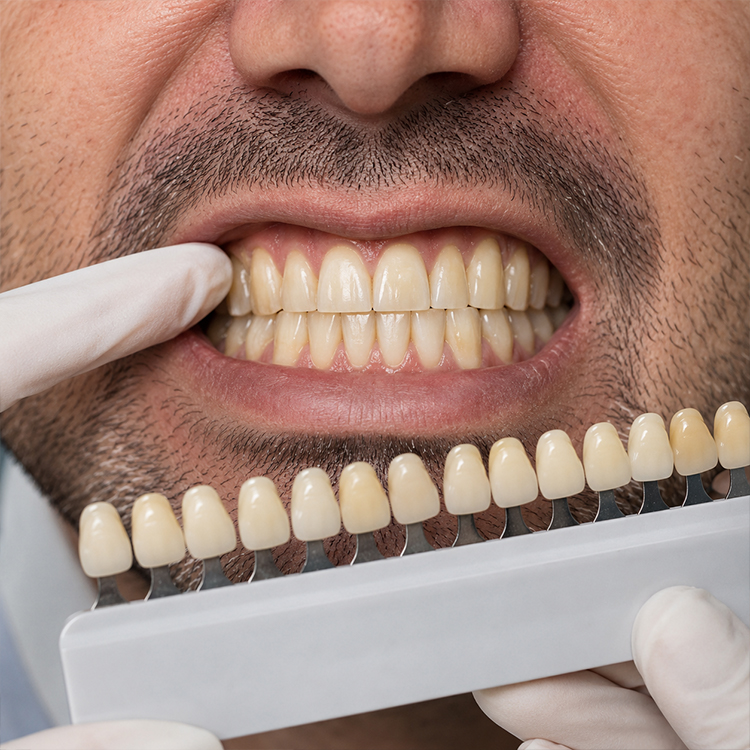
Here is the lab-side version: if I receive a deep bite veneer case with no bite scan, no protrusive record, no lateral movement notes, no stump shade, no smile photo, and no explanation of where the lower incisors hit, I do not see a premium cosmetic case. I see a controlled accident waiting for resin cement.
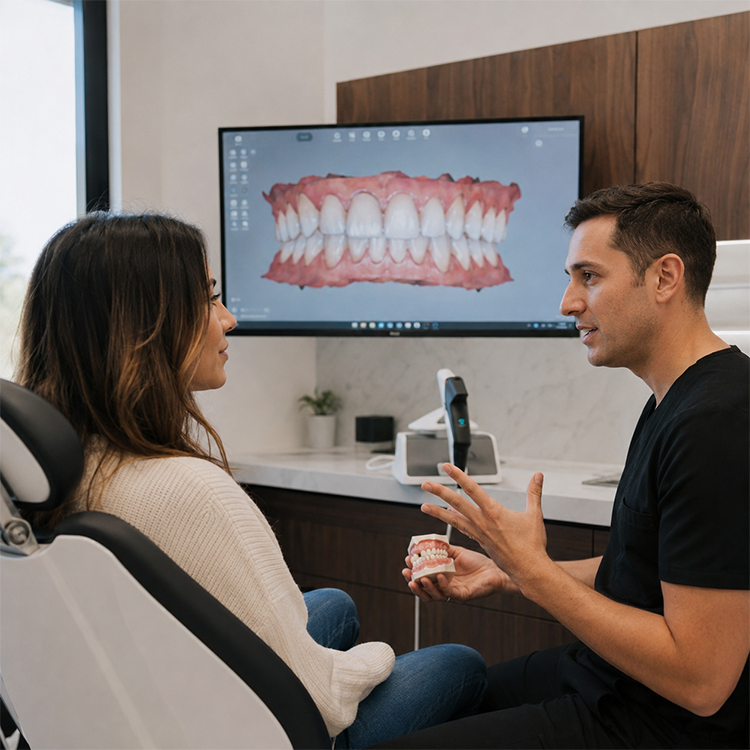
That is why I would route many routine anterior cases toward lithium disilicate E.max veneers only when the dentist provides opposing scans, bite registration, margin notes, shade/stump shade, smile photos, and clear occlusal priorities. Artist Dental Lab’s own E.max veneer page asks for STL scans, opposing and bite data, photos, stump shade, and esthetic reference goals, which is exactly the evidence package these cases need.
Deep Bite Veneers: The Failure Pattern Nobody Likes to Admit
Deep bite veneers usually fail for boring reasons. Not mysterious ones.
The ceramic is too thin where it receives load, the incisal edge is wrapped into a collision path, the lower incisors hammer the palatal or incisal ceramic, the patient bruxes, the prep exposes too much dentin, or the case is sold as “minimal-prep” when the mouth was begging for orthodontics, equilibration, or a staged increase in vertical dimension.
In one PubMed-indexed clinical case report, a severely worn deep bite patient with loss of vertical dimension was treated through a minimally invasive interdisciplinary approach using occlusal ceramic overlays and full-mouth planning; after three years, the authors reported no complications. That is the lesson: the successful case was not “just slap on veneers.” It was staged, functional, and interdisciplinary.
The hard truth is that cosmetic dentistry for deep bite becomes safer when the dentist stops asking, “Can I bond it?” and starts asking, “What will hit this ceramic 500 times tonight?”
Where Material Choice Gets Misused
Lithium disilicate, often known through IPS e.max, is not weak. Ivoclar lists IPS e.max CAD at 530 MPa flexural strength and 2.11 MPa·m¹/² fracture toughness, which explains why Li₂Si₂O₅ glass-ceramic became a workhorse for veneers, onlays, inlays, and selected crowns.
But a strong ceramic is still not a license to ignore occlusion.
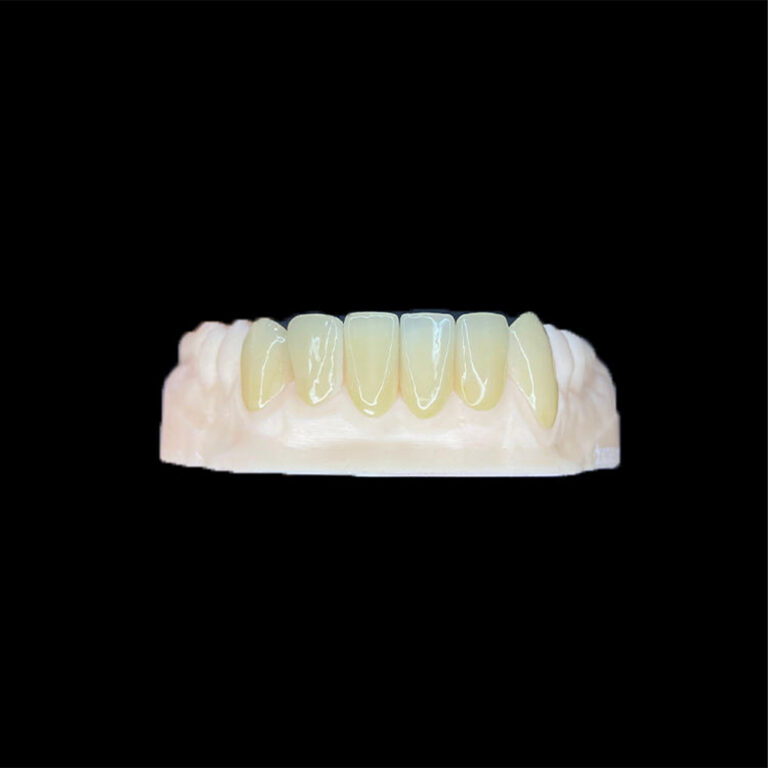
For premium anterior esthetics where space, photos, stump shade, and functional limits are well documented, layered E.max veneers can add incisal depth, halo effects, and lifelike surface texture. But the same layering that makes a case look alive can become a liability if the bite is chewing directly into the incisal build-up. Artist Dental Lab’s layered E.max workflow explicitly asks dentists to communicate parafunction, guidance, photos, midline, smile line, and texture preferences early.
And yes, zirconia veneers enter the conversation when functional demand starts making threats. ZrO₂ is not the prettiest default for every anterior veneer case, but when a patient has heavy function, poor clearance, or repeated fracture risk, durability deserves a seat at the table. Artist Dental Lab frames zirconia veneers around higher functional demands, added fracture resistance, occlusal notes, and challenging bite conditions, which is exactly where that material belongs.
Edge-to-Edge Bite: The Incisal Collision Problem
Edge-to-edge cases punish lazy planning.
A finite element analysis on laminate veneer preparation found that edge-to-edge bite stresses were severe with window-type preparation, while normal bite conditions did not show the same critical stress values. That is not a marketing opinion. That is mechanical behavior showing up in the model.
So when someone asks, “Are veneers suitable for edge-to-edge bite?” I answer with a condition: only if the clinician first creates a survivable occlusal scheme.
That may mean orthodontics. It may mean additive mock-up testing. It may mean changing incisal edge position. It may mean composite trial restorations before final ceramics. It may mean no veneers at all until the bite is treated.
Not glamorous. Very useful.
A case report on Class I edge-to-edge malocclusion described a 26-year-old patient seeking a natural-looking makeover after previous orthodontic treatment failed to meet the goal; the case itself shows why edge-to-edge malocclusion is rarely a “veneer only” discussion, because the esthetic problem is tied to overjet, overbite, tooth form, and functional positioning.
The Data Table I Would Use Before Saying Yes
Clinical Situation
Direct Veneers?
Main Risk
Better First Move
Lab Material Conversation
Mild deep bite, stable guidance, no bruxism, good enamel
Sometimes
Incisal overload if design is careless
Diagnostic wax-up, bite scan, provisional test
E.max or feldspathic, depending on esthetics and enamel
Severe deep bite with worn lower incisors
Usually no
Ceramic fracture, debonding, loss of vertical space
Orthodontic or full-mouth rehabilitation planning
E.max overlays, crowns, or coordinated anterior/posterior design
Edge-to-edge bite with zero overjet
High risk
Direct incisal collision
Orthodontics, mock-up, guidance redesign
Consider lithium disilicate only after load path is controlled
Bruxism plus veneer demand
Conditional
Fracture and debonding
Splint compliance, risk consent, material upgrade
E.max, zirconia, or hybrid planning depending on load
Dark stump plus deep bite
Dangerous if rushed
Overprep, dentin exposure, opacity mismatch
Stump shade mapping and reduction audit
Low-translucency lithium disilicate or selective zirconia
Patient wants “no-prep” in a traumatic bite
Usually no
Bulky contour and occlusal interference
Say no or correct bite first
No-prep is not a religion; it is an indication
This is where feldspathic veneers need adult supervision. Feldspathic porcelain can produce beautiful enamel-like translucency, texture, and incisal effects, but Artist Dental Lab’s own feldspathic page flags occlusal risk and parafunction evaluation as part of the case notes, not an afterthought.
Bruxism, Splints, and the Numbers Behind Porcelain Veneer Failures
Bruxism changes everything.
In a clinical study of 323 porcelain laminate veneers placed in 70 patients, 170 veneers were bonded in patients with bruxism activity and 153 in patients without it; the study reported 13 fractures and 29 debondings, with 8 fractures and 22 debondings associated with bruxism.
A separate 8-year prospective clinical investigation of 364 feldspathic veneers in 64 patients found an overall survival rate of 93.7% after 3 years, 91% after 5 years, and 87.1% after 8 years. In bruxism patients, survival was 89.1% with an occlusal splint but dropped to 63.9% without one.
That is not a small detail. That is the difference between a managed risk and a predictable complaint.
So when a patient with a deep bite asks for porcelain veneers and says, “I only grind a little,” I want the dentist to hear a siren. Not because veneers are impossible, but because the case now needs documentation: splint plan, consent language, photos, occlusal record, material selection, and follow-up schedule.
The Veneer-Tech Problem: Cheap Cosmetics Meets Permanent Damage
There is another industry problem we should name.
The American Dental Association warned in May 2024 about “veneer technicians” offering services without the dentist’s role in diagnosis, treatment planning, and care management; the ADA listed risks including infection, nerve damage, choking hazard, untreated cavities being covered, and irreversible harm.
The Associated Press later reported on unlicensed veneer providers marketing through Instagram and TikTok, with some promising full sets for $4,000 to $5,000 while dental offices often charge $1,000 to $2,000 per tooth. AP also reported that all U.S. states require dental work, including veneers, to be performed under licensed dentist supervision.
Why bring this up in an article about deep bite and edge-to-edge cases?
Because these are exactly the patients who get hurt when cosmetics outruns diagnosis. A normal veneer case already requires clinical judgment. A bite-problem veneer case requires more. More records. More planning. More honesty.
The Georgia Dental Association’s warning on unlicensed providers says improperly applied dental treatment, including veneers, can lead to infection, nerve damage, choking hazard, improperly trimmed teeth, and later treatment that is more extensive or expensive.
My Working Rule: Treat the Bite Before You Beautify the Tooth
Here is my working rule for veneers and malocclusion: if the bite created the wear, the bite gets addressed before the ceramic gets blamed.
That can mean pre-restorative orthodontics. It can mean increasing vertical dimension in a controlled way. It can mean posterior support before anterior veneers. It can mean a protective night guard. It can mean refusing the case until the patient accepts the functional diagnosis.
For more complex restorative plans, I would connect the veneer decision to a broader anterior/posterior material strategy, not isolate six upper anterior veneers as if the rest of the mouth does not exist. Artist Dental Lab’s article on coordinating anterior and posterior materials in full-mouth rehabilitation is a more honest frame because deep bite cases often involve worn posterior support, altered vertical dimension, and mixed material demands.
And if the case is lithium disilicate, bonding is not a casual chairside ritual. It is a sequence. Artist Dental Lab’s article on the standard bonding protocol for E.max veneers belongs in the internal path because occlusion and adhesion fail together more often than marketing admits.
What Dentists Should Send the Lab Before Prescribing Veneers for Bite Problems
Send the ugly files.
For veneers for deep bite or veneers for edge-to-edge bite, I would want STL/IOS scans of prep, opposing, and bite; full-face smile photos; retracted anterior photos; shade and stump shade; protrusive and lateral guidance notes; parafunction history; intended incisal edge position; material preference; reduction map; and whether a splint is planned.
The lab cannot “make it work” if it cannot see where the case is dangerous.
Artist Dental Lab’s contact and trial case pathway already separates product interest, material preference, and case type, including veneers, zirconia, lithium disilicate, anterior esthetic cases, full-arch restorations, and implant-supported prosthetics. That structure is useful because deep bite veneer planning should never be reduced to “send shade A1 and make it natural.” (Site Title)
FAQs
Can dental veneers be used directly in deep bite cases?
Dental veneers can sometimes be used in deep bite cases, but direct placement is usually risky unless the dentist confirms stable occlusion, adequate restorative space, enamel support, no uncontrolled bruxism, and a clear anterior guidance plan before preparation, bonding, or ceramic fabrication begins.
In practical terms, deep bite veneers should be treated as functional restorations, not simple cosmetic shells. If the lower incisors are striking the planned incisal ceramic, the case needs orthodontic, occlusal, or full-mouth planning before final porcelain is made.
Are veneers suitable for edge-to-edge bite?
Veneers are suitable for edge-to-edge bite only in carefully selected cases where the incisal collision risk has been redesigned or controlled through orthodontics, additive mock-ups, occlusal adjustment, provisional testing, or a restorative plan that prevents direct ceramic-to-tooth impact during function.
A true edge-to-edge bite gives the veneer very little mechanical forgiveness. If the patient bites straight into the incisal edge, even excellent ceramics and bonding protocols can fail earlier than expected.
Can veneers fix bite problems?
Veneers can improve tooth shape, length, color, minor alignment appearance, and worn incisal edges, but they do not truly fix skeletal bite problems, severe deep overbite, edge-to-edge jaw relationships, or active parafunctional habits unless they are part of a larger orthodontic or restorative treatment plan.
This is where patients get misled. A veneer can camouflage a symptom. It cannot make a damaging occlusal pattern disappear by itself.
Which veneer material is best for deep bite veneers?
The best veneer material for deep bite cases is the material that matches the functional risk, enamel remaining, ceramic thickness, esthetic target, bonding condition, and occlusal scheme; lithium disilicate is often practical, feldspathic is selective, and zirconia may be considered when fracture resistance matters more.
I would not choose material from a menu. I would choose it from records: photos, scan data, bite marks, guidance notes, stump shade, reduction, and the patient’s parafunction history.
Do patients with bruxism need a night guard after veneers?
Patients with bruxism often need a protective occlusal splint after veneers because nighttime grinding can increase fracture, debonding, and ceramic fatigue risk, especially in deep bite or edge-to-edge cases where the anterior teeth already carry concentrated functional load.
The splint is not a magic shield, but the numbers are hard to ignore. In the 8-year feldspathic veneer study, bruxism patients who wore splints had much better survival than those who did not.
Your Next Step: Do Not Send a Cosmetic Case When the Real Problem Is Function
If you are planning dental veneers for a deep bite or edge-to-edge bite case, do not start with shade selection. Start with the collision map.
Send the lab the bite. Send the photos. Send the stump shade. Send the opposing scan. Send the functional notes. Then decide whether the case belongs in E.max, layered E.max, feldspathic, zirconia, orthodontics first, or full-mouth rehabilitation.
If you want a lab-side material recommendation before the case becomes an expensive remake, submit the case through Artist Dental Lab’s contact page with STL files, full photos, occlusal notes, parafunction history, and your intended bonding plan. That is how veneer cases stop being cosmetic guesses and start becoming defensible dentistry.