What Should Be Considered When Showing Veneer Cases for Expectation Management
The Instance Image Is Not the Case
Pretty smiles lie.
A dental veneer case can look stunning in a chopped Instagram framework while concealing the 3 points that actually determine whether a person will feel completely satisfied 6 months later: the beginning condition, the biological compromise, and the useful risk that was worked out prior to a bur ever touched enamel.
So why do we maintain revealing “after” photos like they are neutral proof?
I’ll claim this candidly: many veneer situation presentations are sales possessions making believe to be clinical education and learning. Not all. But sufficient. The refined smile, white history, and remarkable lip retraction produce a clean tale, while the real tale beings in the margins: stump shade, gingival display, bruxism, black triangles, midline concession, pronunciations, and the individual’s exclusive idea that veneers will certainly in some way make them look 10 years younger.
That belief is where assumption administration starts.
Oral veneers are custom-made treatments placed over the front surface areas of teeth to mask cosmetic problems such as chips, cracks, gaps, staining, and shape abnormalities, according to the Cleveland Facility veneer summary. But even Cleveland Clinic’s patient-facing support notes the compromises: enamel may be removed, many veneers are not relatively easy to fix, sensitivity can happen, veneers can loosen, and proper treatment is still required.
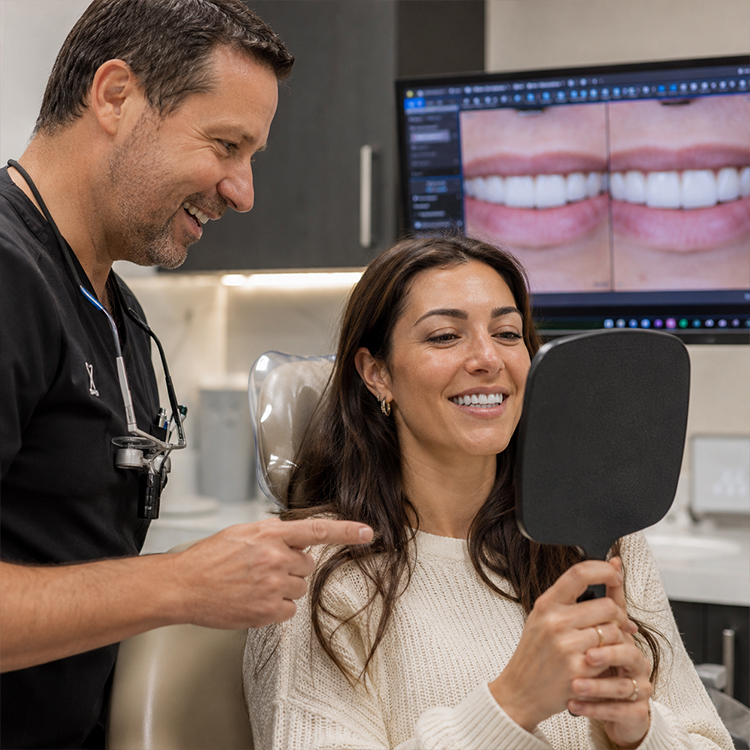
For a professional target market, that indicates one thing: before-and-after photos need to not be used as design. They must be made use of as regulated proof.
The Legal and Ethical Problem Nobody Wants in the Brochure
The person did not consent to your finest case. They granted their case.
The American Dental Organization claims notified consent is not simply a record; it is a procedure and discussion in which the dental practitioner explains the individual’s oral health and wellness status, proposed therapy, advantages, dangers, choices, and the risks of doing nothing. That matters because veneer therapy is elective, visual, psychological, and frequently permanent. The picture discussion becomes part of the authorization setting, whether the method confesses or otherwise. ADA notified consent advice makes that difference extremely plain.
Yet right here is the hard truth: the a lot more stunning the instance image, the more careful the description needs to be.
A person may not hear “case-dependent.” They hear “I want that.” They may not understand that the photographed individual had lighter stump color, thicker enamel, a reduced smile line, favorable gingival design, no parafunction, or an extra forgiving bite. And if no one says that out loud, the image begins doing silent legal job.
The UK Supreme Court’s 2015 decision in Montgomery v Lanarkshire Health Board is not a veneer situation, yet it changed the conversation around medical authorization by focusing material threats and sensible alternatives. In 2023, McCulloch v Forth Valley Health and wellness Board even more checked out how sensible options must be taken into consideration in approval discussions. For dentistry, the sensible message is basic: do absent a desire result while muting the patient-specific restrictions.
And marketing adds another layer. The U.S. Federal Trade Compensation states health-related advertising and marketing claims need to be genuine and sustained, and it can look for corrective advertising and marketing, consumer refunds, civil fines, and even bans from certain marketing tasks in severe deceptive situations. If before-and-after veneer images indicate a typical result that is not common, you are no more simply taking care of looks. You are taking care of insurance claim danger. FTC wellness advertising assistance deserves reading before the advertising and marketing group touches another smile gallery.
Table of Contents
Program the Beginning Point, or Don’t Program the Instance
The “previously” image needs to be sincere.
Not severe. Honest. Very same light, very same angle, same retraction, exact same lip pose when feasible, and no aesthetic sabotage where the pre-op photo looks dimmer, yellower, or meaner than fact.
I have actually reviewed sufficient aesthetic situation decks to know the earliest trick in the cabinet: cozy, shady, a little descending “previously”; intense, well balanced, higher “after.” It services customers. That is precisely why professionals need to dislike it.
For oral veneers before and after pictures, the instance ought to reveal the beginning restraints:
What the visitor should see
Why it matters for assumption management
What occurs if you hide it
Full-face smile
Reveals face midline, smile line, lip wheelchair, and proportion
Patient anticipates tooth-only adjustment to fix face-level asymmetry
Withdrawed former view
Reveals tooth proportions, gingival contour, shade, and spacing
Individual misses black triangle, economic downturn, and emergence-profile limitations
Occlusal or attack view
Exposes edge-to-edge, deep bite, wear, and corrective area
Client thinks veneers are cosmetic only, not functional reconstructions
Stump color picture
Explains opacity, concealing, and last value limits
Individual expects bleach-white results over dark substratum
Temporaries/mock-up
Transforms abstract smile style right into testable shape and pronunciations
Person authorizes a dream, not a mouth-tested design
Last photos under neutral light
Decreases lights deception and shade disagreements
Client compares the real world to edited marketing photos
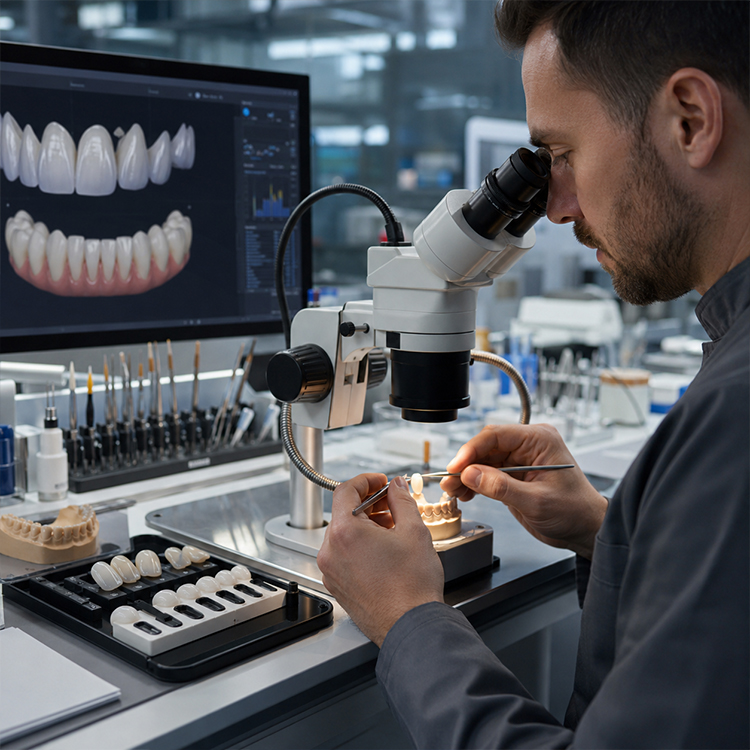
This is where lab communication ends up being noticeable to the individual. If the dental expert is collaborating with lithium disilicate E.max veneers, the laboratory needs STL scans, opposing and bite records, shade and stump color, withdrawed and smile images, margin notes, and esthetic referral objectives. Artist Dental Lab’s own E.max veneer process asks for those exact inputs because “pretty” is not a prescription.
The image is bait if it is not coupled with the diagnosis.
Material Names Can Deceive People Quicker Than Bad Photos
Patients like product tags. “Porcelain.” “E.max.” “Zirconia.” “No-prep.” “Premium.” The difficulty is that product language usually seems even more outright than the professional fact.
E.max is not magic. Zirconia is not a personality kind. Feldspathic porcelain is not instantly remarkable since it looks fragile and pricey.
For conventional former instances with well balanced esthetics and toughness demands, E.max veneer remediations can be a reasonable discussion since lithium disilicate uses translucency, fit consistency, and a familiar adhesive process. For elite characterization, split E.max veneers can add vigor, incisal results, halo, heat, and surface area texture when the space and occlusion support that option.
Yet allow’s not spruce up every instance as premium creativity.
If the client has a hefty bite, thin restorative room, parafunction, or duplicated fracture risk, zirconia veneers for high-strength cosmetic instances might go into the conversation because ZrO ₂ brings a various danger profile. It is not always the initial aesthetic choice for a high-translucency anterior case, but durability sometimes should have the microphone. Artist Dental Laboratory particularly frames zirconia veneers around higher functional demand, included fracture resistance, occlusal notes, and tough bite problems.
And feldspathic? Stunning. Unforgiving.
Hand-layered feldspathic veneers can develop enamel-like clarity, fragile incisal results, surface appearance, craze lines, and refined characterization. But feldspathic porcelain needs to not be offered to the person as “the most natural” without clarifying the scientific price of that appeal: instance choice, enamel bonding, reduction control, occlusion, and parafunction testing. Artist Dental Laboratory’s feldspathic web page also keeps in mind the need to evaluate occlusal risk and parafunction.
The Survival Information Is Good, However It Is Not a Consent Slip
Numbers comfort individuals.
A PubMed-indexed organized evaluation reported a 10-year estimated collective survival rate of 95.5% for porcelain laminate veneers, which seems outstanding until you remember that survival statistics do not get rid of specific threat variables such as bruxism, dentin bonding, inadequate seclusion, edge-to-edge loading, dark stump masking, or impractical color demands. Porcelain laminate veneer survival research study should be used to inform clients, not sedate them.
An additional 2024 testimonial summarized that oral veneers usually show high survival prices above 90% beyond 10 years, while likewise going over lab and scientific failing factors to consider. That is the component I wish a lot more dental professionals would certainly claim aloud: survival is not the like contentment. A veneer can remain adhered and still dissatisfy the person if value, structure, incisal size, embrasures, or face harmony were oversold.
The Australian Health And Wellness Practitioner Policy Agency alerted in 2023 that cosmetic oral procedures are not without threat, keeping in mind that porcelain veneers may be irreversible and long-lasting, with prompt and recurring economic ramifications. That is the type of sentence that ought to sit close to every major smile transformation approval kind. AHPRA’s aesthetic dental caution reviews like a regulator silently stating what shiny ads prevent.
Before Showing Veneer Situations, Sector the Client’s Assumption Kind
Not every client looks at a veneer case the same way.
Some are practically curious. Some are anxious. Some are shopping. Some are regreting an old variation of their smile. Some bring a celeb screenshot and a budget plan that can not support the biology.
So I separate patients right into assumption kinds prior to showing cosmetic dental care case examples:
The “I Want That Specific Smile” Person
This individual requires boundary-setting before motivation. Program comparable situations, yes, however promptly explain what can not be copied: tooth size, lip frame, periodontal display screen, face proportions, enamel thickness, bite, and starting color.
The best phrase is not “we can do that.” It is: “We can utilize this as a direction, but your mouth gives us different regulations.”
The “I Just Want Natural” Person
All-natural is not a color. It is an arrangement.
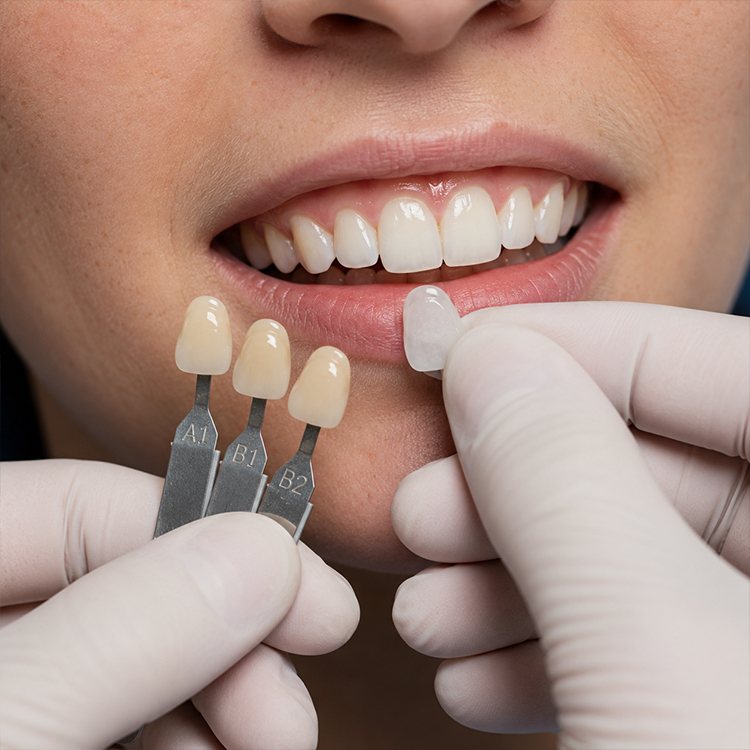
For one person, natural methods A1. For one more, BL2. For one more, it suggests slight crookedness, softer structure, low-value incisal clarity, and canine warmth. This is where premium feldspathic porcelain veneer preparation can help the conversation since photos, stump shade, appearance preferences, and incisal characterization entered into the prescription, not decoration.
The “I Hate My Temporaries” Individual
Pay attention meticulously.
Temporary veneers are not simply placeholders. They are an emotional wedding rehearsal. If the individual turns down the provisionals because the teeth feel too long, too large, as well fake, as well bright, or too “not me,” that is important data.
Disregarding it is malpractice-adjacent stupidness. I claimed what I stated.
The “I Saw This Online” Client
This person needs an electronic detoxification.
Show them actual instances, not filteringed system fantasy. Clarify that phone screens exaggerate value, social media compression misshapes texture, and many smile transformation posts conceal gum compromise, orthodontic history, whitening, crown replacements, gingival contouring, or picture editing.
What the Laboratory Requirements Before the Patient Sees the Pledge
The laboratory needs to not be asked to produce assurance from missing details.
Musician Dental Laboratory’s website consistently directs towards an electronic, B2B process: scans, color data, stump shade, photos, occlusal notes, material choice, and clear esthetic goals. Its client instance page additionally describes veneer-focused esthetic lines, digital smile design workflows, standardized color communication, and digital photography protocols for aesthetic centers and smile facilities. That is the operational spinal column behind great expectation monitoring.
Below is the list I would certainly desire prior to the patient is revealed a “similar instance”:
Situation input
Minimum appropriate version
Why it matters
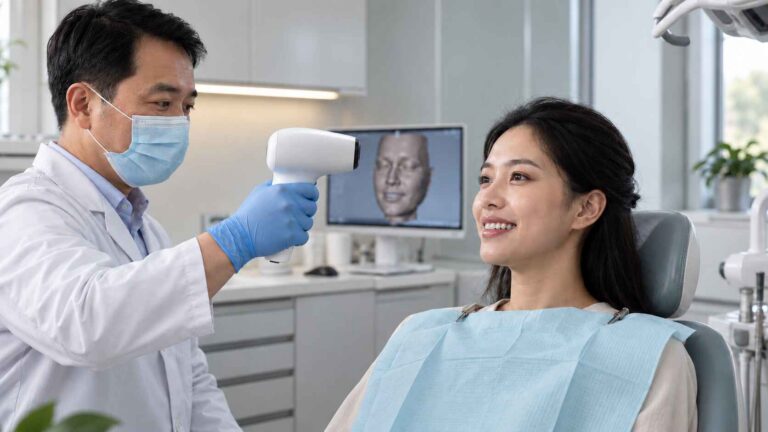
STL/IOS scans
Prep, opposing, bite
Protects against smile layout from overlooking function
Shield data
Tooth color plus stump shade
Controls worth, opacity, and masking expectations
Images
Full-face, smile, pulled back, side, occlusal
Shows face-tooth relationship and restrictions
Attack notes
Overbite, overjet, guidance, parafunction
Forecasts fracture, debonding, and side layout risk
Client recommendations
2– 3 suched as smiles plus 2 disliked smiles
Exposes taste boundaries quicker than spoken summaries
Mock-up/wax-up
Authorized or modified before final
Turns abstract expectations into testable geometry
Permission keeps in mind
Risks, alternatives, maintenance, substitute
Safeguards person autonomy and minimizes conflict threat
For bite-risk instances, I would also aim medical professionals towards the website’s post on deep bite and edge-to-edge veneer risks, since that item mentions the uncomfortable factor clearly: veneers in deep bite or edge-to-edge scenarios are not simply aesthetic; they are occlusion situations using cosmetic apparel.
The Very Best Veneer Case Discussion Is a Controlled Disappointment
Yes, dissatisfaction.
A great assessment eliminates fantasy early so the final result can seem like a win. A bad consultation lets the individual maintain the fantasy till cementation day, after that everyone pretends the problem is “interaction.”
When showing porcelain veneer instances, I would rather under-sell these 5 things:
Final brightness
Perfect symmetry
“No-prep” expediency
Long-term discolor resistance
Life-span without substitute or maintenance
After that I would certainly over-explain these five things:
Shield limitations from stump shade
Attack and bruxism danger
Upkeep and night guard conformity
The distinction in between veneers, crowns, and orthodontics
The final approval factor before bonding
This is why the “try-in” conversation matters a lot. The client ought to recognize when shape, length, shade, and fit can still be readjusted, and when they come to be much harder or difficult to change. Cleveland Facility keeps in mind that during positioning, the dental professional checks shape, shade, and fit before bonding, and clients should speak out if they want something changed. That is not a laid-back information. That is the last leave.
Frequently asked questions
What should be taken into consideration when showing veneer cases to people?
When revealing veneer situations to people, dental professionals ought to discuss the beginning condition, product selection, shade limitations, attack threat, gum display, preparation degree, maintenance demands, and whether the presented result is scientifically equivalent to the client’s very own mouth, not just visually appealing. This protects against before-and-after pictures from becoming unrealistic pledges.
The functional move is to reveal matched cases, not simply attractive situations. If a patient has dark stump shade, deep bite, economic crisis, or bruxism, do disappoint an excellent low-risk instance without describing why their outcome may vary.
Why are oral veneers before and after pictures high-risk for assumption management?
Dental veneers before and after images are risky because people usually interpret them as predicted end results, even when the photographed situation had various enamel thickness, bite conditions, lip dynamics, stump shade, gingival design, material choice, and maintenance behaviors. A picture can enlighten, yet it can also silently overpromise.
The repair is basic: systematize the photography, reveal constraints, and discuss what part of the result originated from veneers versus lightening, orthodontics, gingival contouring, crowns, or wider smile layout.
Exactly how should dental experts describe porcelain veneer situation constraints?
Dentists must explain porcelain veneer case limitations by linking the desired look to biological and mechanical restraints, including enamel elimination, bonding substratum, ceramic density, occlusion, parafunction, stump shade, gum health and wellness, and the person’s long-term upkeep obligations. The client needs the rules, not simply the desire.
I would reveal the individual the “why” behind every compromise. If the incisal side can not be lengthened safely, claim so. If BL1 will certainly look man-made versus the face, say so.
What is the duty of the oral laboratory in person assumption administration?
The oral laboratory supports assumption management by translating medical documents into sensible restorative layout, including color interpretation, product referral, contour preparation, surface area texture, incisal impacts, margin high quality, and useful danger feedback. A strong laboratory does not just fabricate veneers; it aids expose weak assumptions before they become remakes.
That is why dental professionals need to send pictures, stump shade, scans, attack records, smile references, and occlusal notes early. The lab can not protect a case it can not see.
Just how do you manage individual expectations for veneers prior to cementation?
Before cementation, individual expectations ought to be handled with try-in confirmation, clear discussion of shade and form, confirmation of pronunciations and comfort, review of upkeep tasks, and documents that the person understands which modifications are still feasible prior to final bonding. Cementation should not really feel like a surprise reveal.
This is where hurried dentistry gets costly. Decrease. Allow the patient see the veneers in sensible light, compare them with authorized references, and confirm that the last design matches the agreed goal.
Your Following Actions
If you show veneer cases, stop treating them like profile trophies. Treat them like scientific evidence.
Develop an instance presentation method: standardized photos, matched situation instances, stump shade paperwork, bite-risk testing, product description, mock-up approval, and created permission language that mirrors the client’s actual circumstance. And if your current laboratory can not sustain that degree of interaction, send out a test instance via Musician Dental Lab’s veneer and smile layout inquiry procedure before your following high-stakes smile remodeling.