How to Provide Better Case Communication for Layered Zirconia Crowns
The Dirty Secret: Most Zirconia Remakes Start Before Manufacturing
Margins tell stories.
I have seen enough crown cases go sideways to say the quiet part out loud: many “material failures” are not material failures at all, but communication failures that get dressed up later as shade problems, porcelain problems, bite problems, or lab problems because nobody wants to admit the prescription was too thin to guide a real technician.
So why are we still sending layered zirconia crowns with a shade, a tooth number, and a prayer?
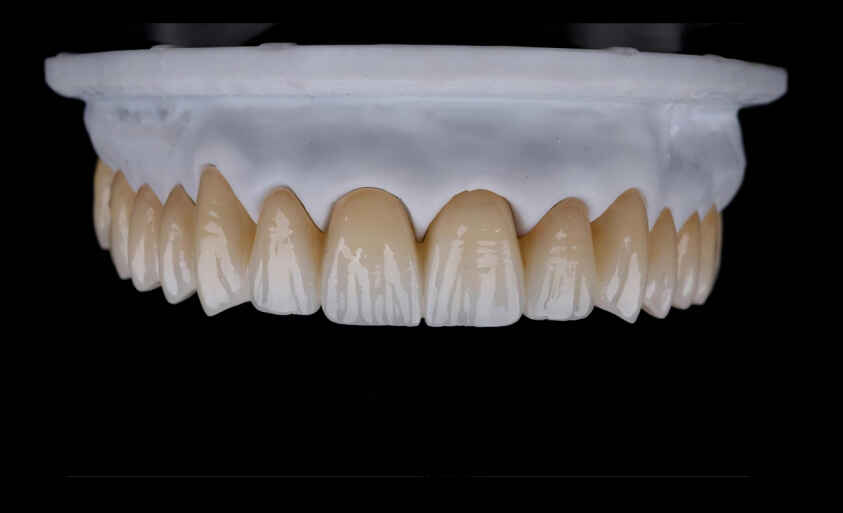
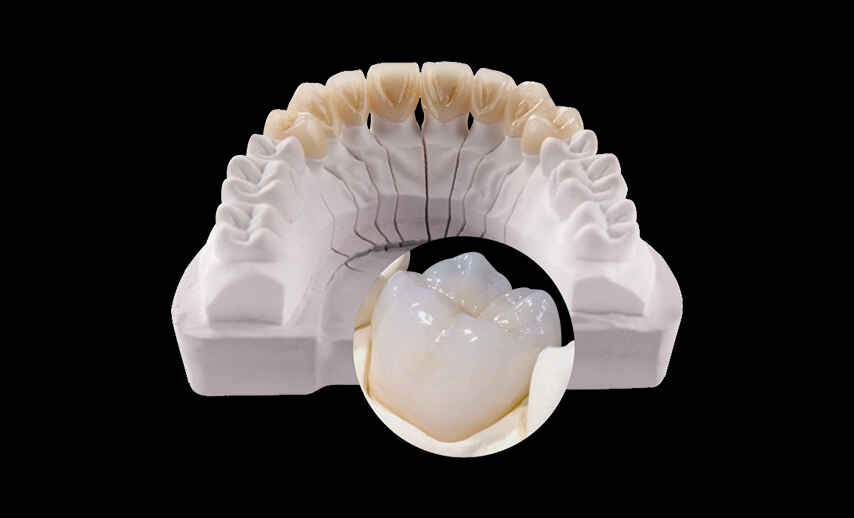
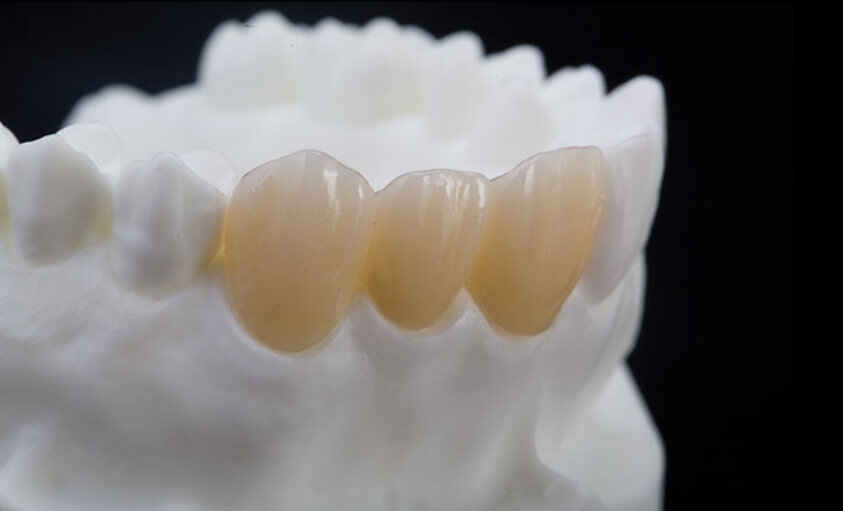
Layered zirconia crowns are not generic zirconia crowns. They are zirconia-core restorations with porcelain layering added for depth, translucency, surface texture, and lifelike esthetics. Artist Dental Lab describes its layered zirconia crown option as a zirconia core plus porcelain layering for esthetic-zone cases needing both strength and premium characterization.
That combination is powerful. It is also less forgiving than the sales brochure makes it sound.
The zirconia framework may survive. The facial porcelain may not. The crown may fit. The value may still be wrong. The shade tab may say A2. The patient may still see a white block in tooth #8.
This is the hard truth: layered zirconia crown communication must be treated like a diagnostic record, not an order form.
Layered Zirconia Crowns Are a System, Not a Product Name
When a dentist writes “layered zirconia crown,” the lab still has unanswered questions. Which tooth? Which stump color? Which smile line? Which opposing material? Which occlusal scheme? Which porcelain support design? Which surface texture? Which value target? Which incisal translucency? Which failure risk are we accepting?
Tiny words. Big bill.
A 2014 NIH-hosted review on zirconia ceramics reported chip-off fracture rates up to 20% at five years in zirconia systems. That number does not mean layered zirconia is bad; it means veneering porcelain is not magic, and unsupported or poorly planned porcelain will punish lazy planning.
The ADA’s ACE Panel reporting also gives us a useful reality check: 98% of surveyed dentists said they use zirconia for posterior crowns, 61% use it for anterior crowns, and 36% named shade matching and translucency as top disadvantages. That is not anti-zirconia. That is the market telling us where the weak spot lives.
And yes, there is a regulatory backdrop too. Under 21 CFR Part 872, dental devices intended for human use in commercial distribution fall under FDA dental-device classification. That does not make a shade photo legally perfect, but it should remind every clinic and lab that crown communication is part of a documented medical-device workflow, not casual texting.
Table of Contents
What Makes Layered Zirconia Communication Different?
Monolithic zirconia communication is often about strength, fit, occlusion, contacts, and finish. Layered zirconia communication adds a second burden: the visible porcelain layer has to fool the eye.
The lab needs to know whether the restoration should mask, transmit, blend, brighten, or characterize. Those are not synonyms.
A crown with a ZrO₂ core and facial porcelain behaves differently from lithium disilicate, Li₂Si₂O₅, and differently again from full-contour multilayer zirconia. If the patient is a bruxer, if clearance is thin, or if the crown sits in heavy guidance, the better answer may be full-contour multilayer zirconia for high-strength crowns and bridges, which Artist Dental Lab positions for posterior strength cases, everyday crown-and-bridge workflows, and reduced porcelain chipping risk.
But if tooth #8 is in a high-smile line, the patient has natural adjacent enamel, and the case needs incisal depth, layered zirconia may be exactly the right tool.
The tool is not the problem. The blind prescription is.
The Case Packet I Would Demand Before Touching Porcelain
Photos save remakes.
For layered zirconia crown communication, I would rather receive an imperfect but complete photo set than a polished prescription with no visual proof, because shade, value, stump color, and surface texture cannot be reconstructed from “A2, make natural” unless the lab technician also happens to be a mind reader.
A 2022 review on dental color matching found that digital photography and spectrophotometric measurements helped reduce color differences and incorrect shade matching.
Here is the minimum packet I would send for any serious anterior layered zirconia crown case.
This is not paperwork. This is the price of precision.
And I would add one more thing: tell the lab what you are afraid of. Dark stump? Say it. High smile line? Say it. Patient already rejected a crown elsewhere? Say it. Bruxer wearing through natural enamel? Say it twice.
Shade Communication: Stop Worshipping A2
A2 is not a plan.
The classic dental shade mistake is pretending hue is the whole story. It is not. In layered zirconia crown shade communication, value usually betrays the case first. A crown can be close in hue and still scream fake because it is too bright, too flat, too opaque, or too clean beside aged enamel.
This is where I get opinionated: most bad shade communication is caused by shame. The dentist does not want to send messy photos. The lab does not want to push back. The patient wants “natural but whiter.” Everyone acts polite. Then the crown fails emotionally before it fails physically.
For layered zirconia crown shade matching, I would send:
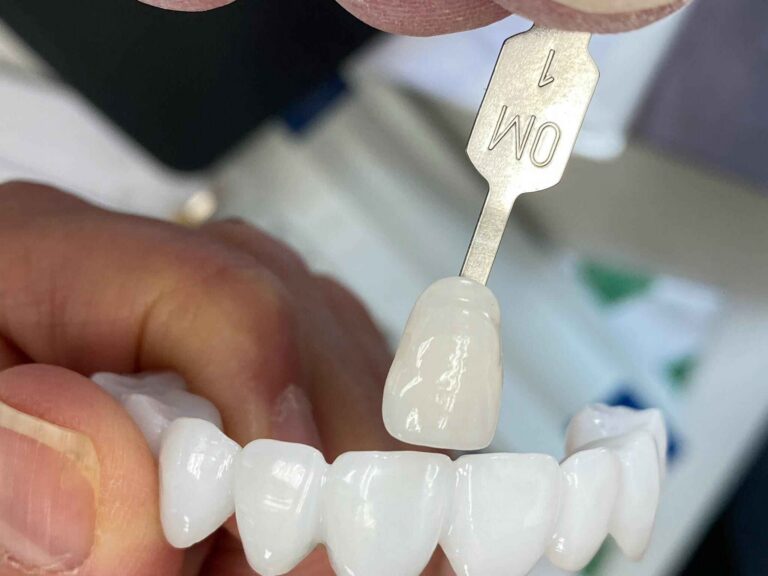
1. A Shade Tab in the Same Plane as the Tooth
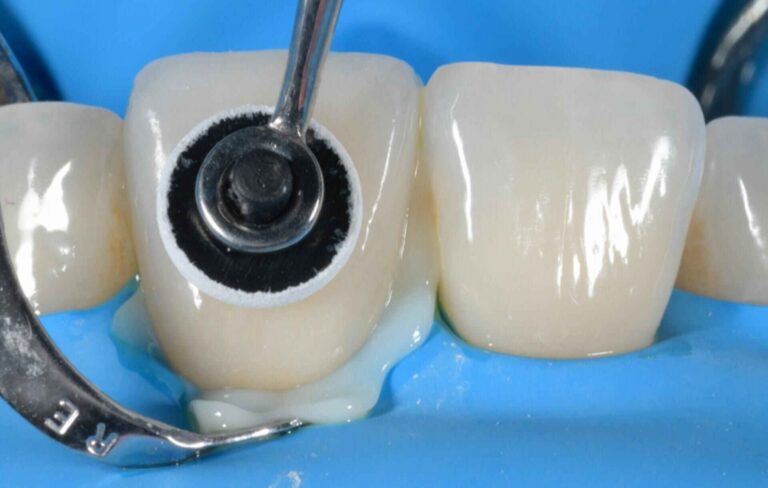
Not floating in front. Not angled. Not in a glamour photo. Put the VITA Classical or VITA 3D-Master tab edge-to-edge with the target tooth, same lighting, same distance, same exposure.
2. A Stump Shade Photo
Layered zirconia can mask better than some translucent ceramics, but the lab still needs to know what it is fighting. A ND2 stump is not a ND8 stump. A tetracycline-stained prep is not a clean vital prep.
3. A Value Photo or Black-and-White Conversion
Color distracts. Value exposes.
If the lab cannot see whether the adjacent central is brighter, darker, or more translucent, the technician is guessing. For a single central incisor, guessing is expensive.
4. Texture and Incisal Detail
The porcelain layer is where the technician can build mammelons, incisal halo, subtle translucency, craze lines, and surface luster. But only if the clinical photo shows those features.
This is why I would naturally point a dentist comparing materials toward Artist Dental Lab’s article on E.max crowns vs layered zirconia crowns, because the optical decision is not “pretty versus strong.” It is substrate, clearance, function, and risk.
Occlusion, Clearance, and Margins: The Three Records That Humble Everyone
Bite breaks beauty.
Layered zirconia crowns are often prescribed because a clinician wants strength with better facial esthetics. Fair. But porcelain layering introduces a visible ceramic layer that must be supported, protected, and kept out of the wrong kind of stress.
If the case has parafunction, edge-to-edge movement, implant support, group function, or thin clearance, the lab must know before the coping and porcelain design are built. Do not bury that information in a phone call nobody documents.
Margin design matters too. Artist Dental Lab’s page on how margin design differs between zirconia crowns and E.max crowns makes the same point I would make at a lab bench: preparation geometry, ceramic thickness, marginal adaptation, cementation logic, and remake risk meet at the finish line.
Here is the blunt version.
Communication Failure
What the Dentist Thinks Happened
What Often Really Happened
No stump shade sent
“The lab missed the shade”
The lab did not know the substrate was controlling the result
No occlusion notes
“The porcelain chipped”
The porcelain was placed into a hostile contact zone
No smile photo
“The crown shape looks off”
The lab designed from teeth, not from the face
No margin photo
“The fit is inconsistent”
The scan did not tell the whole tissue and finish-line story
No clearance note
“The crown looks bulky”
The lab had no room to create strength and esthetics together
Vague final instruction
“Patient wanted more natural”
Nobody defined natural: lower value, more texture, less opacity, or warmer chroma
This is why dental lab case communication should be standardized, not improvised.
The Better Prescription Template for Porcelain Layered Zirconia Crowns
I would use this format for every esthetic-zone layered zirconia case.
Material Request
Layered zirconia crown, ZrO₂ core with facial porcelain layering. Specify whether porcelain should be facial-only, facial-incisal, or full anatomical layering depending on lab protocol and occlusal risk.
Tooth and Case Type
Tooth number, single-unit or multi-unit, implant-supported or tooth-supported, replacement crown or first-time restoration.
Prep and Margin
Margin type, reduction quality, subgingival depth, tissue issues, scan reliability, and whether a margin photo is included.
Shade and Stump
Final shade target, stump shade, adjacent tooth shade, whether masking is needed, and whether the patient wants exact matching or mild whitening.
Functional Risk
Bruxism, nightguard use, anterior guidance, canine guidance, group function, opposing zirconia, opposing lithium disilicate, metal, natural enamel, or implant.
Esthetic Instructions
Surface texture, luster, incisal translucency, halo, white spots, crack lines, mamelon effect, cervical saturation, and value control.
Delivery Expectation
Try-in planned or final delivery only. Cement strategy if value is sensitive. Photos requested before glazing if the case is high risk.
This is not overkill. This is how you avoid paying twice.
When the Lab Should Push Back
Some dentists hate this. I do not care.
A serious lab should push back when the case does not support the requested material. If the patient has severe bruxism, minimal clearance, implant loading, and a posterior position, I would question layered zirconia and discuss full-contour multilayer zirconia instead. If the case is a single central incisor with high optical demand and favorable prep, I might also compare E.max crowns for natural translucency against layered zirconia before locking the plan.
The worst labs say yes to everything. The best labs slow the case down before it becomes a remake.
For Artist Dental Lab’s workflow, the most natural conversion point is not a generic “send case” button. It is case review. A clinician sending anterior layered zirconia records should use the Artist Dental Lab contact page with product, material, indication, and case notes, especially when the case involves crowns and bridges, zirconia, anterior esthetics, or implant-supported prosthetics.
FAQs
What is the best way to communicate a layered zirconia crown case to a dental lab?
The best way to communicate a layered zirconia crown case is to send a complete diagnostic packet with STL scans, bite records, stump shade, shade-tab photos, full-face smile images, close-up texture references, occlusal risk notes, margin photos, and a written esthetic target that tells the technician what to match, mask, or avoid.
After that, be specific about porcelain placement and risk. “Layered zirconia, A2” is too vague for a single central incisor or high-smile-line case. The lab needs to know whether the crown must hide a dark prep, match aged enamel, survive bruxism, or carry incisal translucency.
Why is shade communication harder for layered zirconia crowns?
Shade communication is harder for layered zirconia crowns because the final appearance comes from the interaction between the zirconia core, porcelain layering, stump color, restoration thickness, surface texture, glaze, lighting, and adjacent natural teeth, not from a single shade-tab label such as A1, A2, B1, or 1M2.
That is why photos matter. The lab must see value, chroma, translucency, and texture. For layered zirconia crown shade matching, a black-and-white value reference and stump shade photo often prevent more disappointment than another casual shade note.
What photos should I send for zirconia crown shade communication?
For zirconia crown shade communication, send a retracted shade-tab photo, stump shade photo, full-face smile photo, close-up adjacent tooth photo, lateral view, incisal view if relevant, and a black-and-white value reference, all taken with stable lighting, clean teeth, no lipstick distraction, and the shade tab in the same plane as the target tooth.
Do not over-edit images. Do not rely on ring-light glamour shots. And do not send one cropped photo of the prep and expect the technician to recreate the patient’s smile architecture from a tiny square.
When should I choose layered zirconia crowns instead of full-contour zirconia?
Layered zirconia crowns should be chosen instead of full-contour zirconia when the case needs a stronger zirconia substructure but also demands hand-built porcelain depth, incisal effects, individualized surface texture, and higher esthetic customization in the visible smile zone, especially for anterior or esthetic-zone restorations with manageable functional risk.
Full-contour zirconia often makes more sense for posterior load, bruxism, implant-supported restorations, or limited clearance. Layered zirconia earns its place when beauty is not optional and the clinical records support the material choice.
What causes remakes in porcelain layered zirconia crowns?
Remakes in porcelain layered zirconia crowns are commonly caused by weak dentist-lab communication, missing stump shade, poor shade-tab photography, unreadable margins, inadequate reduction, unmanaged occlusion, unsupported veneering porcelain, wrong material selection, unclear esthetic expectations, and failure to document patient-specific risks such as bruxism, high smile line, or dark underlying tooth structure.
The remake usually looks like a lab problem at the end. At the beginning, it often looked like a thin prescription.
Final Thoughts: Send Better Evidence, Not Longer Excuses
The next time you prescribe layered zirconia crowns, do not ask the lab to rescue an incomplete case with porcelain artistry. Send the evidence: STL files, margins, stump shade, shade photos, smile photos, occlusion notes, reduction realities, patient risk, and a direct esthetic target.
Then make the lab answer back.
If the case is a true esthetic-zone candidate, review Artist Dental Lab’s layered zirconia crown workflow and send the full case details through the contact page. If the case carries heavier functional risk, compare it against full-contour multilayer zirconia before committing to porcelain layering.
Better communication will not make every crown perfect.