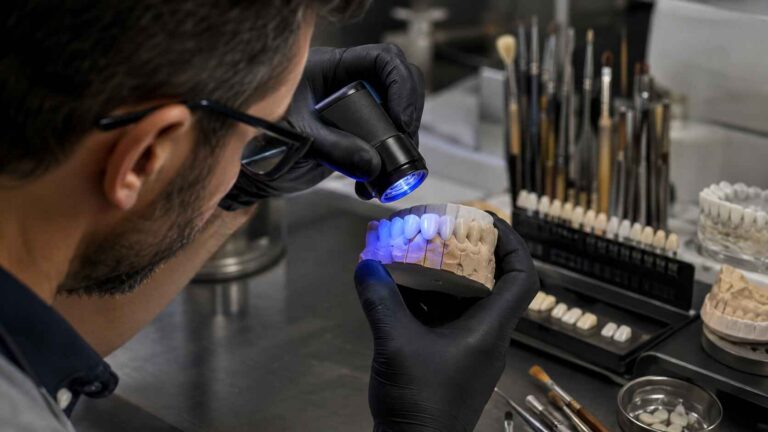
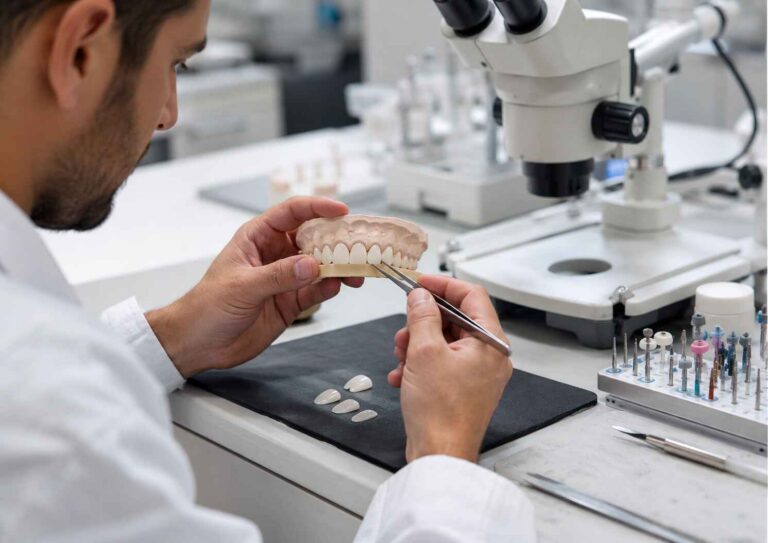
Are Zirconia Veneers Suitable for High-Smile-Line Cases?
The Uncomfortable Answer: Yes, But Not by Default
Zirconia veneers are suitable for some high-smile-line cases, but I would not call them the default choice. That answer annoys sales teams. Good.
Margins show fast.
When a patient has a high smile line, the upper lip exposes more cervical tooth structure and gingival architecture, which means the case is no longer just about “white esthetics”; it becomes a pink-white interface problem where emergence profile, zenith symmetry, ceramic value, cement shade, and preparation discipline all get judged in one glance. So why would anyone pretend material strength alone solves that?
A UCL Eastman Dental Institute study on gingival display found that high smile lines were ranked as the least attractive gingival amount by 88.7% of respondents, while a symmetrical gingival architecture pattern was preferred by 65.3%. That is the real trap: patients may say they want “white teeth,” but what destroys the case is often the gingival frame around those teeth.
I’ve seen this mistake more than once: a clinic chooses zirconia veneers because the patient is a grinder, the stump shade is dark, or the patient wants “Hollywood white,” then everyone acts surprised when the cervical third looks too dense under a lifted lip. That is not zirconia failing. That is case selection failing.
Table of Contents
Why High-Smile-Line Veneers Are a Different Animal
A high smile line means the gingival margins are visible during a full smile, often with noticeable gingival display. In plain terms, the patient is showing the edge of the restoration-to-gum relationship, not just the incisal edges. That changes everything.
With an average smile line, a tiny value mismatch at the cervical third may hide under the lip. With a high smile line, it walks into the room first.
For high smile line veneers, I care about five things before I care about brand names:
Gingival zenith symmetry
Cervical emergence profile
Stump shade and masking demand
Ceramic translucency versus value control
Bonding surface, enamel remaining, and occlusal risk
Zirconia veneers can help when masking and fracture resistance matter. But zirconia can also flatten light. And in a high-smile-line case, flat light looks fake faster than almost anything else.
The FDA’s 2024 dental ceramics guidance classifies these materials within prescription-use prosthetic dentistry and references ISO 6872 ceramic-material standards, which is a dry regulatory way of saying this is not beauty-counter material; it is medical-device territory with performance expectations. The FDA dental ceramics guidance is worth reading if your team still talks about veneers like nail extensions.
What Zirconia Veneers Actually Do Well
Zirconia, chemically ZrO₂, is not one thing anymore. We now have high-strength 3Y-TZP, more translucent 4Y and 5Y zirconias, and multilayer blanks that try to balance strength and optics. That sounds clean in a brochure. Chairside, it is messier.
The ADA’s ACE Panel reported that 99% of surveyed dentists using zirconia used it for natural-tooth restorations, 98% used it for posterior crowns, and 61% used it for anterior crowns. The same report said shade matching and translucency were the most cited disadvantages, named by 36% of respondents, while 57% cited flexural strength or fracture resistance as zirconia’s biggest advantage. That is the whole debate in four numbers. The ADA report on zirconia restorations does not flatter lazy anterior planning.
So I like zirconia veneers when the case has a reason. Real reason. Not “because zirconia is strong.”
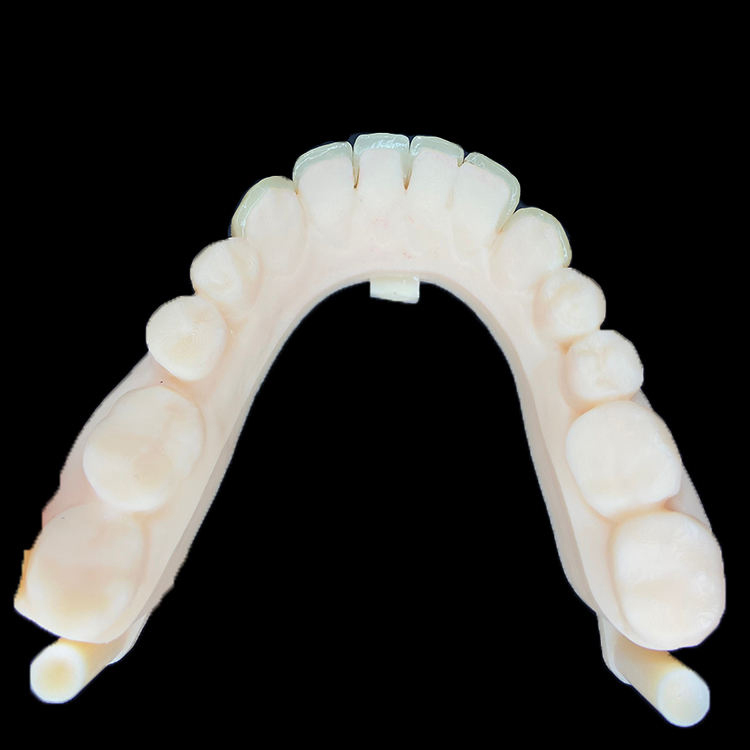
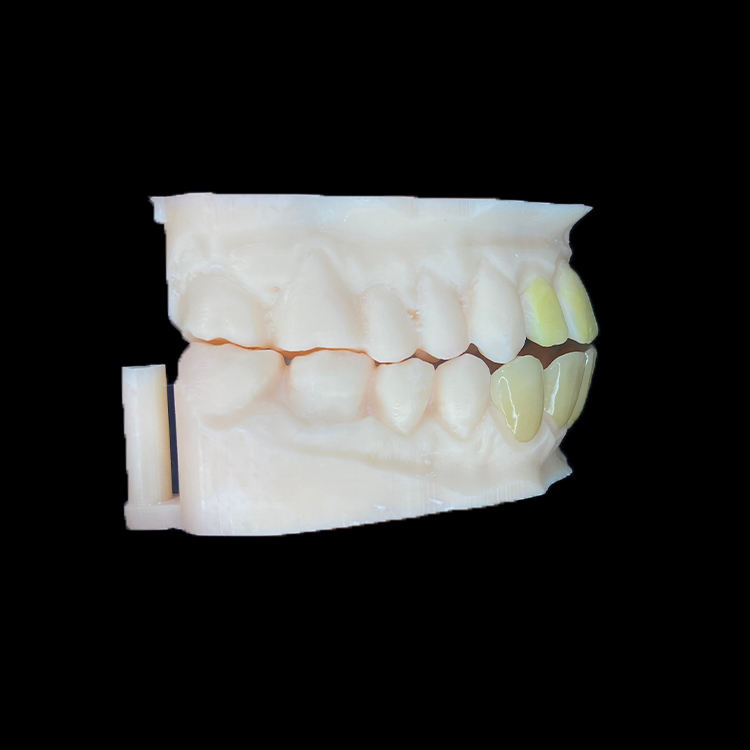
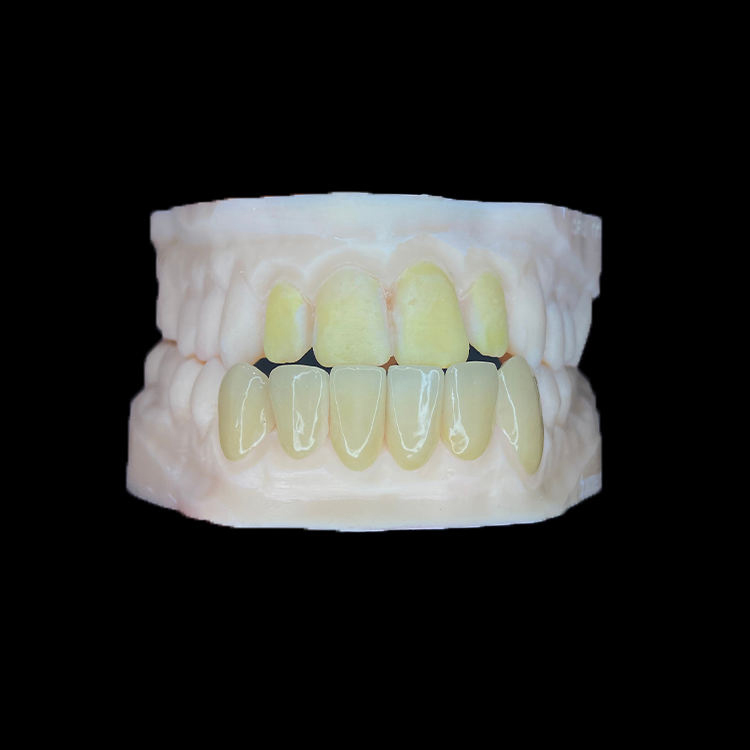
Good indications may include worn incisal edges, mild discoloration masking, functional risk, bruxism history after occlusal management, thin available space where value must stay controlled, or a patient who needs better fracture tolerance than a more glassy ceramic can offer. Artist Dental Lab’s Anterior Zirconia Veneer page positions the material around high-strength smile-zone restorations, CAD/CAM fit, shade control, stump shade records, smile photos, and QC checks for margins, contacts, texture, and emergence profile. That is the right conversation. Not “zirconia is stronger, so use it.”
Where Zirconia Veneers Can Betray a High-Smile-Line Case
Here is my hard opinion: zirconia veneers are over-prescribed when the clinician is scared of failure and under-communicates esthetics.
But fear is not a treatment plan.
If the case is enamel-rich, minimally prepared, bright but natural, and the patient shows every gingival margin, I usually want to discuss lithium disilicate or feldspathic porcelain before zirconia. Artist Dental Lab’s E.max Veneer workflow is built around lithium disilicate, natural translucency, adhesive resin cement protocols, and predictable cosmetic cases, while the Feldspathic Veneer option leans into enamel-like translucency, micro-texture, delicate incisal effects, and complex shade blending. Those two pages matter because they describe the optical side of the argument that zirconia vendors sometimes rush past.
I am not anti-zirconia. I am anti-pretending.
If the patient has a high lip line and wants natural lateral-incisor translucency, warm cervical blending, halo effects, and soft internal depth, then high-translucency zirconia has to earn the case. It does not get a free pass because it survives load.
Zirconia vs Porcelain Veneers in High-Smile-Line Planning
Broad cosmetic cases needing balance of strength, translucency, and repeatability
Elite enamel-rich esthetic cases with high optical demand
High-smile-line risk
Can look too dense cervically if shade/value planning is weak
Usually safer optical balance when stump shade is manageable
Beautiful, but technique-sensitive and less forgiving functionally
Masking ability
Stronger masking potential, especially when opacity is needed
Moderate to strong depending on ingot/block and thickness
Limited masking unless enough space and expert layering exist
Translucency
Improved in modern 4Y/5Y options, but still case-dependent
Generally strong esthetic predictability
Highest enamel-like potential
Bonding discussion
Requires strict surface treatment and cement protocol
Familiar adhesive veneer pathway
Highly adhesive, but prep and enamel quality matter
My bias
Use when there is a mechanical or masking reason
Use as the first serious discussion for many multi-unit cases
Use when beauty ceiling matters more than production efficiency
The table is not a popularity contest. It is a risk map.
Artist Dental Lab’s Full E.max Veneer page frames monolithic lithium disilicate around consistent strength, fit, and natural translucency, while the Layered E.max Veneer option adds porcelain build-up for depth, vitality, incisal effects, and surface texture. That internal split is useful for high-smile-line cases because it separates production consistency from optical ambition.
The “Gummy Smile” Problem Is Not Always a Veneer Problem
High smile line veneers are often sold as tooth solutions. Sometimes they are gum problems. Sometimes lip problems. Sometimes orthodontic problems. Sometimes all three.
A 2026 case report on Digital Smile Design-guided lithium disilicate laminate veneers described a 29-year-old female patient with an imbalanced smile line, tooth form, tooth angle, and color; the plan included DSD, diagnostic wax-up, mock-up, gingivectomy, and 10 anterior veneers rather than orthodontic treatment. That matters because the ceramic was only one part of the correction. The DSD-guided veneer case report shows the kind of interdisciplinary planning high-smile-line cases usually deserve.
So when someone asks, “Are zirconia veneers good for gummy smile cases?” I ask a colder question: what is causing the gummy smile?
If the cause is altered passive eruption, you may need periodontal crown lengthening or gingival recontouring. If the cause is vertical maxillary excess, veneers are lipstick on architecture. If the upper lip is hypermobile, botulinum toxin, lip repositioning, or orthodontic planning may be part of the conversation. If the teeth are short because of wear, then restorative length and incisal edge position may help.
Zirconia cannot diagnose that. Neither can E.max. The dentist has to.
The Industry’s Dirty Little Shortcut: Stronger Gets Sold as Safer
Here is the part manufacturers and labs do not always say loudly enough: stronger ceramics can reduce some failures while creating different failures.
The veneer may not chip. Great. But the case can still fail esthetically. It can fail biologically. It can fail because the margin is visible, the cervical contour is bulky, the papilla looks compressed, or the color value screams against natural gingiva.
The Associated Press reported in 2024 that unlicensed “veneer techs” were marketing low-cost veneer procedures online, with some full-set offers around $4,000 to $5,000, while dentists commonly charge $1,000 to $2,000 per tooth. The same report noted that veneers involve enamel removal and are considered irreversible by the ADA. The AP investigation into fake veneer providers is not about zirconia specifically, but it exposes the bigger market disease: cosmetic dentistry is being sold faster than it is being diagnosed.
And demand is not slowing down. The ADA Health Policy Institute reported that U.S. national dental expenditure reached $189 billion in 2024, up $7 billion after inflation from 2023, with out-of-pocket spending increasing 3.3%. That means patients are still paying, still shopping, and still vulnerable to simple answers. The ADA national dental expenditure report should make every cosmetic practice more careful, not more aggressive.
My Case-Selection Rules for Zirconia Veneers in High-Smile-Line Patients
Use zirconia veneers when strength and masking have a documented reason
I want photos, stump shade, opposing arch scans, occlusal notes, reduction maps, bite records, and a clear value target. Artist Dental Lab asks for STL or IOS scans, opposing arch, bite registration, margin notes, shade selection, stump shade, smile photos, and design references for anterior zirconia veneers. That is exactly the file a high-smile-line case needs before anyone starts promising magic.
Be cautious when the patient wants “natural but very bright”
That phrase is dangerous. “Natural” wants translucency, texture, depth, and variation. “Very bright” wants value control and opacity. Zirconia can help with the second demand and fight the first one if handled bluntly.
Do not let the lab guess the gingival story
A high-smile-line veneer case should include full-face smile photos, retracted views, lateral views, shade tabs in the frame, stump shade, gingival zenith markings, and the approved mock-up. If the lab receives only an intraoral scan and “BL2,” the result is already at risk.
Consider material mixing only with discipline
Zirconia in functional zones and lithium disilicate in the optical smile zone can work, but only if value, surface texture, and transition logic are coordinated. Artist Dental Lab’s guide on coordinating anterior and posterior materials in full-mouth rehabilitation makes the same practical split: anterior selection is usually about translucency, value, texture, and guidance behavior, while posterior selection is more about fracture tolerance and occlusal stability.
FAQs
Are zirconia veneers good for high smile lines?
Zirconia veneers can work for a high smile line when the clinician controls gingival architecture, cervical contour, stump shade, prep depth, and cement shade, but they are not the automatic first choice because a high lip position exposes every opacity mismatch and margin decision. In strong-function or masking-heavy cases, zirconia may be defensible. In enamel-rich beauty cases, I would compare E.max and feldspathic options first.
What is a high smile line?
A high smile line is a smile pattern where the upper lip rises enough to reveal the gingival margins and often several millimeters of maxillary gingiva, making tooth length, zenith symmetry, emergence profile, crown proportion, and ceramic value more visible than in average-smile-line veneer cases. This is why the same veneer material can look acceptable on one patient and harsh on another.
Are zirconia veneers better than porcelain veneers?
Zirconia veneers are better than porcelain veneers only when the case needs higher fracture resistance, stronger masking, or more functional tolerance; porcelain options such as lithium disilicate or feldspathic ceramics are often better when translucency, enamel-like depth, and cervical softness are the dominant esthetic demands. The best veneer is the one that matches the risk profile, not the one with the loudest material claim.
What are the best veneers for a gummy smile?
The best veneers for a gummy smile are the restorations chosen after diagnosing why gingival display exists, because excessive gum show may involve altered passive eruption, short clinical crowns, lip hypermobility, vertical maxillary excess, tooth wear, or poor gingival architecture. Veneers alone may help tooth proportion, but they cannot correct every gummy smile cause.
Can zirconia veneers look natural on front teeth?
Zirconia veneers can look natural on front teeth when high-translucency zirconia, accurate stump-shade communication, controlled ceramic thickness, proper surface texture, correct cement shade, and disciplined cervical contouring are used together, but they are less forgiving than many marketing claims suggest. The higher the smile line, the more obvious the mistakes become.
What should dentists send to the lab for high-smile-line zirconia veneer cases?
Dentists should send the lab STL or IOS scans, opposing arch records, bite registration, margin notes, stump shade, standard shade photos, full-face smile photos, retracted images, approved mock-up files, occlusal guidance notes, and a written esthetic target for value, translucency, texture, and incisal edge position. Without that, the lab is not designing; it is guessing.
Final Thoughts: Make Zirconia Earn the Case
Zirconia veneers are not wrong for high-smile-line cases. Lazy zirconia planning is wrong.
Use zirconia when the case demands strength, masking, CAD/CAM precision, and controlled value. Be more cautious when the patient shows a lot of gingiva and wants a soft, enamel-like, highly translucent smile. In those cases, compare zirconia against E.max veneers, layered E.max veneers, and feldspathic veneers before committing.
If you are a clinic, dental group, or lab planning high-smile-line veneers, send Artist Dental Lab a complete case file with STL scans, bite records, stump shade, smile photos, mock-up references, and margin notes. Start with the Anterior Zirconia Veneer workflow if strength and masking are part of the problem, or use the Contact Us page to request a B2B price list and trial case review before the patient is promised a material that may not fit the smile.