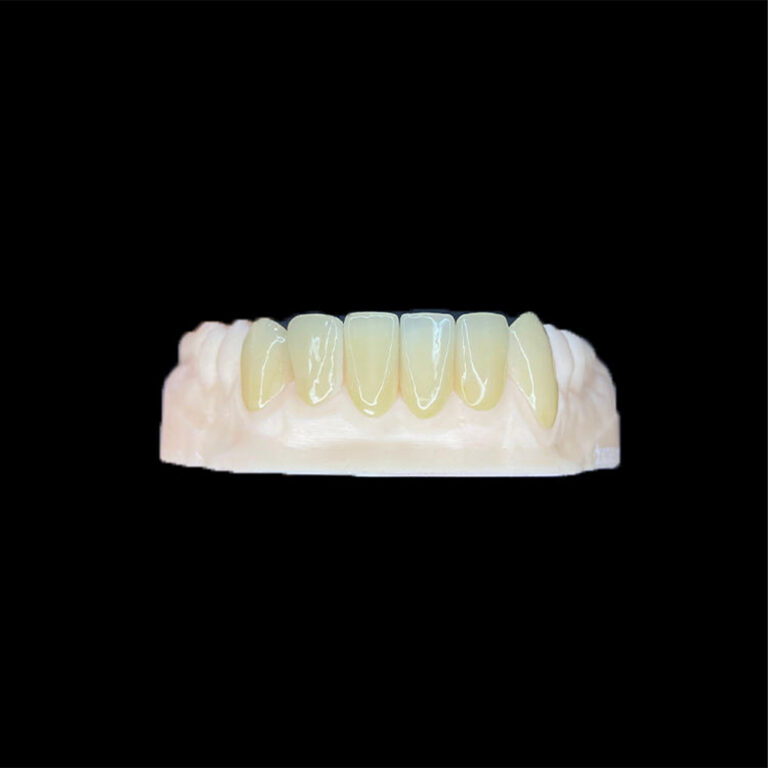
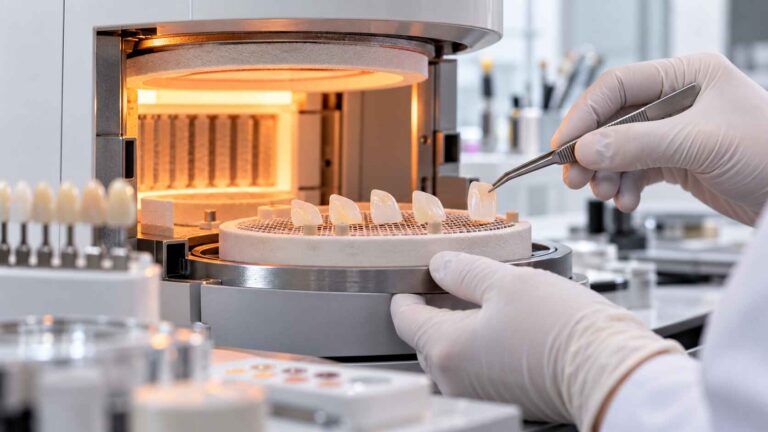
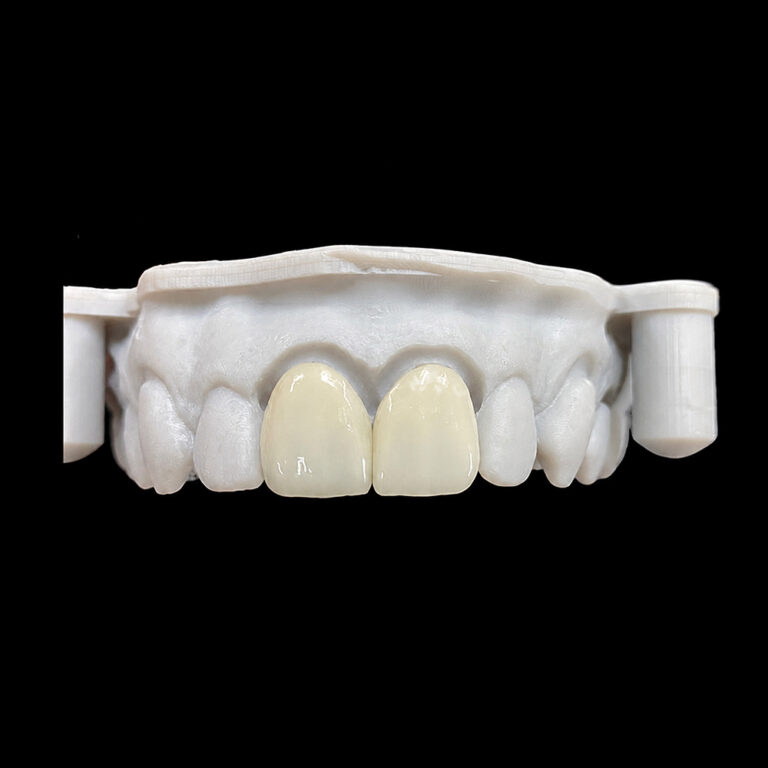
価格・サンプルに関するお問い合わせ
ジルコニアクラウン、二ケイ酸リチウムクラウン、ベニア、OEMサービス、あるいは修復物の卸売り注文を比較検討している歯科技工所、歯科医院、販売代理店、および調達担当者の方へ。.
取り扱い製品の種類、素材、月間販売数量、輸出先国、およびサンプルのご要望をお知らせください。営業チームが適切な対応策を講じることができます。.

“「ジルコニアにサンドブラスト処理を施す」というのは、プロトコルではありません。.
これは、実際に凹版表面に何が起こるかを決定づける情報の半分が欠落している指示です。.
プレッシャーはすべてを変える。.
0.2 MPaの圧力下で50 μmの酸化アルミニウムによる処理を受けたジルコニアベニアは、0.4 MPaや0.5 MPaの圧力下で処理されたものとは同じ処置を受けているとは言えません。たとえ、どちらの手順も検査依頼書や診療記録上では「Al₂O₃エアアブレーション」と大まかに記載されることがあるとしてもです。.
では、なぜ私たちは今でも、まるでその機械に「ON」スイッチしかないかのように、ジルコニアエアアブレーションについて議論し続けているのでしょうか?
粒子径、加圧、距離、処理時間、材料の生成、および修復物がすでに完全に焼結されているかどうかといった情報が省略されている、一般的なジルコニアの接着に関する指示には信頼を置いていません。 これらの変数は、単なる実験室の些細な事柄ではありません。それらは、表面粗さ、微細力学的保持力、相挙動、微細ひび割れ、曲げ特性、そして最終的には、レジンとジルコニアの界面に対してどれほどの信頼を置くべきかという点に影響を及ぼす可能性があります。.
また、ベニアの場合、不必要な衝撃を吸収できるセラミックの量が少ないため、問題が発生した際の許容範囲が狭くなります。.
したがって、重要な問いは「ジルコニアにサンドブラスト処理を施すべきか」ということではない。“
それはこうです:
特定のジルコニアベニアについて、不必要な表面損傷を引き起こすことなく、接着性を向上させつつ、どの程度まで積極的にエアアブレージョン処理を行うことができるでしょうか?
ジルコニア、すなわち二酸化ジルコニウム(ZrO₂)は、多結晶酸化物セラミックスである。二ケイ酸リチウムとは異なり、従来のガラスセラミックスにおいてフッ化水素酸エッチングやシラン処理を極めて有効にする、シリカを豊富に含むガラス相を含まない。.
その相性が理由なのです E.maxとジルコニアでは表面処理が異なります. 二ケイ酸リチウムは「エッチング・アンド・シラン」法による経路をたどる。一方、ジルコニアの結合は通常、制御された微細機械的表面改質や、10-MDPなどのリン酸エステル系モノマーの化学的性質に、はるかに大きく依存している。.
浮遊粒子による研磨が有効なのは、酸化アルミニウムの粒子がジルコニアの表面に衝突し、レジンセメントとの結合に利用できる微細な凹凸を増やすためである。.
しかし、その説明は不完全だ。.
この衝撃により、表面応力も生じます。.
押し込みを強めすぎると、密着性を向上させることを目的とした同じ処理が、より深刻な欠陥や微細な亀裂、あるいは機械的挙動の望ましくない変化を引き起こす可能性があります。.
だからこそ、私はその言い回しが嫌いです “「荒ければ荒いほどいい。」”
それは怠け者だ。.
米国国立医学図書館に収録された2021年の研究では、半透明のジルコニアを用いて 0.1、0.2、0.3、0.4、および0.5 MPaにおける50 μmのAl₂O₃. 。研究者らは、最大せん断接着強度が 0.2 MPa、15.88 ± 2.70 MPa, そして 0.3 MPa、14.32 ± 1.12 MPa. 。しかし、 0.3、0.4、および0.5 MPaでは曲げ強度が低下した, 、また、0.5 MPaの試験片では、より大きな表面損傷や微小ひび割れが見られた。著者らは、次のように推奨した。 0.2 MPa、50 μmのアルミナ その半透明のジルコニアにとって、より良い妥協案として。.
この結果は、ジルコニアによるサンドブラスト処理について私たちが語る方法を変えるはずだ。.
圧力が高まると、表面の粗さが増した。.
それは無制限の機械的利点をもたらすものではなかった。.
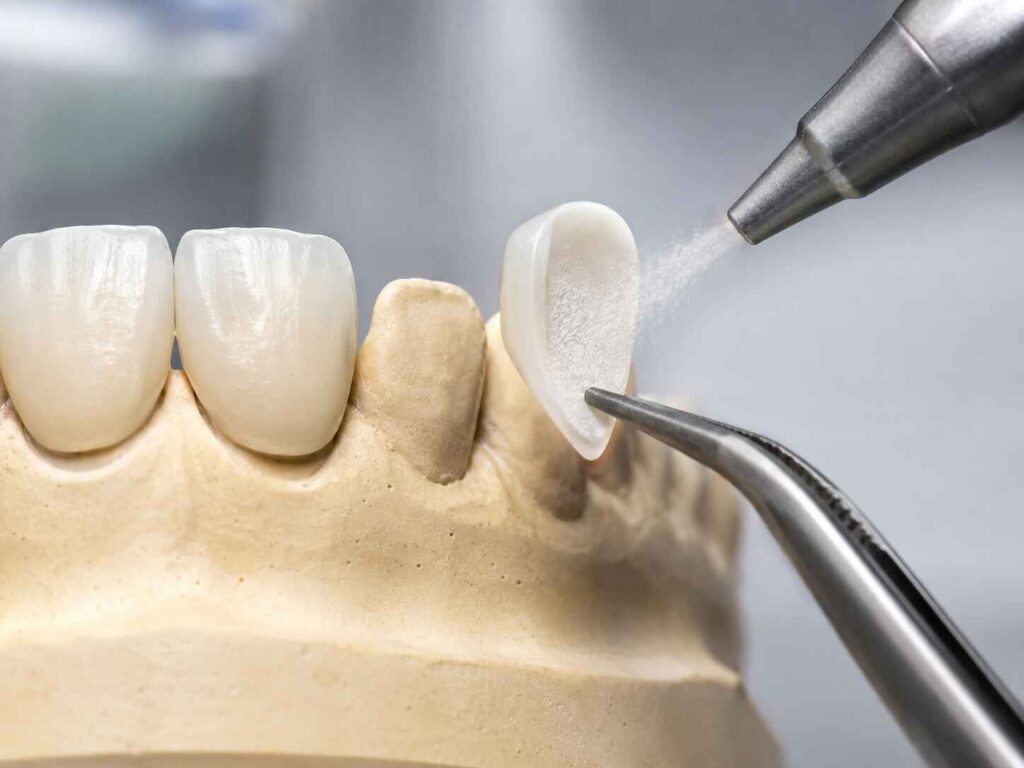
すべてのジルコニアベニアに適用できる、正当化可能な普遍的な設定など存在しない。.
それを約束する人は、3Y-TZP、4Y-PSZ、5Y-PSZ、メーカー独自の配合、修復物の厚さ、および歯科技工所での加工といった違いを無視していることになる。.
とはいえ、公表されている証拠は、私たちにとって有用な検討の範囲を示してくれています。.
多くの従来のジルコニアや半透明のジルコニアについては、, 0.2 MPa / 2 bar 付近で、30~50 μm または約 50 μm の Al₂O₃ 文献では、製造元の使用説明書に基づいて評価する価値のある、保存的なエアアブレーションの条件として繰り返し言及されている。2024年のエア・パーティクル・アブレーションおよびMDP系ボンディングに関する総説でも、同様に概ね 0.2 MPa、粒子径30~50 μm 債券の改善と機械的保存との間の有益なバランスとして。.
爆破装置の横に実際に設置したいパラメータ表は以下の通りです。.
| エアアブレーションの可変項目 | エビデンスに基づく出発点 | その重要性 | 「過剰」がもたらすもの |
|---|---|---|---|
| 研磨剤 | Al₂O₃ | 微細機械的表面改質を行う | 激しい摩耗は、薄いセラミックを損傷させる恐れがあります |
| 粒子径 | 約30~50 μm。50 μmについては広く研究されている。 | 大きな粒子を自動的に必要とせずに、表面の粗さを生成します | 粒子が大きいほど、より深刻な表面欠陥が生じる可能性がある |
| 圧力 | 調査対象となった多くのジルコニアにおいて、約0.2 MPa / 2 bar | 有益な結合や扱いやすい機械的特性と繰り返し関連付けられている | 圧力を高くすると、微細ひび割れが増加し、曲げ強度が低下する可能性がある |
| 距離 | 多くの実験プロトコルでは約10 mm | 粒子の衝突エネルギーと分布を制御する | 距離が短いほど、衝撃の強さが増す |
| 所要時間 | 公表されている実験プロトコルでは、多くの場合10~20秒となっている | 表面を均一に覆うことができます | 過度な処理は、表面の累積的な損傷を増大させる |
| ノズル角度 | 実験プロトコルでは、しばしば90°付近となる | 影響を標準化する | 角度の変化が有効衝撃エネルギーに影響を与える |
| その後の化学 | 指示がある場合は、10-MDP対応のプライマー/セメントを使用する | ZrO₂に化学結合を付与する | 摩耗のみでは、十分な耐久性のある接着が得られない可能性がある |
| 最終決定 | メーカー固有の使用説明書 | ジルコニアの種類によって挙動が異なる | 一般的な設定は、特定の材料には適さない場合があります |
距離や時間の数値については、その背景を理解しておく必要があります。研究では、エアアブレーションを概ね 10 mm, 、プロトコルはおよそ 10~20秒. 。例えば、2023年の研究では、 50 μm Al₂O₃、0.2 MPa、10 mm、20秒, 、一方、他の公表された研究では10秒間の露光が用いられている。こうした条件は、研究プロトコルがいかに標準化されているかを示しているものであり、修復剤メーカーの指示を無視してよいという許可として解釈すべきではない。.
その違いは重要だ。.
研究は私たちに境界を与えてくれます。.
IFUには、材料ごとの取扱説明が記載されています。.
ここからが、会話がますます気まずくなってくる部分です。.
その言葉 ジルコニア そこには、性質が大きく異なるいくつかの陶磁器が隠されている。.
伝統的な 3Y-TZP 約3 mol%のイットリア安定化を含み、正方晶相の割合が高い。イットリア含有量を4Yおよび5Yの配合に向けて増加させると、光学的に望ましい立方晶構造や部分的に安定化された構造の量が増加し、半透明性は向上するが、変態による靭性向上や機械的特性に変化が生じる。.
このトレードオフは、前歯部の修復において極めて重要である。.
高透過性のジルコニアベニアの方が見た目が良いと思われるのと同じ理由から、その内面を従来の後歯用3Yクラウンのように扱うことについては、より慎重になる必要がある。.
半透明ジルコニアにおけるエア・パーティクル・アブレーション法の手順を比較した研究では、次のような結論が導き出された。 試験対象の3Y-TZP材料については、2 barの圧力下で50 μmのAl₂O₃を使用することが推奨された。, 、一方、研究者たちは…… 試験対象の5Y-ZP材料については、摩耗試験は推奨しません その実験条件下において。.
もう一度読んでみてください。.
同じ大まかな材料群。.
異なる結論。.
だからこそ、一律に「50ミクロン、2バール、これで完了」というルールには、今でも不安を覚えるのです。.
最近の調査によると、適切に管理された浮遊粒子による研磨は、適切なプライマーと組み合わせれば、3Yおよび5Yジルコニアの両方に対して有効であることが示されています。2025年の研究では、 160個のジルコニア試料 3Yおよび5Yジルコニアを評価し、以下のエアアブレーションプロトコルを採用した。 50 μm Al₂O₃、2 bar、10 mm、20秒; 著者らは、実験系において、プライマーと組み合わせたエア・パーティクル・アブレーションが接着強度の向上に有効であることを報告した。.
矛盾している?
そうでもないですね。.
そこには、もっと役立つ情報が書かれています: ジルコニアの配合、治療プロトコル、接着剤の化学的性質、および試験設計は相互に影響し合う。.
マーケティングパンフレットの世界以外では、材料科学はまさにそのように振る舞うのです。.
症例計画の段階において、アーティスト・デンタル・ラボではすでに分別を行っており、 ジルコニアベニア 従来のガラスセラミックベニアのワークフローとは一線を画し、耐久性、機能性、マスキング、および準備戦略の観点からジルコニアの使用が妥当とされる症例に適しています。.
何よりもまず、素材選びが重要です。.
爆破パラメータは二の次だ。.
もし私がこれを評価するとしたら、 ジルコニアベニアに最適なエアアブレーションのパラメータ, 、リスク分析は、まず以下の点から始めたいと思います。 0.2 MPa / 2 bar、30~50 μmの微細なAl₂O₃を使用, 、その条件が当該ジルコニアメーカーによって認められていることを前提として。.
0.2 MPaという数値に何か特別な意味があるからというわけではない。.
なぜなら、私たちが欲張るとどうなるか、その実例が繰り返し示されているからです。.
2021年の半透明ジルコニアに関する調査では、0.2 MPaから 0.3~0.5 MPa 表面粗さは増加したが、高圧群では曲げ強度も低下し、0.5 MPaで目に見える微細なひび割れが生じた。.
透明度の高いY-PSZに関する別の研究でも、同様の傾向が確認された: エアアブレーションの圧力が上昇するにつれて表面粗さは増加したが、曲げ強度は低下した.
これで、「もう一回やってみよう」という衝動は消えるはずだ。“
ベニアは、錆びた機械部品ではありません。.
我々は、長年にわたる引張応力、せん断応力、熱応力、湿気、および咬合応力に耐えることが期待される薄層のセラミック修復物を調整しています。.
目標は、クレーターの深さを最大にすることではありません。.
目標はインターフェースです。.
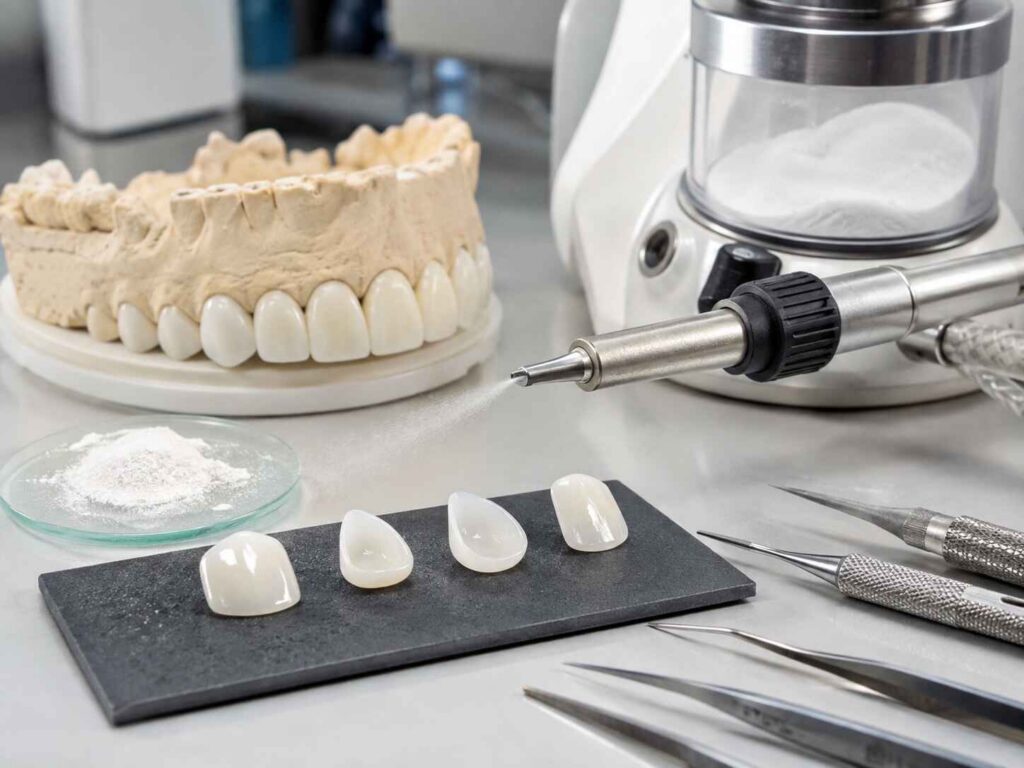
ここで、一部の記事は早々に終わってしまうのです。.
彼らはジルコニアのサンドブラスト処理の方法を教えてくれるだけで、それで作業は完了だと言うのです。.
そうではありません。.
エアアブレーションは主に、 微小機械的 ジルコニアへの接着の側面。耐久性のある接着プロトコルでは、一般的に、酸化ジルコニウムと相容れる化学的アプローチも必要となる。.
そこが 10-MDP — 10-メタクリロイルオキシデシル二水素リン酸 — 会話に加わる。.
この分子のリン酸基側はZrO₂などの金属酸化物と相互作用する一方、メタクリレート成分は樹脂系との重合に関与する。.
平易な英語?
摩耗が地形を作り出す。.
MDPは、人同士の相性を生み出す手助けをします。.
2025年の研究によると、試験対象となったジルコニア系材料において、サンドブラスト処理とMDP系プライマーを併用した場合、いずれかの手法のみを用いる場合と比較して、せん断接着性能が大幅に優れていることが明らかになった。.
これまでの知見も同様の傾向を示している。さまざまな研究や総説において、微細機械的コンディショニングをリン酸モノマープライマーやレジンセメントと併用することで、ジルコニアとレジンとの接着性が向上することが繰り返し報告されている。.
また、それがこのサイトに掲載されている、 ジルコニアベニアにおける最大の接着上の課題 エアアブレーションだけでなく、MDPの化学的性質、汚染、処置計画、セメントの選定、および咬合にも焦点を当てています。.
一歩が失敗する。.
インターフェース全体が効果を発揮する。.
さて、ここで、チェアサイドでの作業の流れがずさんだと、入念に調整された実験室での処置がほとんど意味をなさなくなってしまうという部分について説明します。.
トライインによる汚染。.
ジルコニアの表面は、唾液に含まれるリン酸塩系汚染物質と相互作用する可能性があります。歯科技工所から届いた修復物は、内部表面が管理された状態であっても、口腔内で試着され、軽くすすがれた後、接着処置に移行する段階では、研究論文に記載されているような「清潔な歯科技工所試料」とは異なる状態になっている可能性があります。.
唾液による汚染後、水だけで自動的に元の接着状態が回復すると安易に想定すべきではない。最近の実験研究では、汚染されたジルコニア表面、水で洗浄した表面、および特別に洗浄した表面の間に、依然として有意な違いが認められている。.
つまり、そのプロトコルには所有権が必要だということです。.
最終的なエアアブレーションは誰が実施するのですか?
研究室?
その臨床医のことですか?
出荷前に表面のブラスト処理は行われますか?
その後、口腔内試着は行われますか?
どのような洗浄システムが使用されていますか?
表面は再度研磨されるのでしょうか?
ところで、メーカーは実際にそれを許可しているのでしょうか?
そうした質問は、ベニアが口の中に入る前のワークフローの段階で検討すべきものです。.
便利な ベニアの購入仕様書 すでに、材料、基材、光学的な目標、寸法、仕上げの要件、および臨床情報については説明済みです。ジルコニアベニアについては、この厳格な基準を、インタリオ処理や予定されているセメント固定システムにも適用したいと思います。.
私はこの手順を次のように記録するでしょう。.
単に「ジルコニア」とだけ書かないでください。“
製造元、製品ファミリー、および(入手可能な場合は)ジルコニアの世代またはイットリアの分類を記録してください。.
3Y-TZPと高透過性の5Yジルコニアは、自動的に同一の仮定を引き継ぐべきではない。.
チームがジルコニアをベニアの材料として採用すべきかどうかまだ決定していない場合は、以下の内容を確認してください。 E.max、ジルコニア、および長石系ベニアの選定ガイド まず、材料の選定にあたっては、残存エナメル質、歯台の色調、形成計画、咬合関係、審美的な要求、および接着リスクを考慮に入れる必要があります。.
インターネット上のレシピよりも、製造元が現在提供している使用説明書を優先すべきです。.
特に以下の点に注目してください:
もし使用説明書(IFU)で、特定の高度に半透明なジルコニアをブラスト処理してはならないと記載されている場合、別のジルコニアを使用した論文があるからといって、我々がその指示を無視して独自の対応を行うことは許されません。.
その材料が空気中の粒子による摩耗に耐える場合、, 約30~50 μmのAl₂O₃ 合理的かつエビデンスに基づいた初期範囲を示している。.
それに、オペレーターに「軽く吹き付けて」と言うよりは、圧力を標準化したほうがよいと思います。“
“「Lightly」は監査の対象外です。.
0.2 MPaの缶。.
ノズルを、誰が持っていようとも、20 mmから3 mmまでずれてしまわないようにしてください。.
多くの対照研究では、おおよそ 10 mm スタンドオフ距離および 10~20秒 治療期間。.
繰り返しになりますが、これらの数値はあくまで研究上の目安であり、普遍的な指針というわけではありません。.
目的は、損傷が激しい部分だけを薄く削り取るのではなく、表面を均一に整えることにある。.
接着界面が凹版表面全体に広がっている場合、局所的な過剰処理にはほとんど意味がありません。.
選択したジルコニアおよびボンディングシステムの取扱説明書に従って、研磨剤の残留物や汚染物質を除去してください。.
「たいていうまくいく」という理由だけで、掃除の手順を勝手に決めないでください。“
選択した接着システムで必要とされる場合は、ジルコニアと相性の良い10-MDPプライマーを塗布するか、適切に設計されたMDP含有システムを使用してください。.
互いに関連のないシステムに属するプライマー、接着剤、レジンセメントを無作為に組み合わせることは、洗練された手法とは言えません。.
それは制御不能な化学反応だ。.
これは、最も華やかさのないステップかもしれませんが、最も役立つステップの一つでもあります。.
記録:
Al₂O₃ 50 μm / 0.2 MPa / 10 mm / 15 s / 焼結後 / MDPシステム X
これで、クリニックと検査室は実際に何が起きたのか把握できた。.
“「サンドブラスト加工されたジルコニア」という表現では、彼らにはほとんど何も伝わらない。.
ある種の設定については、日常的な習慣になる前に、話し合いの場を設けるべきです。.
圧力が~に向かって上昇すると 0.3、0.4、または0.5 MPa, 、その理由を知りたいんです。.
メーカーが認めている理由があるかもしれません。.
しかし、「離脱率の低下」だけでは不十分です。.
既存の文献によれば、圧力を高めることで、半透明ジルコニアの表面が粗くなる一方で、曲げ強度が低下することがすでに示されている。.
粒子が大きければ大きいほど、衝撃エネルギーも大きくなる。.
だからといって、それが自動的に臨床的に優れたインターフェースにつながるわけではない。.
粒子径に関する研究によると、アルミナ粒子の粒径は表面形態や機械的挙動に影響を与えることが示されており、粒子選定を単なる些細な詳細ではなく、重要なパラメータとして扱う必要性が改めて裏付けられている。.
特に、「念のためにもう一度爆破しておく」という習慣には懐疑的だ。.
累積的な影響を把握せずに、過激な手順を繰り返し行うだけでは、安全性は確保できない。.
洗浄および再調整は、特に汚染が発生した後は、修復および接着システムの指示に従って行う必要があります。.
これは、おそらく最大の概念上の誤りである。.
高透過性のジルコニアが存在するのは、その組成と相構造が異なるためである。.
もし、美学的観点からそうした違いを称賛しておきながら、表面処理の過程でそれらが消えてしまうかのように振る舞うなら、それは自己矛盾に陥ることになる。.
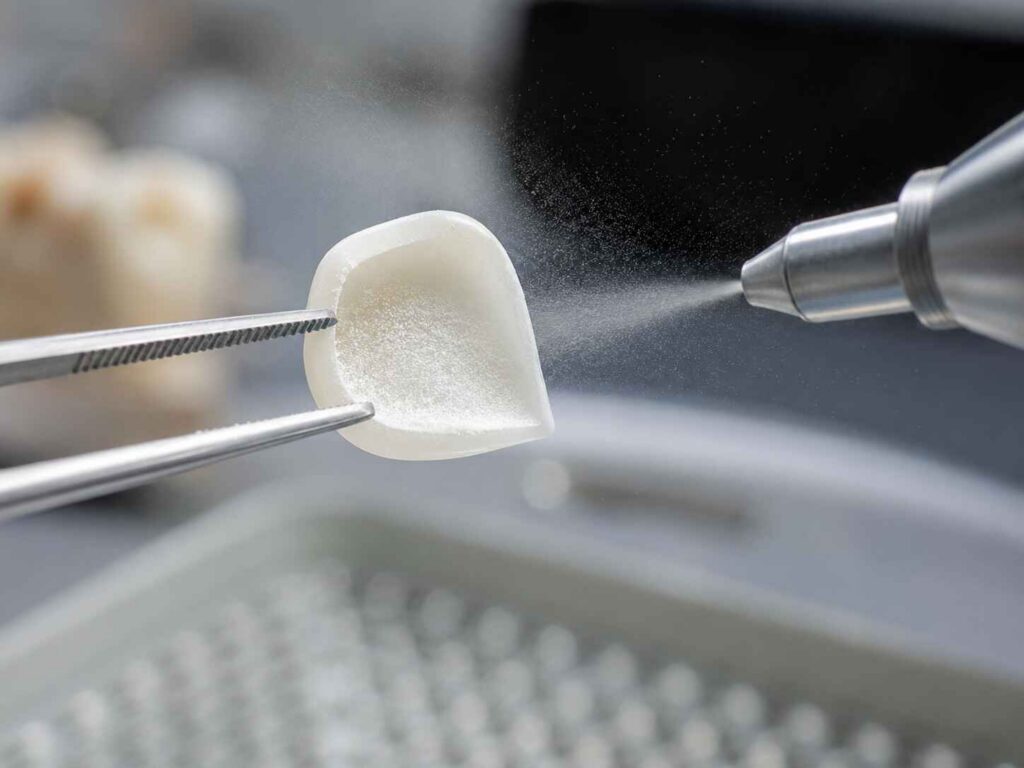
ここで、SEO記事では通常、この部分が省略されがちです。.
これまで取り上げてきた極めて具体的な数値のほとんどは、 in vitro テスト。.
ディスクはベニアではありません。.
せん断接着試験片は、上顎中切歯ではありません。.
5,000回のサーモサイクルは、歯ぎしり、酸性の飲み物、不規則な口腔衛生、深い咬合、繰り返される咬合接触、そして10年間にわたる予測不可能な挙動を持つ人間の患者とは異なります。.
実験室での研究は、変数を切り分けることができるという点で有用である。.
それらは臨床的判断を排除するものではない。.
これは特にジルコニアベニアにおいて重要であり、この分野では、確立されたガラスセラミックベニアシステムに比べ、長期的な臨床的エビデンスがまだ十分には蓄積されていない。 アーティスト・デンタル・ラボによる材料選定のレビューでは、最近のメタ分析が引用されており、それによると、長石質および二ケイ酸リチウムベニアについては10年を超える長期的なエビデンスが示されているのに対し、ジルコニアベニアの追跡期間はそれに比べて依然として短いことが示されている。.
ですから、特定のブラスト設定を「生涯にわたって実証済み」として売り込むようなことはしません。“
そんなのナンセンスだ。.
証拠が裏付けているのは、より慎重な主張である:
微粒子を用いた中圧のエアブラスト処理は、ジルコニアとレジンとの接着性を向上させることができますが、過度な研磨は機械的強度の低下を招く恐れがあり、最適な処置法はジルコニアの配合や接着システムによって異なります。.
その文章はそれほど面白くない。.
また、はるかに実用的です。.
ジルコニアベニアに最適なエアアブレーションのパラメータは、セラミックに不必要な損傷を与えることなく、十分な微細機械的固着を生み出す、材料ごとに異なる設定である。 公表されている研究では、多くの場合、約0.2 MPaまたは2 barの圧力下で、粒径約30~50 μmのAl₂O₃を用い、処理深さは概ね10 mm程度から開始することが多いが、最終的なプロトコルはジルコニアメーカーの最新の指示に従うべきである。.
多くのジルコニア材にとって、この中圧ゾーンは、強力なサンドブラスト処理よりも妥当な出発点となります。しかし、3Y、4Y、5Yの材料では反応が異なる可能性があるため、製品間で同じパラメータを安易に流用してはなりません。.
ジルコニアのエアアブレーションにおいて、不必要な衝撃損傷を抑制しつつ、制御された微細な機械的表面改質をもたらすために、一般的に研究対象とされるアルミナ粒子の粒径範囲はおよそ30~50 μmであり、半透明ジルコニアの接着性および機械的性能に関する研究では、50 μmのAl₂O₃が頻繁に用いられている。.
粒子径は、あくまで一つの要因に過ぎません。圧力、距離、露光時間、ジルコニアの組成、焼結段階、洗浄方法、および接着剤の化学的性質のすべてが、最終的な結果に影響を及ぼします。.
2 bar(約0.2 MPaに相当)は、一般的に検討されている中程度のエアアブレーション圧力であり、いくつかのジルコニアに関する研究において、50 μmのAl₂O₃を用いた場合に良好な接着結果が得られているが、 しかし、高透過性の配合やメーカー固有のセラミックスでは反応が異なる可能性があるため、すべてのジルコニアベニアに対して普遍的に安全であると断言することはできない。.
薄い4Yまたは5Yジルコニアベニアの場合、広く引用されている2バープロトコルであっても、使用する前に必ず正確な使用説明書(IFU)を確認するようにしています。.
サンドブラストの圧力が過度に高いと、表面欠陥、微小亀裂、粗さ、および相に関連する変化が深刻化し、ジルコニアに損傷を与えるおそれがあります。また、半透明ジルコニアに関する研究では、アルミナを用いたエアアブレーションの圧力が0.2 MPaといった中程度のレベルを超えると、曲げ強度が低下することが報告されています。.
だからこそ、表面粗さの最小化を目標とすべきではない。目標とすべきは、セラミックの十分な完全性を維持しつつ、予測可能な接着が可能な表面である。.
修復材メーカーのプロトコルで認められている場合、MDPを含むプライマーを塗布する前に、ジルコニアに対してエアアブレーション処理を行うことがよくあります。これは、エアアブレーションによる微粒子研磨が微細機械的保持力を向上させると同時に、10-MDPが酸化ジルコニウムとの化学的相互作用をもたらし、 これにより、いずれかのメカニズムのみに依存するのではなく、機械的および化学的な結合を組み合わせた戦略が実現される。.
しかし、この一連の工程には、適切な洗浄と汚染管理も含まれていなければなりません。MDPは、損傷していたり、唾液で汚染されていたり、不適切に準備された表面を修復することはできません。.
5モルパーセントのイットリアジルコニアは、従来の3Y-TZPとまったく同じ方法で自動的にサンドブラスト処理を行うべきではありません。これは、その高い半透明性を示す相組成が機械的挙動を変化させるためであり、公表されている実験結果では、特定の5Y系材料については、慎重な研磨手順から研磨の回避に至るまで、材料に応じた推奨事項が示されています。.
その意見の相違は、研究が無意味であるという証拠ではありません。それは、箱に表記されている材料名が重要であることを示す証拠なのです。.
ジルコニアを用いたエアアブレーションの施術時間は、通常、長時間のブラスト処理ではなく、短時間で制御された曝露となります。公表されている実験プロトコルでは、標準化された粒子径、圧力、距離、ノズルの向きとともに、一般的に約10~20秒が用いられています。ただし、これらの研究条件は、普遍的な臨床指針というよりは、あくまで参考条件として扱うべきです。.
薄いベニヤの場合、表面が「十分に粗く見える」まで作業を続けるのは得策ではありません。目視による判断よりも、標準化に従う方が安全です。.
現在、ジルコニアベニアのワークフローで「のみ」と記載されている場合は、 “「エアアブレージョン、下塗り、セメント」” 書き直してください。.
ジルコニアシステムについて文書化してください。.
Al₂O₃の粒子径を記録する。.
文書の圧縮。.
距離を記録する。.
資料作成の時間です。.
治療を行った者を記録する。.
試着後の汚染が発生した場合の対応手順を文書化する。.
また、MDP対応のボンディングシステムに関する文書を作成する。.
外注する案件については、製作開始前に、修復材、歯台の色調、スキャンデータ、準備設計、咬合関係、希望する半透明度、セメント固定の計画、および要求された内面処理などを歯科技工所に送付してください。アーティスト・デンタル・ラボの ジルコニアベニアのワークフロー そして ジルコニアの接着リスクガイド 症例がセメント固定の予約日を迎える前に、検査室と診療科の連携を図るための有益な出発点となる。.
ジルコニアベニアの試作をご検討中の方、あるいは製作前に材料、表面処理、審美的な要件について歯科技工所による確認が必要な場合は、, アーティスト・デンタル・ラボへのお問い合わせ STLファイル、歯根部の陰影図、臨床写真、咬合記録、および予定されている接着プロトコルをご提出ください。.
「もっと粗く」などとは頼まないでください。“
管理されたインターフェースを依頼してください。.