What Is the Most Efficient Cementation Sequence for Multiple Veneers?
Start at center.
I have watched enough veneer conversations get hijacked by brand talk, cement shades, and flashy “all-at-once” videos to say this plainly: the most efficient cementation sequence for multiple veneers is usually a mirrored, midline-out protocol, because it protects symmetry, limits cement chaos, and makes the most visible teeth behave before the case drifts off course. Why gamble with the midline?
Stop Timing the Wrong Thing
Dentists love speed. Labs love repeatability. Patients just want the case to look expensive and feel uneventful.
That is why I do not define “efficient” as the shortest stopwatch number between first veneer seated and final cure, because in real anterior dentistry the true cost shows up later as contact drag, uneven incisal position, trapped cement, or a central incisor that looks slightly off and forces everyone in the room to pretend it is fine. I have no patience for that kind of fake efficiency.
The literature backs the boring truth. A 2025 review of ceramic partial-coverage restorations reported ceramic laminate veneer survival rates of 97.76% at 2.6 years, 97.12% at 5.0 years, and 96.05% at 10.4 years, which tells me veneers are not a fragile idea at all; the problem is usually execution, not the category itself. And a separate 2025 narrative review on lithium disilicate bonding made the point even more directly: veneer bonding works when both tooth and ceramic surfaces are treated in a disciplined sequence, not when the operator improvises under pressure with resin already on the intaglio. Survival and Complication Rates of Ceramic Partial Coverage Restorations and Bonding Protocols for Lithium Disilicate Veneers say the quiet part out loud.
And here is the hard truth: if your sequence makes cleanup harder, seating less controlled, or symmetry more dependent on luck, it is not efficient. It is just hurried. Who benefits from that?
Table of Contents
The sequence that actually saves time
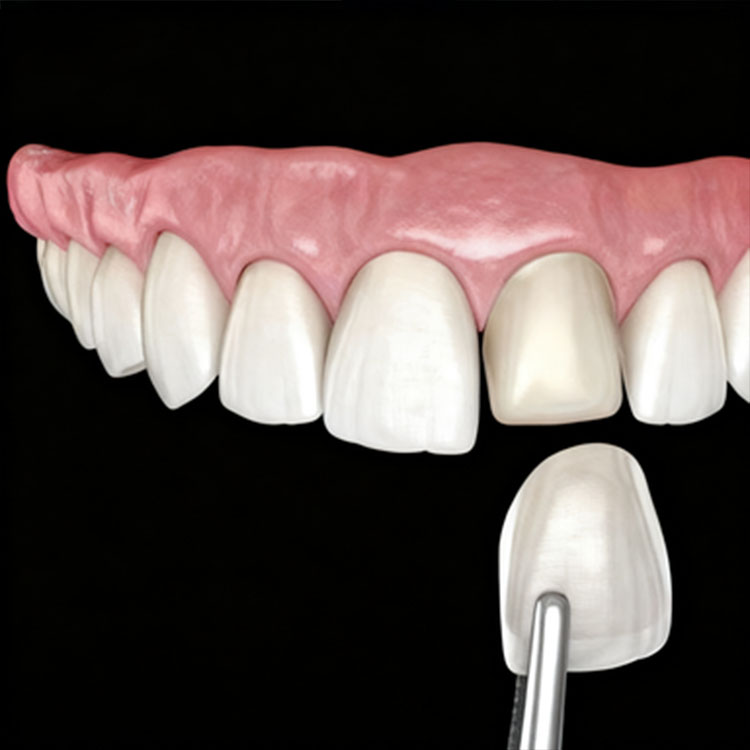
My preferred veneer bonding protocol for four, six, eight, or ten anterior veneers is simple: fully stage the case, seat the two central incisors first, move to the laterals as a pair, then finish with the canines, extending outward in mirrored pairs if the case runs beyond canine-to-canine. That is the most efficient cementation sequence because the eye judges the midline and incisal plane before it judges anything else.
What I do before any resin touches the tooth
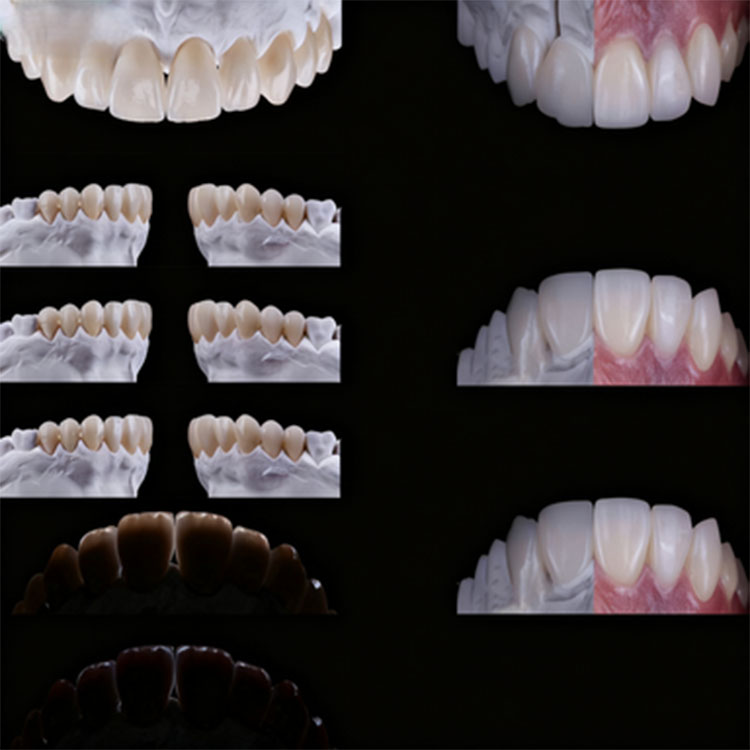
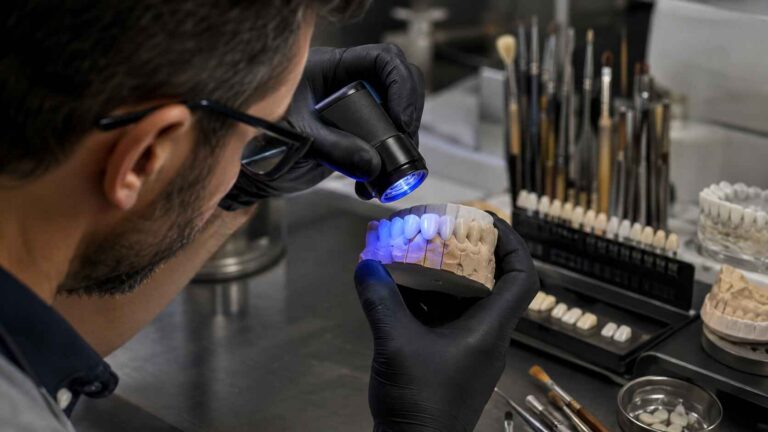
I want every veneer numbered, every contact checked, every intaglio surface pretreated according to the material and manufacturer instructions, and every tooth cleaned and isolated before the first cement syringe opens, because the biggest lie in cosmetic dentistry is that “we’ll sort it out while seating.” No, you will not. You will get busier, not smarter.
A 2022 PubMed-indexed study on preserved enamel and laminate veneer bond strength found that 40% preserved enamel on the bonding surface was the minimum acceptable value for good bond strength, while the 20% and 0% enamel groups performed significantly worse. That matters because the more you cut, the less room you have for sequence mistakes, cement contamination, and recovery moves once the case starts. Shear bond strength of ceramic laminate veneers to finishing surfaces with different percentages of preserved enamel is not subtle on this point.
The order I trust most
Stage
What I do
Why it is faster in the real world
What usually goes wrong if skipped
1
Dry try-in all units, verify contacts, seating path, and numbering
Problems show up before cement does
One “mystery tight” veneer stalls the whole arch
2
Pretreat intaglio surfaces by material, keep them isolated and labeled
Offloads stress from the bonding window
Wrong veneer, wrong primer, wrong surface chemistry
3
Clean teeth, isolate, and confirm field control
Reduces contamination and panic cleanup
Saliva, blood, or retraction drama ruins momentum
4
Seat both central incisors first
Locks the midline, incisal line, and facial symmetry early
Case drifts and everyone starts chasing it
5
Seat both laterals second
Preserves mirrored contact control
One side gets overcommitted before the other is stable
6
Seat canines last
Lets you finish the frame once the smile center is right
Distal-to-mesial sequencing drags the esthetic center off target
7
Final cure, oxygen inhibition control, floss, finish, and photograph
Cleanup is cleaner because excess was controlled in stages
Residual cement and ragged embrasures steal chair time later
This is why I reject the one-side-first habit in multi-unit anterior work. Start on the patient’s right canine and march across if you want, but now your most visible decision point, the center of the smile, becomes the last thing you stabilize instead of the first. Why would I do that to myself?
Where simultaneous veneer cementation still makes sense
Rarely. And only under very controlled conditions.
If the case is additive, contacts are open and friendly, prep reduction is uniform, isolation is rock-solid, and the operator has rehearsed the seating path, simultaneous veneer cementation can work. But most real cases are not that polite. There is always one lateral with a mood, one contact that lies during try-in, or one prep that makes the veneer float until pressure and cleanup start fighting each other. That is why I call pair-by-pair seating the adult answer.
Even cement-brand data points in that direction. A 2025 observational study of 60 patients comparing Variolink Esthetic LC and Vitique for lithium disilicate veneers found good short-term performance with both systems and no significant difference between them in the main clinical measures. My read is blunt: clinicians spend too much energy arguing cement labels and not enough energy controlling the sequence. Clinical Performance of Lithium Disilicate Ceramic Veneers Cemented With Light-Cured Resin Cements makes that point without the drama.
Material choice changes the workflow, not the rule
One material. Different headaches.
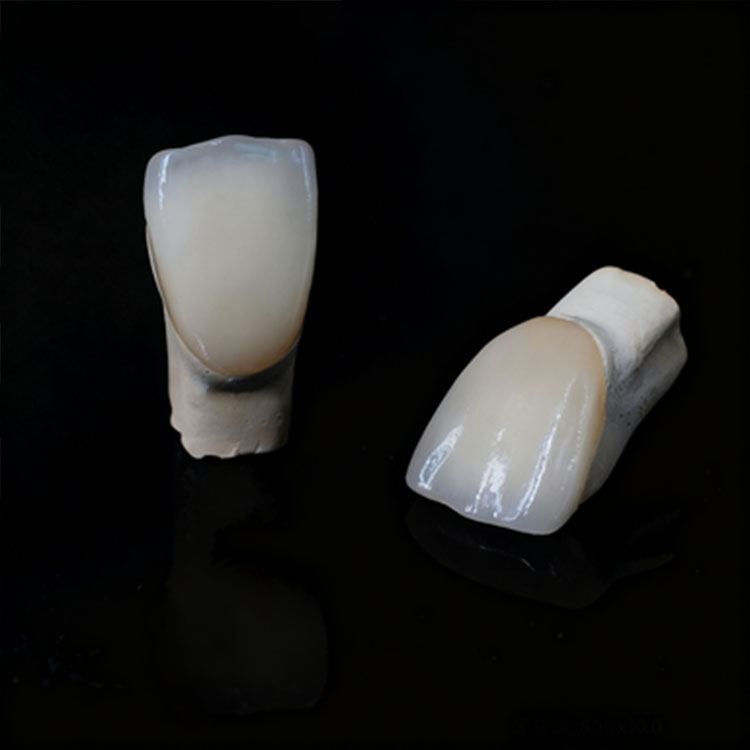
Artist Dental Lab’s own site architecture is more honest than most dental sales copy. Their standard E.max veneer page frames lithium disilicate as the balanced everyday option for single-to-multi-unit cases, the Full E.max veneer page leans into repeatability and multi-unit consistency, the Layered E.max veneer page is clearly positioned for high-end characterization, the Feldspathic veneer page pushes translucency and micro-texture, and the Zirconia veneer page is the durability play for higher functional demand. That is not random navigation. That is a quiet map of risk.
For multiple veneers, I usually trust monolithic logic more than decorative optimism. If the case is six or eight units and the dentist wants consistent value, clean seating, and less cross-unit drama, Full E.max Veneer is the honest internal link to place. If the case truly needs incisal halo, layered depth, and customized texture, then Layered E.max Veneer or even Feldspathic Veneer belongs in the conversation. And when the bite is part of the story, not just the smile photo, Zirconia veneer options deserve a serious look. I would also keep the site’s own comparison piece, Full E.max Veneers vs Layered E.max Veneers: What Is the Real Difference?, inside this article because it reinforces the same clinical split between repeatability and optical ambition.
So no, material choice does not rewrite the best cementation sequence. It changes how unforgiving the case becomes when you get casual.
Where veneer cases really go off the rails
Here is my unpopular view.
Most veneer failures blamed on “cement” are really failures of planning, enamel management, contamination control, or ego. Operators love a villain they can buy around.
The numbers point that way. Long-term evidence still shows strong veneer survival overall, but survival is not the same thing as an easy chairside delivery; once enamel drops, the bond gets less forgiving, and once the sequence turns chaotic, cleanup and seating become harder to control. That is why I keep repeating the same rule: control the center first, then move outward. It is not glamorous, but neither is remaking six veneers because someone wanted to look fast on video.
There is also a legal and reputational angle that people in the cosmetic space like to dodge. In December 2025, ADA News reported that an Atlanta “veneer tech” was indicted on more than 100 charges after allegedly performing unlicensed cosmetic dental procedures and making millions from 2021 to 2024. That story is extreme, sure, but it is a useful reminder that veneer treatment is not a beauty accessory business; it is regulated irreversible care, and sloppy shortcuts have consequences. ADA News on the Atlanta veneer-tech indictment is worth reading if anyone still thinks veneers are just cosmetic stickers.
My hard-rule protocol for multiple veneer cementation
I will put it plainly.
For most four-to-ten unit anterior veneer cases, the best cementation sequence is mirrored pair bonding from the midline outward, using the centrals to lock esthetic reference first, then laterals, then canines, while keeping all surface treatment, shade selection, and isolation fully staged before seating begins.
That sequence works because it respects what the human eye notices first, what resin cement punishes fastest, and what labs already know from the material menu. If you read how Artist Dental Lab positions E.max Veneer for balanced cases, Full E.max Veneer for repeatable multi-unit work, and Layered E.max Veneer for premium anterior characterization, the internal logic is obvious: more optical ambition means more technique sensitivity, and more technique sensitivity means sequence discipline matters even more.
Want the blunt version? Cementation speed is overrated. Sequence control is not.
FAQs
What is the most efficient cementation sequence for multiple veneers?
The most efficient cementation sequence for multiple veneers is a mirrored midline-out protocol in which the central incisors are seated and stabilized first, followed by the laterals and then the canines, because that order protects the midline, incisal plane, contact control, and cement cleanup better than one-side-at-a-time or full-arch simultaneous seating.
I use that sequence because it lowers the odds of esthetic drift while keeping cleanup and verification manageable when several units are being bonded in one appointment.
Is simultaneous veneer cementation faster than pair-by-pair cementation?
Simultaneous veneer cementation is only faster when the case has very friendly contacts, uniform prep space, excellent isolation, and a fully rehearsed seating path; in ordinary multi-unit anterior cases, pair-by-pair seating is usually more time-efficient overall because it reduces cleanup errors, seating interference, and correction time after tack cure.
That is why I see “all at once” as a niche tactic, not the default answer.
Should central incisors or canines be cemented first?
Central incisors should usually be cemented first in multiple veneer cases because they establish the midline, the smile’s incisal reference, and the visual symmetry that everything else depends on, while starting with canines or working from one distal end increases the chance that the case will drift before the esthetic center is locked.
If the center is wrong, the rest of the sequence becomes a rescue mission.
Does cement shade matter more than the cementation sequence?
Cement shade matters, but the cementation sequence matters more in multi-unit veneer delivery because even a well-chosen shade cannot rescue contamination, uneven seating pressure, asymmetrical tack-cure timing, or sloppy excess removal across six or eight bonded units.
I would rather fix the workflow before I obsess over one more try-in paste comparison.
Does veneer material change the best bonding sequence?
Veneer material can change the pretreatment chemistry and the case’s tolerance for mistakes, but it does not usually change the best seating order, because lithium disilicate, feldspathic porcelain, and zirconia all benefit from a controlled esthetic center before the operator extends outward to less visually dominant units.
What changes is how much punishment the case gives you when you get casual with surface prep or communication.
Your next move
If you are planning a multi-unit veneer case, stop asking which cement looks fastest on a tray photo and start asking which sequence gives you the fewest chances to lose the midline, contaminate the bond, or trap yourself in cleanup. Then match the material to the risk profile.
My advice is simple: build the case around a center-first veneer bonding protocol, not around chairside bravado. That is how you get faster by being less reckless.