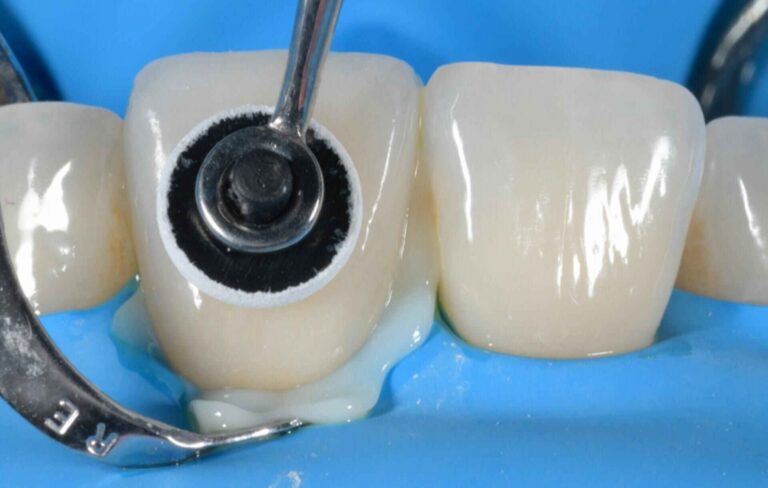
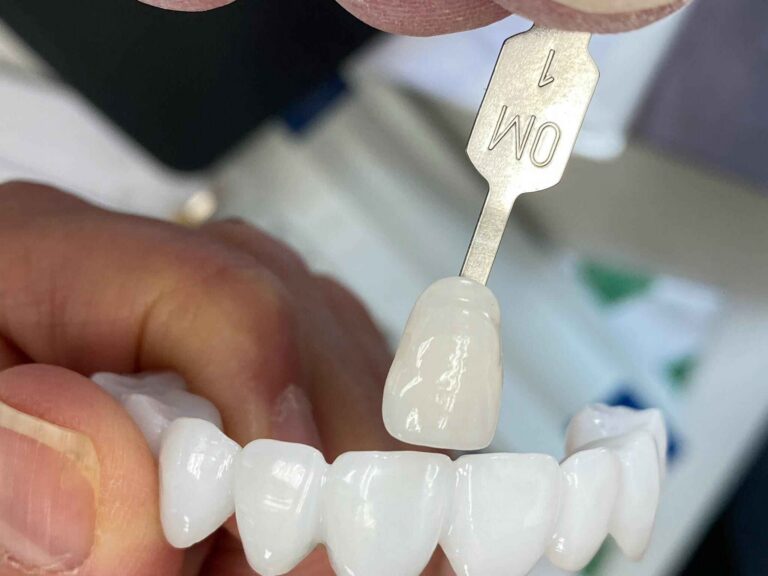
Why Success in Esthetic Anterior Restorations Depends More on Teamwork Than on Technique Alone
Here’s the hard truth.
In anterior restorations, we keep praising the visible move—the prep, the layering, the polish, the cement shade—because it flatters the operator, but the ugly failures usually begin earlier, when the brief is thin, the photos are lazy, the stump shade is missing, and the technician is expected to read the dentist’s mind from a half-filled prescription.
And what exactly is “great technique” supposed to rescue when the lab is guessing on value, translucency, texture, midline, and occlusal intent?
A 2025 review in Dental Clinics of North America put it bluntly: laboratory communication is the recorded exchange of written instructions, photographs, digital scans, and physical materials needed to fabricate indirect restorations for patient care. That is not admin fluff. That is the case.
Table of Contents
The comforting lie our industry keeps repeating
I’ve heard this for years. “Just prep better.” “Just pick the right ceramic.” “Just use a better ceramist.” But anterior restorations are not a solo sport, and pretending they are is how good clinicians end up with mediocre veneers, overbuilt crowns, and that dead-eyed central incisor that somehow looked perfect on the bench and wrong in the face.
Technique matters. Of course it does. But once you move into esthetic anterior restorations, technique becomes the entry ticket, not the whole performance.
A 2025 case report from Fujian Medical University described a 31-year-old patient with gingival recession, faulty prostheses, recurrent inflammation, and functional problems in the anterior segment; the solution required periodontics, endodontics, orthodontics, and prosthodontics, and the authors said outright that a single treatment approach often fails in complex anterior cases. That should kill the lone-wolf myth right there. Read the case study.
And if a complex anterior case already demands multiple disciplines before the lab even starts building ceramic, why are so many clinicians still treating the technician like a downstream vendor instead of part of the treatment plan?
Where anterior restorations actually break down
Shade matching is still the silent killer
Three words. Bad inputs first.
We love to talk about artistry, but shade failure is often just information failure wearing an esthetic costume, because anterior shade is not one number on a tab; it is value, chroma, translucency, stump influence, surface texture, light source, camera behavior, and the technician’s ability to reproduce what the clinician captured.
The 2024 study on digital shade selection is brutal if you still think a quick chairside phone snap is “good enough.” In that study, intraoral scanners showed a ΔE of 5.8, while the smartphone method showed a ΔE of 12.09, the weakest precision of the four methods tested using CIEL*a*b* analysis. That gap is not trivia. That gap is remake territory. See the 2024 shade-selection study.
And no, a better hand with composite will not magically fix bad color intelligence upstream.
Paperwork is not paperwork when the case is in the smile zone
This is where I stop being polite. If the prescription says “match adjacent teeth,” that is not a prescription. That is abandonment.
A 2024 quasi-experimental study comparing 600 dental laboratory prescriptions found that technology-supported case intake improved how often essential information was recorded, reduced recommunication, and improved prosthesis quality metrics tied to shade, charting, and case details. Tooth-to-be-restored data appeared in 98.0% of technology-system prescriptions versus 77.2% in traditional ones, and when general shade was missing, traditional workflows saw substantially more shade modifications and redos. Read the study.
So yes, dentist-technician communication sounds boring. It also has numbers behind it.
Material selection is a team decision, not an ego decision
I’m going to say the quiet part out loud: many material debates in anterior dentistry are just identity politics for dentists. One camp wants to sound conservative. Another wants to sound premium. A third wants to sound strong. The patient, meanwhile, wants the tooth to look real and survive lunch.
The literature is less romantic than the sales pitch. A case report reviewing ceramic options for the anterior dentition notes that feldspathic ceramics offer the most enamel-like optical properties but relatively low flexural strength at about 60–70 MPa, while lithium disilicate reaches roughly 400 MPa and keeps high translucency. In other words, the “best” material depends on enamel availability, discoloration, prep design, occlusal load, and the esthetic target—not on your favorite rep or your last CE course. Review the report.
That is exactly why I would not bury the site’s internal links in some orphaned blog footer. I would place them where the decision actually happens: when the reader is weighing optical behavior against reduction, durability, and communication burden. If the case needs high-end incisal characterization, layered E.max veneer options and feldspathic veneer solutions belong in the conversation. If the brief is multi-unit consistency and controlled shade communication, full E.max veneer workflows and anterior E.max crowns are more honest paths. And when strength has to live in the same room as premium esthetics, layered zirconia crown cases earn their place. The product pages themselves keep repeating the same operational theme: send STL scans, margin notes, shade, stump shade, photos, smile-line notes, and surface texture targets. That repetition is not accidental. It is the workflow telling you what matters.
And that is the point, isn’t it? The material is only as good as the brief that chooses it.
The data gets uncomfortable when you stop worshipping chairside heroics
Here is my unpopular opinion: most anterior remake conversations are too polite. We blame “shade drift,” “patient expectations,” or “minor fit adjustments” because those phrases let everyone save face. But the evidence keeps pointing back to shared understanding.
Even outside dentistry, the pattern is obvious. The Joint Commission’s 2024 annual review reported 1,575 sentinel events in 2024, up 12% from 2023, and specifically identified “lack of shared understanding or mental model across the care team” as a leading contributor in fall events. Dentistry is not hospital medicine, obviously, but pretending communication failures stop mattering once the patient is in a veneer case is fantasy.
The stronger signal, for me, is what happens when workflow is standardized. On Artist Dental Lab’s own Client Cases & Success Stories page, a North American DSO with 28 clinics reportedly moved from inconsistent quality and 15–20 day turnaround on complex cases to 9–11 days for standard cases and 12–14 days for full-arch reconstructions after centralizing digital workflow, templates, and prosthetic protocols; the site also describes cosmetic clinic groups using standardized shade communication and photography protocols to shorten case time and reduce remakes. That is vendor-reported data, not peer-reviewed research, so I would treat it as directional evidence, not gospel. But the operational logic is hard to ignore.
Better systems. Better outcomes. Funny how often that happens.
A team-first workflow for esthetic anterior restorations
If I were auditing an anterior case tomorrow, I would not start with the ceramic. I would start with the handoff.
Case Stage
Technique-Alone Mindset
Team-First Workflow
Likely Result
Treatment planning
Pick a material after the prep
Align indication, reduction, occlusion, and esthetic target before prep
Fewer mid-course reversals
Shade capture
One tab and a phone photo
Shade + stump shade + calibrated photos or scanner data + value notes
Fewer value and translucency misses
Lab prescription
“Match adjacent teeth”
Specify contours, texture, midline, smile line, contacts, and functional limits
Better first-pass acceptance
Material choice
Choose by habit
Choose by enamel, discoloration, strength demand, and facial esthetics
Better indication discipline
Try-in and delivery
Fix everything chairside
Verify with patient, document feedback, archive records for future cases
Fewer remakes and cleaner repeats
That table is not theory. It is basically what the evidence and the site architecture are already telling us. Artist’s OEM / ODM workflow is built around specs, shade strategy, finishing preferences, traceability, QC checkpoints, and pilot validation, while the product pages for Full E.max Veneer, Layered E.max Veneer, E.max Crowns, and Feldspathic Veneer repeatedly ask for the same things: scans, margin notes, photos, stump shade, esthetic priorities, and texture references. That is not decorative content. That is the operating manual for predictable anterior restorations.
And here’s my blunt takeaway: if your workflow does not force that information into the case before fabrication starts, you are not practicing premium esthetic dentistry. You are gambling with expensive ceramics.
FAQs
Why does teamwork matter more than technique in anterior restorations?
Teamwork in anterior restorations is the coordinated process of diagnosis, prep design, shade capture, material selection, laboratory prescription, provisional evaluation, and delivery among dentist, technician, and patient, so the final restoration matches facial esthetics, stump shade, occlusion, and case goals instead of relying on operator guesswork alone. The literature on laboratory communication and multidisciplinary anterior rehabilitation keeps landing on the same point: better information exchange produces better outcomes.
What should a dentist send the lab for esthetic anterior restorations?
The ideal anterior-restoration prescription is a complete case packet containing STL or IOS scans, opposing and bite records, margin notes, shade and stump-shade information, high-quality retracted and smile photos, contour and texture targets, smile-line or midline notes, and any wax-up or mock-up references needed for the technician to build the case accurately. That is also the pattern repeated across the site’s anterior product pages, which is why those pages deserve internal links inside the body, not buried at the end.
What is the best material for esthetic anterior restorations?
The best material for esthetic anterior restorations is the ceramic system whose optical behavior, strength, preparation demands, and bonding conditions fit the specific case, because feldspathic porcelain, lithium disilicate, and layered zirconia solve different problems and fail when they are chosen for branding reasons rather than indication reasons. That is why a serious workflow compares feldspathic veneer cases, layered E.max veneer cases, full E.max veneer cases, anterior E.max crowns, and layered zirconia crown options against the patient’s real biology and bite.
How can practices reduce remakes in anterior restorations?
Reducing remakes in anterior restorations means standardizing the handoff so every case includes complete shade data, high-quality photography or scanner capture, clear esthetic priorities, explicit functional notes, and a repeatable review loop between clinician and technician before fabrication errors become chairside embarrassment. The 2024 communication study gives the practical version of that argument: fuller prescriptions, less recommunication, fewer shade-driven modifications, and cleaner delivery.
Your next steps
Start here.
Audit your last five anterior remakes and ask one ugly question: did they fail because your hands were not good enough, or because the team never got aligned on shade, material, contours, reduction, and function before the lab went to work?