What Are the Biggest Bonding Challenges with Zirconia Veneers?
The Dirty Secret: Zirconia Is Strong, But It Does Not Want to Bond
Zirconia is stubborn.
And that single fact explains most of the frustration around zirconia veneer bonding, because clinicians often talk about zirconia veneers as if strength automatically translates into adhesive forgiveness, when the real mouth punishes chemistry, contamination, preparation design, and lazy cementation with almost bureaucratic efficiency.
So why do smart dental teams still treat zirconia like etched glass?
Here is the hard truth: zirconia veneers are not difficult because zirconia is weak. They are difficult because zirconia is chemically different from silica-based ceramics. Lithium disilicate and feldspathic porcelain give you a more familiar adhesive playbook. Hydrofluoric acid etching. Silane. Resin cement. A protocol most cosmetic dentists can run in their sleep.
Zirconia does not play that game.
Zirconia, or zirconium dioxide, is a polycrystalline oxide ceramic. It has no glassy silica phase to etch in the classic porcelain-veneer sense. That is why the bonding conversation shifts from “etch and silane” to airborne-particle abrasion, 10-MDP chemistry, resin cement compatibility, surface cleanliness, and retentive preparation design.
I have a blunt opinion here: many zirconia veneer failures are sold as “material failures” when they are actually planning failures. The lab gets blamed. The cement gets blamed. The patient gets blamed for parafunction. But the warning signs were often in the case file before the restoration was milled.
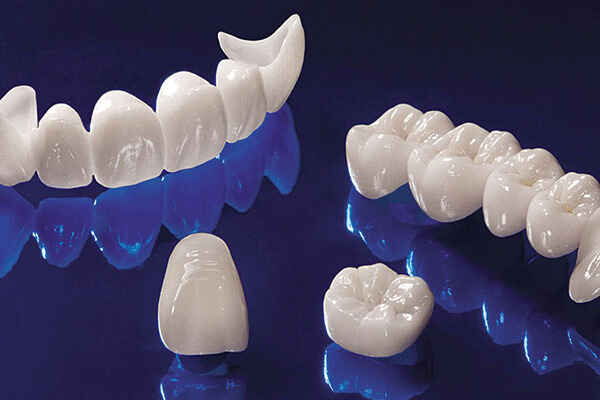
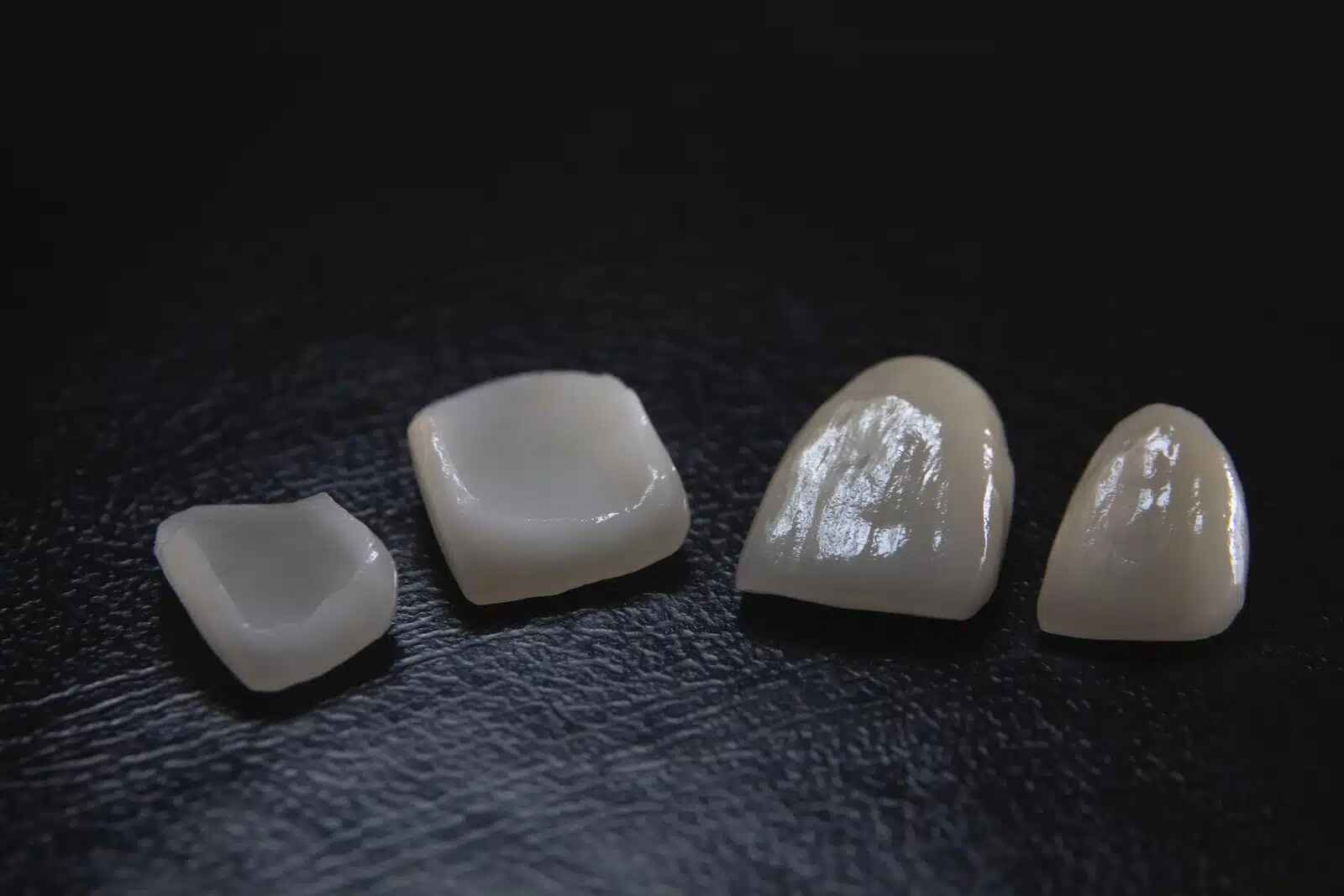
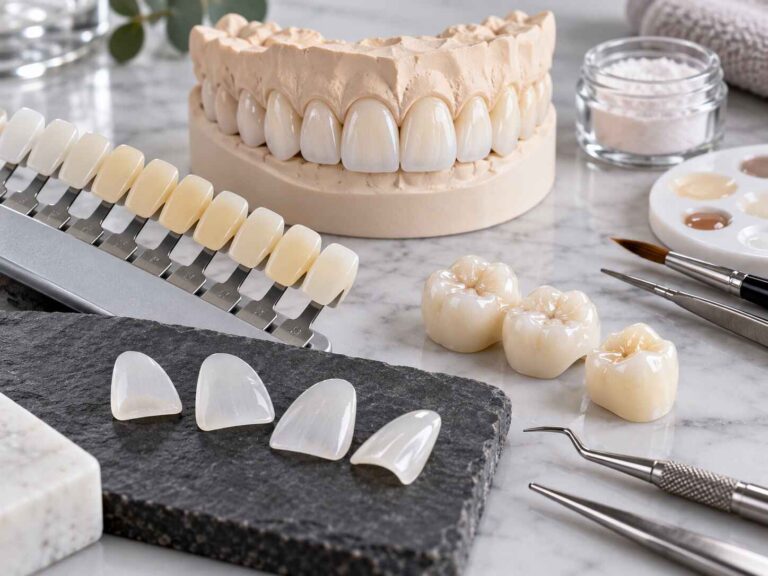
Artist Dental Lab’s own zirconia veneer workflow frames zirconia veneers as high-strength cosmetic restorations for demanding functional cases, not as a universal replacement for every anterior veneer material. That distinction matters. Their anterior zirconia veneer page also points to CAD/CAM fit, shade value, and smile-zone planning, which is exactly where bonding decisions become more than a chairside routine.
The Evidence Says MDP Helps, But It Does Not Save Bad Technique
MDP is not magic.
The adhesive hero in zirconia bonding is usually 10-methacryloyloxydecyl dihydrogen phosphate, better known as 10-MDP. It is the phosphate monomer that can chemically interact with zirconium oxide, which is why MDP primer for zirconia keeps appearing in serious bonding discussions.
But here is where the industry gets slippery. Some sales reps talk as if buying an MDP-containing product automatically solves zirconia veneer adhesion. It does not. The bond is a system. The surface must be prepared. The restoration must be clean. The cement must match the protocol. The clinician must control moisture. And the prep must not ask chemistry to replace mechanical sense.
A 2025 BMC Oral Health study reported a sharp difference between as-sintered and air-abraded zirconia. In one group, zirconia treated with Tooth Primer and Panavia V5 reached 29.26 ± 3.26 MPa after air abrasion, while as-sintered groups sat far lower, such as 8.47 ± 2.08 MPa for Tooth Primer/Panavia V5; the authors found air abrasion significantly improved shear bond strength compared with as-sintered zirconia.
That is not a small laboratory footnote. That is the kind of spread that should make every dentist stop and ask, “Who is actually controlling the intaglio surface?”
Another paper in Scientific Reports explained the chemical logic more deeply: air abrasion improves immediate bond strength, but a purely physical roughening strategy is not enough for durable resin-zirconia bonding; 10-MDP-containing primers and cements are tied to stronger chemical interaction with zirconium oxide.
So the protocol is not “sandblast and hope.” It is controlled surface roughening plus phosphate-monomer chemistry plus compatible resin cement.
Table of Contents
Where Zirconia Veneer Bonding Actually Breaks Down
Most failures are boring.
That is uncomfortable because the dental industry loves exotic explanations: new zirconia generation, cubic phase ratios, special primers, secret cement tricks, and brand-war nonsense. But most zirconia veneers bonding challenges come from a familiar cluster of mistakes.
1. Treating Zirconia Like E.max
Lithium disilicate veneers can be etched with hydrofluoric acid because they contain a glassy ceramic phase. Zirconia does not respond the same way. If a clinician brings an E.max bonding mindset into a zirconia veneer case, the protocol is already compromised.
That is why the internal comparison matters. Artist Dental Lab positions E.max veneer cases around lithium disilicate, translucency, adhesive resin cement protocols, and predictable cosmetic outcomes, while feldspathic veneer work is framed around enamel-like translucency and hand-layered micro-texture. Zirconia belongs in a different lane.
2. Weak or Inconsistent Zirconia Surface Treatment
Zirconia surface treatment is not just “blast it.” Particle size, pressure, distance, duration, and whether the restoration is pre-sintered or fully sintered all matter.
Too little roughening and the resin cement has poor micromechanical retention. Too aggressive and you risk surface damage, phase transformation, or microcracking. The 2025 BMC study noted that airborne-particle abrasion can improve bonding but also discussed variables such as pressure, particle size, time, and distance as part of the risk-benefit equation.
My rule is simple: if the prescription or lab communication does not clarify whether the intaglio surface is ready for the selected resin cement for zirconia veneers, I assume risk is being hidden, not managed.
3. Saliva and Phosphate Contamination
This one is ugly because it happens fast.
Zirconia has an affinity for phosphate groups. That is useful when bonding with 10-MDP. It is less useful when saliva contaminates the surface before cementation. Phosphate contamination can interfere with zirconia primer performance, especially if the restoration is tried in, adjusted, rinsed casually, and then treated as if nothing happened.
This is where chairside discipline matters. A zirconia veneer can leave the lab beautifully finished, digitally fitted, and optically acceptable, then lose its bonding advantage in 90 seconds of sloppy try-in handling.
4. Over-Relying on Resin Cement
Resin cement is not a miracle filler.
For zirconia veneer adhesion, cement choice matters, but cement cannot compensate for a non-retentive prep, dentin-heavy substrate, uncontrolled occlusion, or a patient who bruxes through nightguards like they are chewing gum. If a case has minimal enamel, a high functional load, and a thin prep with no resistance form, the bonding system is being asked to act like a mechanical lock.
That is bad dentistry disguised as advanced materials.
A 2024 narrative review on dental veneer survival reported that veneers generally show high survival rates, often above 90% for more than 10 years, but it also identified fracture as the primary failure mechanism, followed by debonding and color change.
That should sober people up. Veneers can perform well. But survival statistics do not excuse reckless indication selection.
5. Asking Zirconia to Be Both Masking Armor and Enamel Glass
This is where marketing gets people in trouble.
High-translucency zirconia has improved. No serious person denies that. But when you increase translucency in zirconia systems, you usually trade away some mechanical properties compared with older, more opaque 3Y-TZP materials. A 2023 updated review of zirconia classification notes that zirconia generations differ by yttria content, translucency, and mechanical behavior, including 3Y-TZP, 4Y, and 5Y zirconia categories.
That matters in veneers because the case often demands everything at once: thin restoration, high value, stump masking, enamel-like translucency, margin invisibility, and long-term bonding.
Some labs market zirconia veneers as if “high strength” solves everything. It does not. A high-strength restoration with a weak adhesive interface is just a strong object waiting to detach.
But clinics are not innocent either. If the lab receives only STL files and a shade tab photo under bad lighting, nobody should act shocked when the case becomes a guessing exercise. For zirconia veneers, the lab needs stump shade, desired value, photos, occlusion notes, reduction information, parafunction risk, and whether the clinician plans adhesive or more retentive cementation logic.
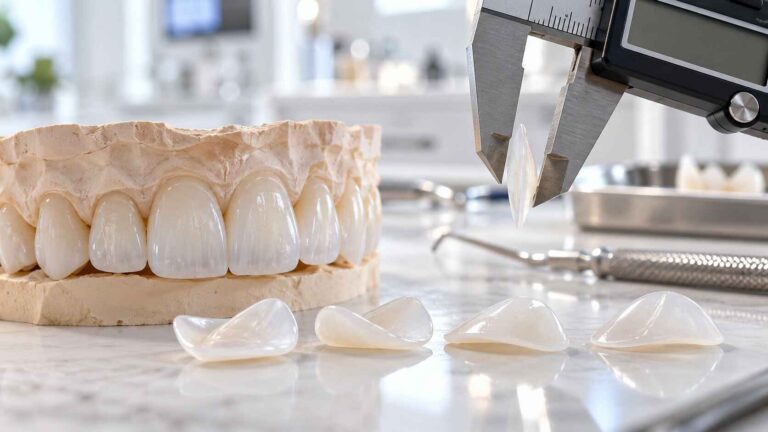
Artist Dental Lab’s zirconia veneer page asks for STL scans, shade and stump shade, occlusal notes, photos, and reference smile-design goals. That is not administrative clutter. That is bonding-risk control.
And from a regulatory perspective, professionals should also understand that adverse device experiences are not abstract. The FDA’s MAUDE database contains medical device reports submitted by manufacturers, importers, user facilities, clinicians, patients, and consumers, and the FDA states it includes the last ten years of MDR data with monthly updates.
No, MAUDE is not a zirconia veneer bonding textbook. But it is a reminder that dental devices live in a world of reports, complaints, failures, follow-ups, and accountability. Documentation matters.
How to Bond Zirconia Veneers Without Pretending the Risk Is Gone
I would not reduce this to a universal recipe because that is how bad protocols spread.
But for bonding zirconia veneers, the serious checklist usually includes these steps:
Use controlled airborne-particle abrasion when indicated, typically with alumina particles under manufacturer-guided parameters.
Clean the zirconia surface properly after try-in and contamination.
Use an MDP primer for zirconia or an MDP-containing resin cement system that is compatible with the full protocol.
Avoid random mixing of systems unless the chemistry is known and defensible.
Control isolation like the case fee depends on it, because it does.
Document the protocol, including surface treatment, primer, cement, shade, and occlusal adjustment.
Short. Brutal. True.
The best zirconia veneer cases are not the ones where everyone worships the material. They are the cases where the dentist and lab admit the material’s limits before the patient is in the chair.
FAQs
What are the biggest bonding challenges with zirconia veneers?
The biggest bonding challenges with zirconia veneers are weak chemical etching response, sensitivity to surface contamination, dependence on controlled airborne-particle abrasion, correct use of 10-MDP primer, compatible resin cement selection, limited enamel bonding in aggressive preparations, and functional overload from bruxism or poor occlusion.
In practical terms, zirconia veneer bonding fails when clinicians treat zirconia like lithium disilicate. Zirconia needs a different bonding strategy because it lacks the glassy silica phase that makes traditional porcelain etching predictable. The case must be planned around zirconia surface treatment, primer chemistry, and realistic mechanical retention.
Why is bonding zirconia veneers harder than bonding E.max veneers?
Bonding zirconia veneers is harder than bonding E.max veneers because zirconia is a polycrystalline oxide ceramic that cannot be etched with hydrofluoric acid in the same predictable way as lithium disilicate glass-ceramic, so adhesion depends more heavily on air abrasion, MDP chemistry, and surface cleanliness.
E.max veneers generally fit a more familiar adhesive workflow: etch, silane, resin cement, isolation. Zirconia requires a more specialized protocol. That does not make zirconia bad. It makes it less forgiving when the operator skips steps or assumes all ceramic veneers bond the same way.
Does MDP primer really improve zirconia veneer adhesion?
MDP primer can improve zirconia veneer adhesion because 10-MDP contains phosphate groups that chemically interact with zirconium oxide, helping resin cement bond more durably to a properly prepared zirconia surface when paired with controlled air abrasion and clean cementation technique.
The mistake is believing MDP primer works alone. It performs best as part of a full bonding system. Surface roughening, contamination control, correct cement selection, and isolation still matter. MDP is a chemical advantage, not a license to ignore clinical basics.
What zirconia surface treatment is best before bonding?
The best zirconia surface treatment before bonding is usually controlled airborne-particle abrasion with alumina particles, followed by proper cleaning and application of a compatible 10-MDP-containing primer or cement system, according to the restoration manufacturer’s parameters and the clinician’s selected adhesive protocol.
The dangerous part is “controlled.” Aggressive blasting can damage the surface. Weak blasting may not create enough micromechanical retention. The lab and clinic should agree on who prepares the intaglio surface and how the restoration will be handled after try-in.
Can zirconia veneers debond even when resin cement is used?
Zirconia veneers can debond even when resin cement is used because resin cement alone cannot overcome poor surface treatment, saliva contamination, inadequate MDP chemistry, dentin-heavy preparations, weak mechanical retention, uncontrolled occlusion, or incorrect material selection for the patient’s bite and esthetic demands.
This is why I dislike sales language that treats cement as the hero. Resin cement is part of the system. If the preparation, surface, primer, and isolation are wrong, the cement becomes the last witness at the crime scene.
Are zirconia veneers a good choice for anterior teeth?
Zirconia veneers can be a good choice for anterior teeth when the case needs higher fracture resistance, masking ability, stable shade value, or functional durability, but they are not automatically the best option for every smile-zone case because bonding complexity and optical limitations must be weighed carefully.
For many enamel-rich cosmetic cases, E.max or feldspathic porcelain may still be more adhesive-friendly or esthetically subtle. Zirconia enters the conversation when strength, masking, or function starts to matter more than maximum enamel-like translucency.
Your Next Step: Stop Guessing and Send the Lab a Real Case File
If you are planning zirconia veneers, do not start with the material name. Start with the evidence.
Send the lab STL scans, stump shade, final shade target, retracted photos, full-face smile photos, margin design, occlusal notes, parafunction history, reduction depth, and the cementation strategy you actually intend to use. Then compare whether the case belongs in zirconia veneers, anterior zirconia veneers, E.max veneers, or feldspathic veneers before the first restoration is fabricated.
Need a second opinion before committing a high-risk anterior case? Send Artist Dental Lab a trial case through the contact page with photos, stump shade, scans, and occlusion notes. Ask one uncomfortable question upfront: “Is zirconia really the safest veneer material here, or are we forcing it?”