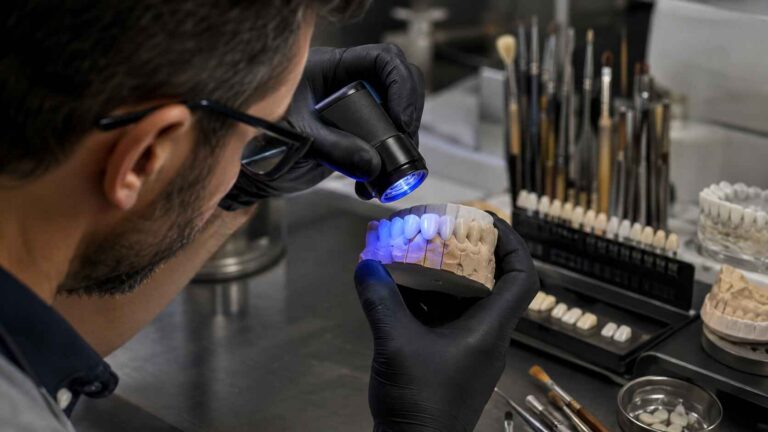
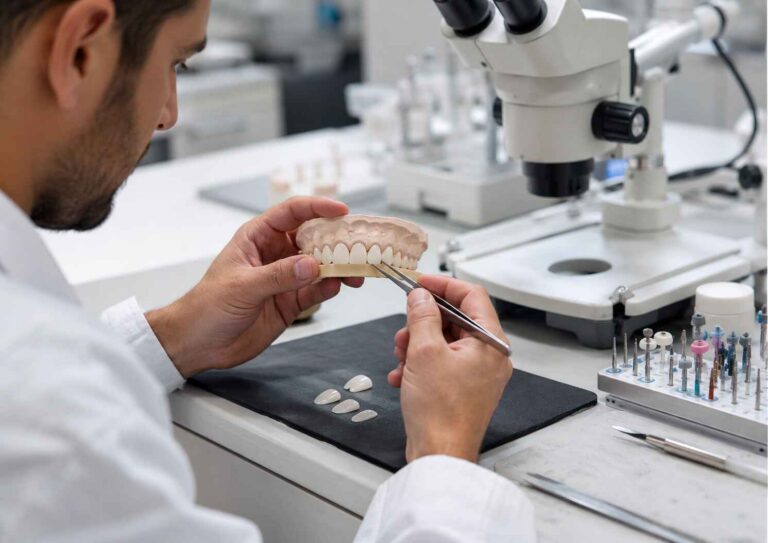
Which Types of Clinics Should Position Full E.max Veneers?
Not every clinic.
If you read Full E.max Veneer next to the site’s E.max Veneer, Layered E.max Veneer, and Feldspathic Veneer pages, the hierarchy is not subtle: full E.max is being framed as the lower-variance, multi-unit, workflow-friendly play, while layered E.max and feldspathic are pushed toward high-art anterior cases where optical nuance matters more than production discipline. Why pretend those are the same business?
I’ll say it plainly. The clinics that should position full E.max veneers are not the loudest clinics, and they are definitely not the cheapest.
Table of Contents
The real fit is operational, not cosmetic
One material.
Very different operators.
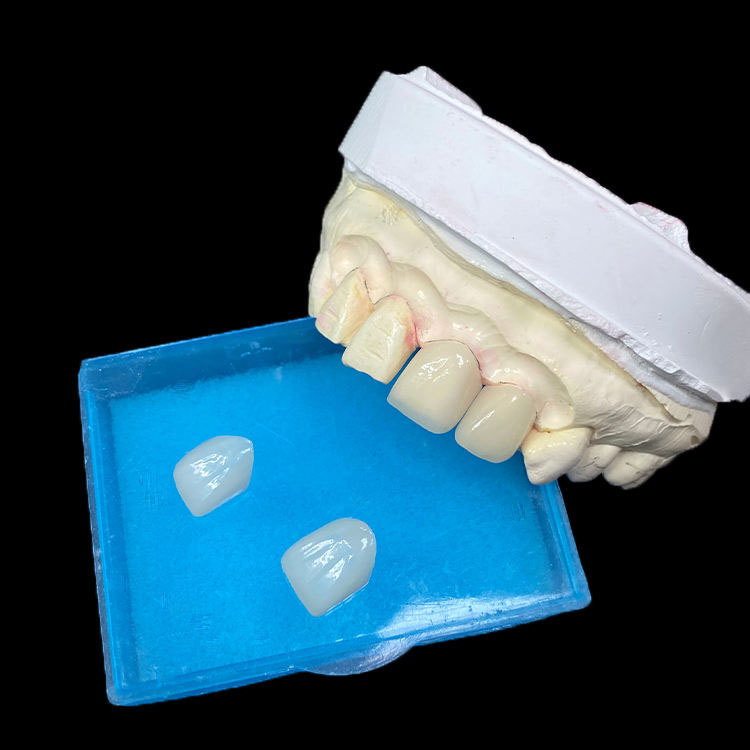
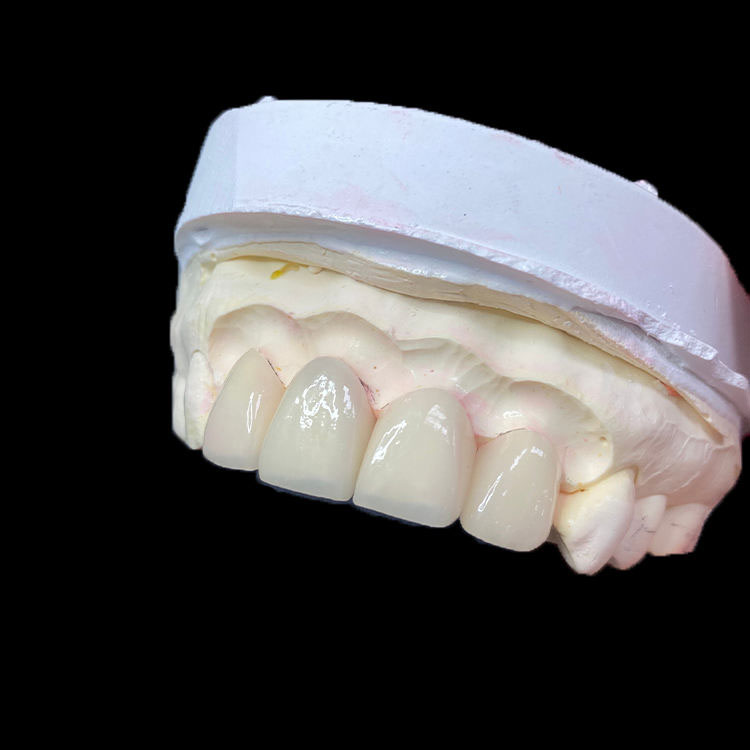
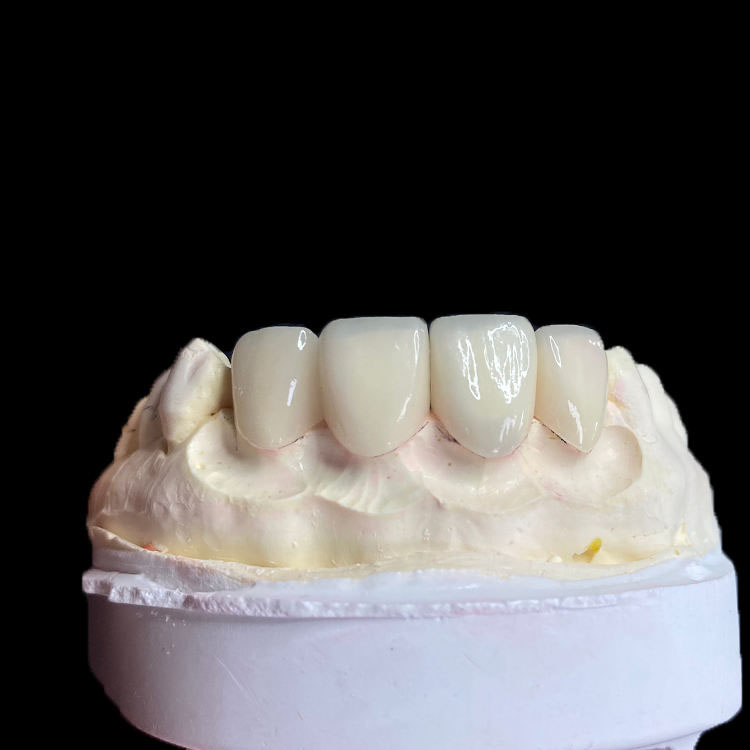
Full E.max veneers are monolithic lithium disilicate restorations, which means fewer moving ceramic parts, more repeatable value control, and less dependence on a ceramist improvising halo, depth, and incisal life across six, eight, or ten units, and that is exactly why I trust them more in clinics trying to scale reliable smile makeover veneers instead of selling a one-off beauty stunt. Isn’t that the real commercial split?
And the material itself is not fluff. Ivoclar describes IPS e.max as lithium disilicate glass-ceramic, and its official IPS e.max CAD documentation lists flexural strength at 530 MPa, which is why E.max keeps sitting in that sweet spot between esthetics and mechanical comfort for properly selected anterior and selective broader restorative cases.
What matters more, in my view, is not whether a clinic can say “E.max veneers” on Instagram. It is whether the clinic can preserve enamel, control stump shade, document reduction, and deliver consistent bonding on multi-unit cases without turning every seat appointment into an apology tour. Artist Dental Lab’s own full E.max vs layered E.max comparison makes that point better than most sales pages do.
The clinic types that should actually own full E.max veneers
Here’s my ranking.
Not by ego, but by fit.
The best clinic for E.max veneers is usually the clinic that can keep variability low across diagnosis, prep, photography, lab communication, and cementation, because full E.max is strongest as a systemized cosmetic offer, not as a vanity label slapped onto every anterior case. Who wins when the workflow is disciplined and the case count is real?
Clinic Type
Should they position full E.max veneers?
Why it fits
Where it breaks
Digital cosmetic general practice
Yes, strongly
Best for 4–10 unit anterior cases needing repeatable shade, fit, and turnaround
Weak records, weak photos, weak stump-shade control
Multi-location smile makeover group or DSO
Yes, if protocols are centralized
Standardization turns monolithic lithium disilicate into a scalable offer
Brand promises outrun clinical calibration
Conservative esthetic referral clinic
Yes, selectively
Great for enamel-respecting cases needing moderate color, shape, and symmetry correction
Dark stumps, extreme characterization demands, parafunction
Boutique ultra-premium anterior studio
Sometimes, but not as flagship
Useful as a controlled option for multi-unit consistency
Hero cases often belong to layered E.max or feldspathic
Insurance-heavy high-volume family clinic
Usually no
The workflow burden is too high unless the esthetic pathway is separated and tightly managed
Chair time, documentation, and case selection collapse
That ranking is not guesswork. Artist Dental Lab’s standard E.max veneer page positions E.max as the balanced everyday lithium disilicate route, the full E.max veneer page explicitly says it is “best for” single-unit or multi-unit smile enhancement cases needing efficient production and consistent results, and the layered E.max veneer page reserves itself for high-end anterior characterization. That is not menu design. That is indication triage.
My number-one fit is the digital cosmetic general practice. I have seen too many clinics chase “premium” by defaulting into layered work when what they really needed was a full E.max veneers protocol with clean records, clear stump-shade notes, and disciplined multi-unit harmony. And yes, that sounds boring. Boring pays.
My number-two fit is the multi-location cosmetic group. On Artist Dental Lab’s own site, a vendor-reported client story describes a North American DSO with 28 clinics moving from inconsistent quality and 15–20 day turnaround on complex cases to 9–11 days for standard cases after centralizing workflow and prosthetic protocols; I would never treat that as peer-reviewed truth, but I would absolutely treat it as a signal that full E.max belongs in systems that value standardization over drama. Isn’t that where monolithic dentistry makes its money?
My number-three fit is the conservative esthetic clinic that still respects enamel. These are the practices that say no to the fake “20 veneers for everybody” pitch and instead use full E.max for moderate color improvement, shape correction, and controlled smile broadening, while escalating to layered E.max, feldspathic, or even crowns only when the biology or optics really demand it. That’s a smarter sell, and patients can feel the honesty.
The evidence says lithium disilicate works, but only under adult supervision
Good material.
Strict protocol.
A 2024 systematic review and meta-analysis covering 29 studies found a pooled long-term survival rate of 96.81% for lithium disilicate laminate veneers at 10.4 years, with lower long-term technical and biological complication rates than the feldspathic and leucite-reinforced groups; a separate 10-year retrospective study of 364 lithium disilicate laminate veneers reported 97.4% survival with just 1.64% complications. That is excellent data, but it is not a license for sloppy clinics to market full E.max veneers like a universal fix. Isn’t the phrase “applied by experienced dentists” doing a lot of work there? systematic review and meta-analysis and 10-year retrospective study.
That is why I care so much about workflow. Artist Dental Lab’s article on teamwork in esthetic anterior restorations says the quiet part out loud: anterior failures often come from misalignment on shade, contours, reduction, and material selection, not just hand skill. And the site’s multiple-veneer cementation sequence article makes the same operational point from the delivery side by arguing for a mirrored midline-out sequence. Same theme. Better systems beat prettier promises.
So here is my hard truth. Full E.max veneers should be positioned by clinics that know how to repeat a good result, not just produce one.
Who should not lead with full E.max veneers
Quite a few.
Some clinics are selling the wrong story.
I would not position full E.max veneers as a flagship offer for high-volume discount veneer mills, insurance-driven family practices that have no separate esthetic workflow, or boutique celebrity clinics that live on ultra-custom optical hero cases, because each of those models breaks the main advantage of full E.max in a different way: the first destroys diagnosis, the second destroys process discipline, and the third destroys the product fit by asking a consistency-first material to play an artistry-first role. Why force the wrong horse into the wrong race?
I am especially skeptical of cheap social-media veneer packages. According to an October 2024 Associated Press report, veneers typically cost about $1,000 to $2,000 per tooth, are irreversible, and were being illegally offered online by unlicensed “veneer techs” promising full sets for far less; the University of Colorado Anschutz Medical Campus also warned in 2024 that patients drawn into that market can end up with painful, expensive repairs. That is not a fringe sideshow anymore. It is direct competition for irresponsible clinics.
And there is a legal angle most clinics still underestimate. The FTC case against the North Carolina dental board turned on efforts that made cosmetic whitening harder to access and more expensive for consumers, while California Dental Assn. v. FTC sits as a reminder that dental advertising around price and quality claims is not casual copywriting; it lives in a regulated space where “trust me, we’re better” is not the same thing as verifiable communication. So if a clinic wants to position full E.max veneers, it had better do it with diagnosis, evidence, and honest indication language.
The smartest positioning statement, in my opinion
Say less.
Prove more.
If I were building this category page for a serious porcelain veneers clinic, I would position full E.max veneers as the consistency-first option for conservative-to-moderate anterior cosmetic cases, especially single-unit to multi-unit smile enhancement where fit, repeatability, value control, and efficient delivery matter more than handcrafted incisal theatrics, and I would route patients with dark stumps, severe internal discoloration, extreme characterization demands, or structurally compromised teeth into a different conversation. Isn’t that how adults protect both margin and remake rate?
Which dental clinics offer full E.max veneers most successfully?
The dental clinics that offer full E.max veneers most successfully are systemized cosmetic practices that can preserve enamel, capture stump shade accurately, send strong photo records, manage multi-unit smile design, and deliver reliable adhesive bonding without improvising the case at every stage of treatment. That is the real dividing line. Clinics with weak records and loose protocols can still buy lithium disilicate, but they usually cannot buy predictability.
Are full E.max veneers better than layered E.max veneers?
Full E.max veneers are better than layered E.max veneers when the case priority is multi-unit consistency, lower workflow variance, cleaner value control, and efficient repeatability, while layered E.max veneers are better when the case genuinely needs premium incisal effects, custom internal characterization, and a higher esthetic ceiling in the visible anterior zone. I would not call one “best.” I would call them different risk profiles.
How should a clinic choose between full E.max veneers and E.max crowns?
A clinic should choose between full E.max veneers and E.max crowns by deciding first whether the tooth is still mainly an enamel-bonded cosmetic case or has crossed into structural compromise, because veneers solve conservative anterior esthetics and crowns solve broader circumferential protection when biology and mechanics stop cooperating. That boundary matters more than branding. For structurally compromised teeth, even beautiful veneer language becomes dishonest fast.
What is the best clinic for E.max veneers?
The best clinic for E.max veneers is the one that combines conservative diagnosis, strong lab communication, calibrated photography, occlusal judgment, and disciplined delivery protocols, because long-term lithium disilicate success in the literature comes from experienced teams following strict treatment systems rather than from charm, décor, or social-media volume. I trust workflow more than polish. Rutgers on veneer longevity.
Can a high-volume clinic position full E.max veneers?
A high-volume clinic can position full E.max veneers only if it runs a protected cosmetic workflow with standardized prep design, shade records, photo protocols, and lab prescriptions, because volume by itself increases communication error, remake exposure, and bonding inconsistency rather than magically creating efficiency. Volume helps only when the process is stricter than average. That is why some DSOs can do this well and some cannot.
Your next move
Be honest.
Then get specific.
If your clinic is a digital cosmetic general practice, a protocol-driven smile makeover group, or a conservative esthetic referral office, you should position full E.max veneers as your repeatable, consistency-first lithium disilicate offer and support that claim with real process language, not beauty clichés; if you are a discount veneer mill, an insurance-first family office, or an artistry-only boutique, you should stop pretending full E.max is your natural flagship and build a narrower offer around the cases you can actually control. That is the cleanest strategy on the table.
I would build the page around that truth, weave in the internal paths already sitting on the site, and let the article qualify the reader before the consultation ever starts. That is better SEO. More importantly, it is better dentistry.