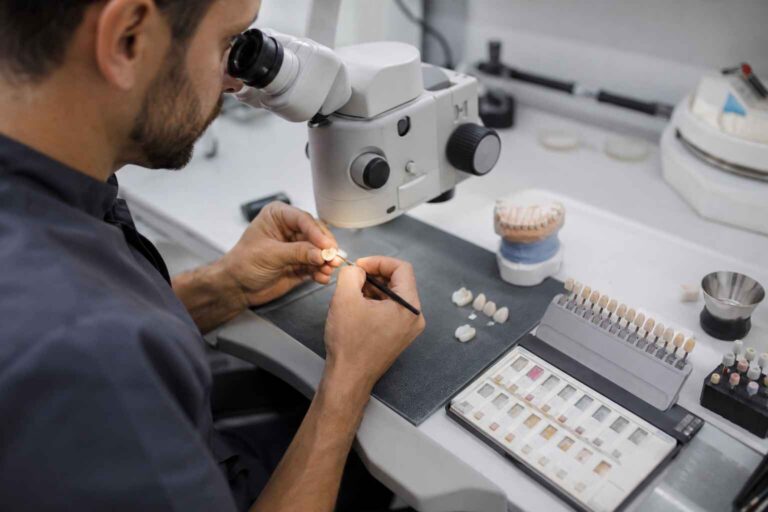
A blunt, lab-side breakdown of why full-mouth rehabilitation burns more appointments, more verification, and more clinical patience than a six-unit anterior case — and why skipping try-ins is usually a remake disguised as efficiency.

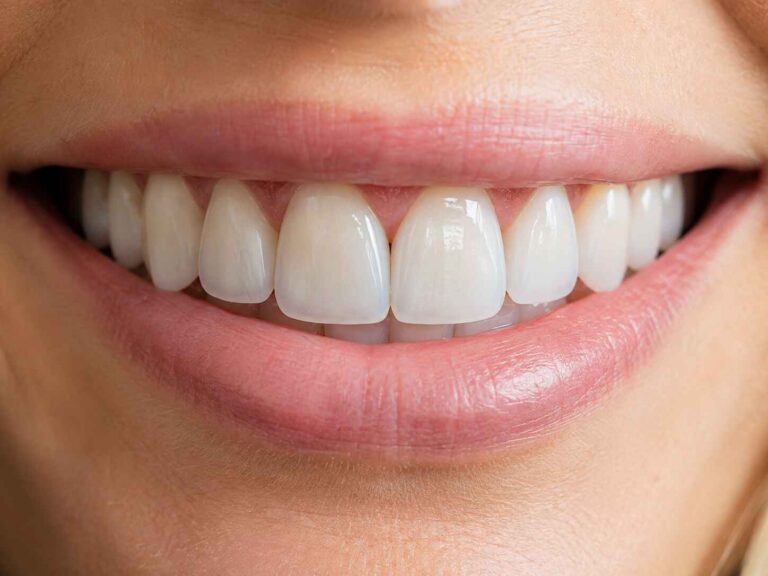
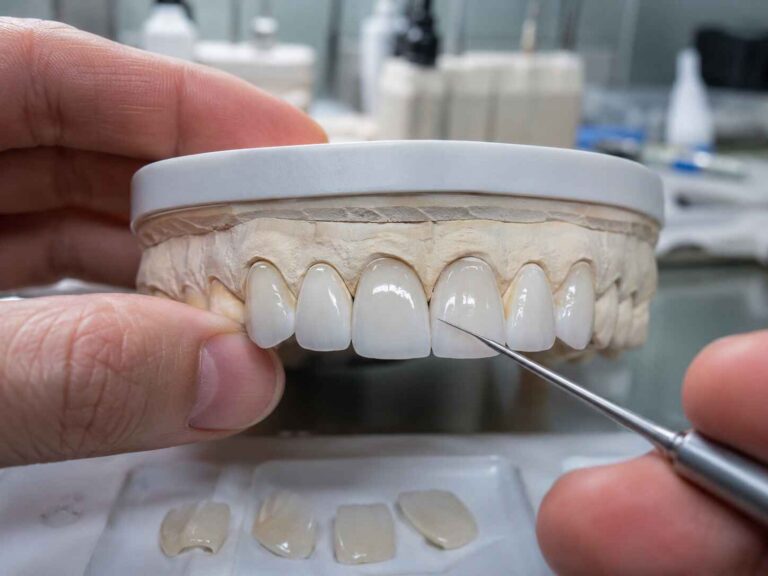
Anterior restorations fail visually when the surface is too flat, too shiny, too smooth, or too generic. Shade matters, but texture tells the eye whether the tooth belongs in the mouth.

Dental veneers can work beautifully, but deep bite and edge-to-edge cases are where cosmetic dentistry turns into engineering. This article explains why direct veneer placement is often risky, when it may be defensible, and what dentists should send the lab before prescribing porcelain veneers in bite-problem cases.

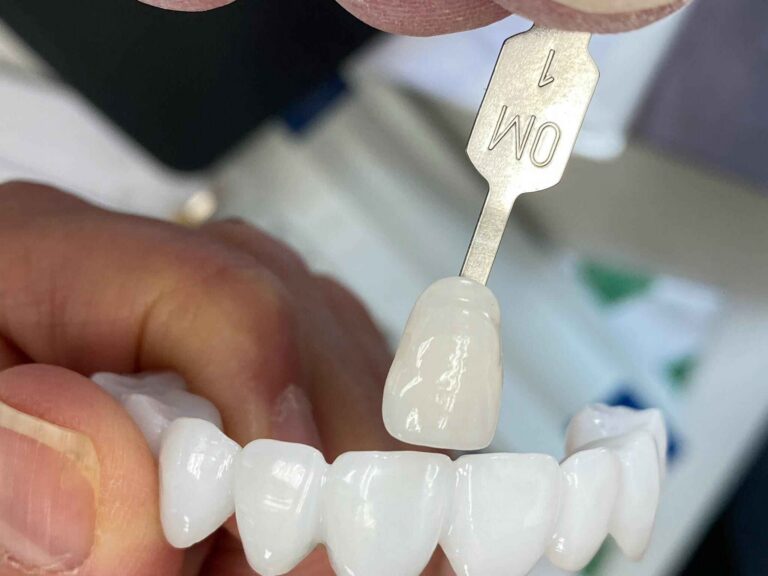
“Whiter” is easy to request and hard to live with. Natural-looking dental restorations require better shade data, better photos, and a lab brief that describes enamel behavior—not just a VITA tab.

High clarity zirconia crowns guarantee strength and esthetics, but anterior situations subject every weakness: value, stump color, incisal deepness, bonding, and occlusion. This write-up breaks down when zirconia suffices, when E.max still wins, and when the lab requires better information prior to touching the instance.

A blunt, evidence-backed consider why anterior bite enrollment is not clerical documentation-- and why laboratories can not rescue missing out on occlusal information with artistry alone.

Full contour zirconia crowns are not chosen since dental practitioners stopped appreciating esthetics. They are chosen since damaging, turn-around, occlusion, individual expectations, and remake economics penalize weak product choices.

Margin structure decides whether ceramic restorations seat cleanly, look alive, and survive function. Here is the hard comparison most material brochures avoid.

Tetracycline-stained teeth veneers are not a simple beauty purchase. The real decision sits at the intersection of masking power, enamel bonding, stump shade, ceramic thickness, cement value, occlusion, and whether the lab can control the final result under ugly clinical conditions.

The best veneer material for minimally prepared anterior cases is not the strongest ceramic. It is the material that protects enamel, controls value, bonds predictably, and does not force the dentist or lab to lie about thickness.

Feldspathic is not dead. E.max is not magic. The better veneer material depends on enamel, stump shade, prep space, occlusion, unit count, and whether the case needs artistic invisibility or mechanical control.

Multi veneer cases do not fail because the dentist “missed beauty.” They fail because the midline was not owned early, the symmetry was judged too late, and the lab received poetry instead of usable data.